• About

Unwanted Advice: Reflections from a Self-Appointed Life Counselor

~ Caminante, no hay camino. Se hace camino al andar. Wayfarer, there is no way. You make a way as you go. (Antonio Machado)

Unwanted Advice: Reflections from a Self-Appointed Life Counselor

Tag Archives: painting

“The terrifying groundlessness, the eradication of all violences. To be embraced by that which doesn’t know us and in that unknowing caresses us and truly loves us. We might become anything at all, something wildly other than what we are encountered by. A world that truly loves us by not presuming what we want or what shape we will take before we show up… We will be held when we are not known from the start.” — Dr. Marquis Bey

06 Monday Jul 2026

Posted by summermlee in Aesthetic philosophy, Art, Birds, Nature, philosophy, Uncategorized

≈ 1 Comment

Tags

art, Étienne Souriau, Being, birding, birds, birdsong, birdwatching, Crossings, death, Dr. Marquis Bey, homecoming, nature, painting, philosophy, Photography, Summer Lee, Summer Mei Ling Lee, tragedy, travel, Vinciane Despret, Virginia Woolf

Last year, there were vireos, grosbeaks, and warblers raining down on me with their song, from their canopy above a steep climb through the pine and aspen canyon, Ouray of the San Juan Mountains. This year a fire erased it all and was still burning as we flew out above the plumes, our pilot making a rubbernecking route as we departed. As we peered out down onto the devastated mountains, my sons held my hand as we ascended, a tradition they still abide by. And I saw the woman behind me from the corner of my eye, crossing herself.
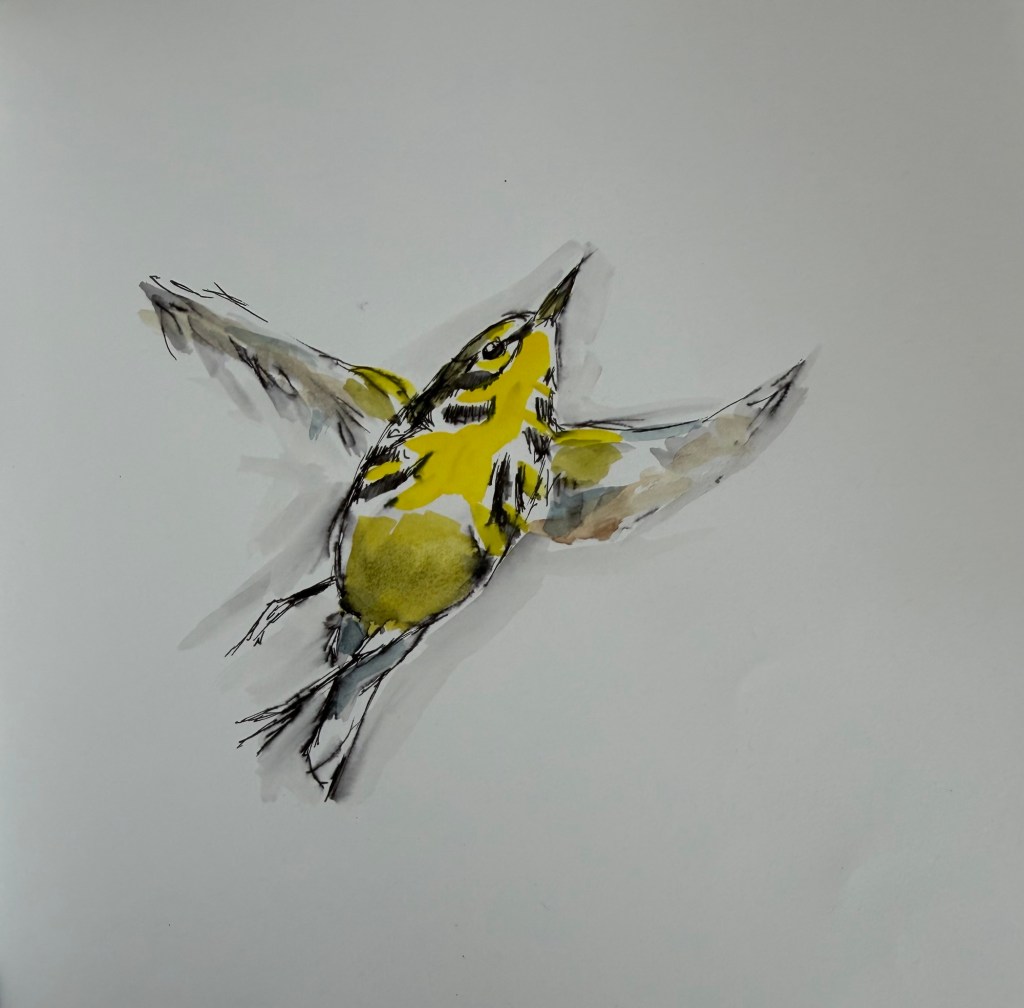
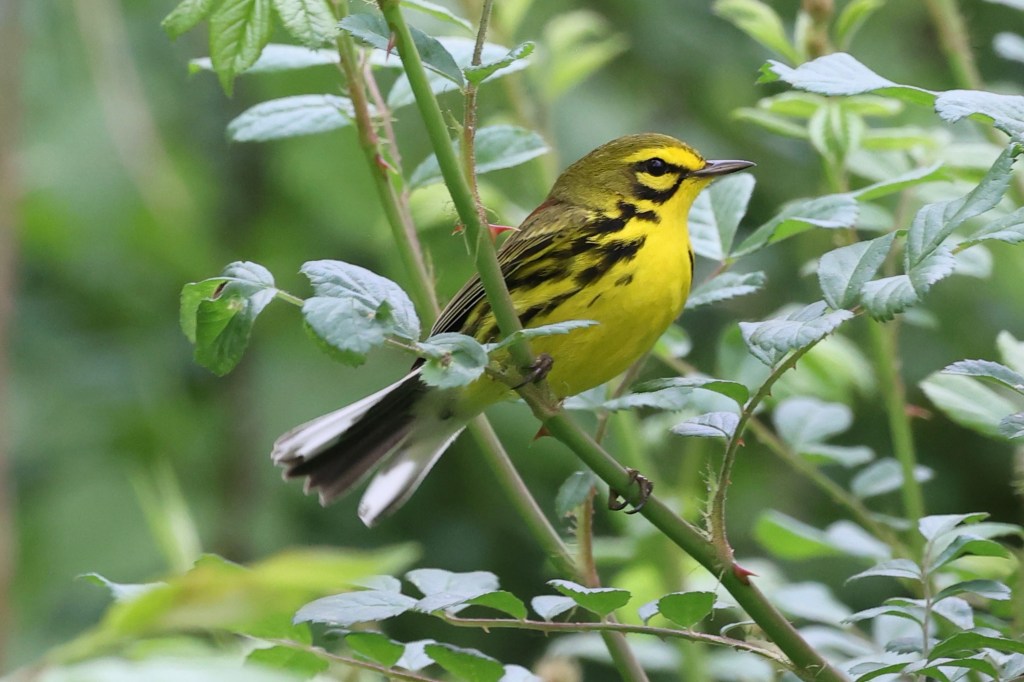
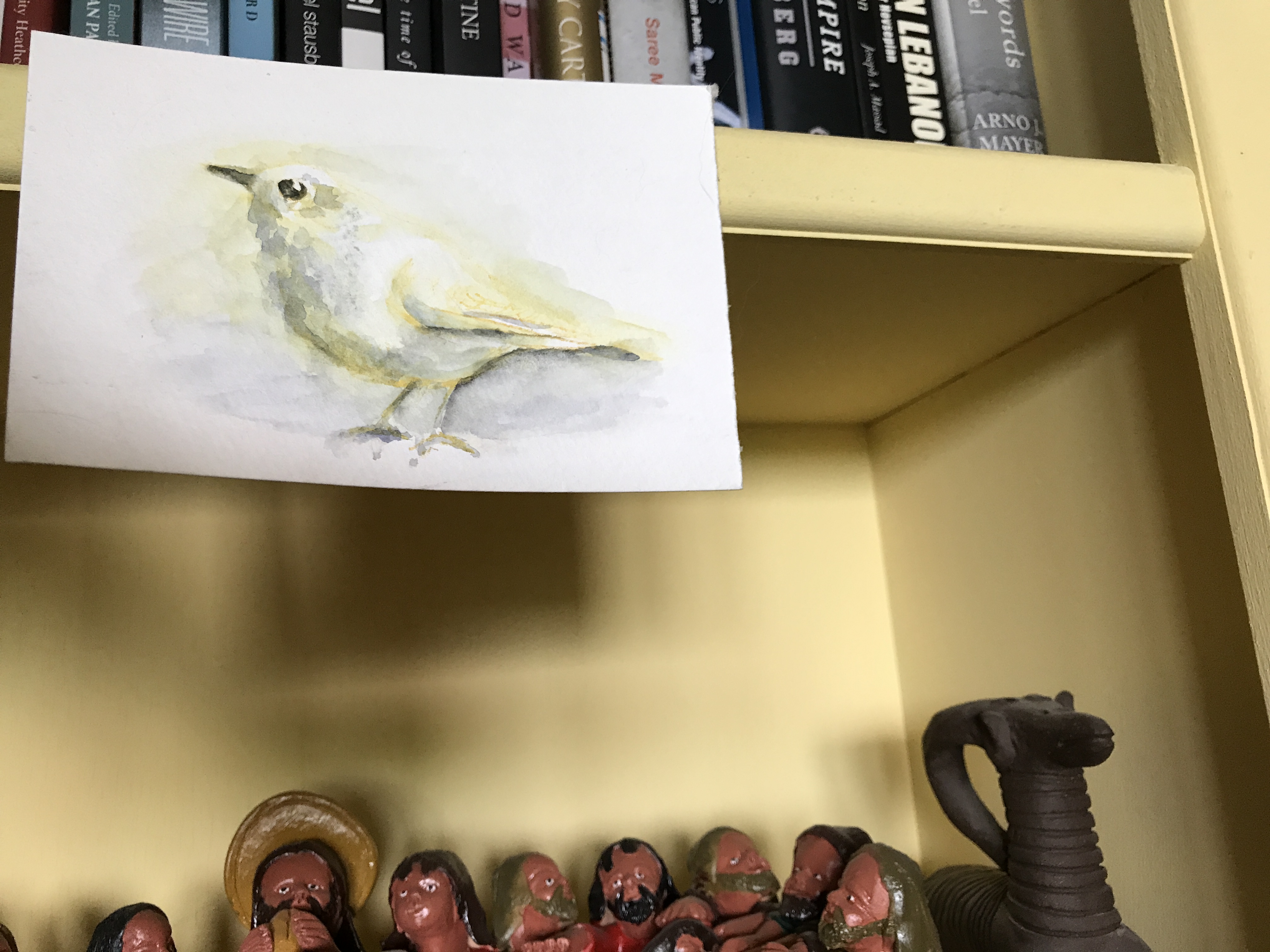
Prairie Warbler, 2025, by Summer Mei Ling Lee

Joseph drove me from that place I freed myself from, where he was a day laborer. He had to change his shirt before he got into the van, where I waited in my impatience to break away. I was reborn like when I collected my kids and my things and my self worth and flew away from her smoldering apartment.

Joseph apologized for keeping me waiting and asked where I was going. Though he meant which hotel, I said I wanted to see his Zambia. Minutes later we were deep in conversation in the local open market. The open aluminum and wood stalls were humming at mid day with babies sleeping in the piles of vegetables and housewares, and women walking in groups with their bags and baskets. I bought vegetables from his aunt, peanuts from a man and his son, and I can’t remember what else, but in a short time his van was full of food. I told Joseph to bring it all home to his wife, what would I do in a hotel with any of that anyway. I was down to my last $20 USD in kwacha, a week’s wages for the better off there, when Joseph said he had understood me now. The last spot he took me was under a tree where women sat on the ground with some vegetables. He told me these women had to take a bus for two hours to arrive to that patch of dirt at the end of the market, to try and sell what little they had. I said for him to pick someone and give her my last bit of money. In a few minutes, he returned to the van with a fistful of onions he threw onto the pile of food. He said the woman was very grateful, told him to tell me thank you, but she had to give me something in return.

I would understand soon that many Zambians were orphaned young, and that famine lingered. They didn’t come out and tell you this directly but a few sentences in and they were missing their mother who was a good church singer, who even while dying asked her son if he had eaten something.

During our drives around the area, Joseph became less a guide and more a confidant. Joseph had some disappointment with his wife, the unfairness at his workplace, the different ways Zambians did things. How his young parents got sick, one after the other, and died. One evening, a story came up that he said he hadn’t told anyone. He had been taken in by an aunt who was mean, making him choose between school and food. He told me more than a few times that he knew what hunger was. He said one night when he was a boy he was dreaming and a voice told him to get up and walk the road. It was 2 am but he did it anyway, along a red dirt road just like the one we were driving along. Pitch darkness except his headlights and our imaginations. He said that he walked about a hundred yards and found coins lying in the dirt. It was enough to let him eat the next day. The next morning no one believed him and he didn’t try to convince them. I said it was an angel, thinking silently to myself about his parents somewhere in a different mode of existence. He said from then on he started to believe in a god, that there was something bigger than all of us that we couldn’t make sense of. His god was loving.

Ten years ago when I had to move thousands of miles away from my native land, I found a nest that fell to the ground in the yard of the home I was about to leave, I separated the fibers and fluff of the nest and sewed them into fifty cards and sent them to everyone across the country and the world who had given me a sense of home. When I told her about the project, she told me, you had to become displaced to find your family.

Soon after my time with Joseph, I found myself on four continents within a few months, and home became that tiny piece of driftwood I once photographed, where a Common Tern perched forty miles out at sea with no hint of land anywhere on the horizon.

Adrienne said this is where the utter vastness of patterning arrives to us in 3D rendering. I said Virginia Woolf called it the hidden pattern behind the cotton wool of daily life. I droned on about miracles, and she said: yes, they occur in the crossing, when the pattern breaks through and reminds us of what we are normally cut off from. And then she sent me a poem where multiple realities are happening all at the same time, the most superficial one being a young girl declining a stranger’s invitation.

Are there unlived lives?

Joseph tells me in the same sentence that he is ready to leave the earth, and that he adopted and is raising two orphans of his own.

And yesterday, emerging from the smoke of the western Colorado fires, the Black Grosbeak and the Yellow Warbler alight upon branches within feet of each other and despite everything, sing each other into being.
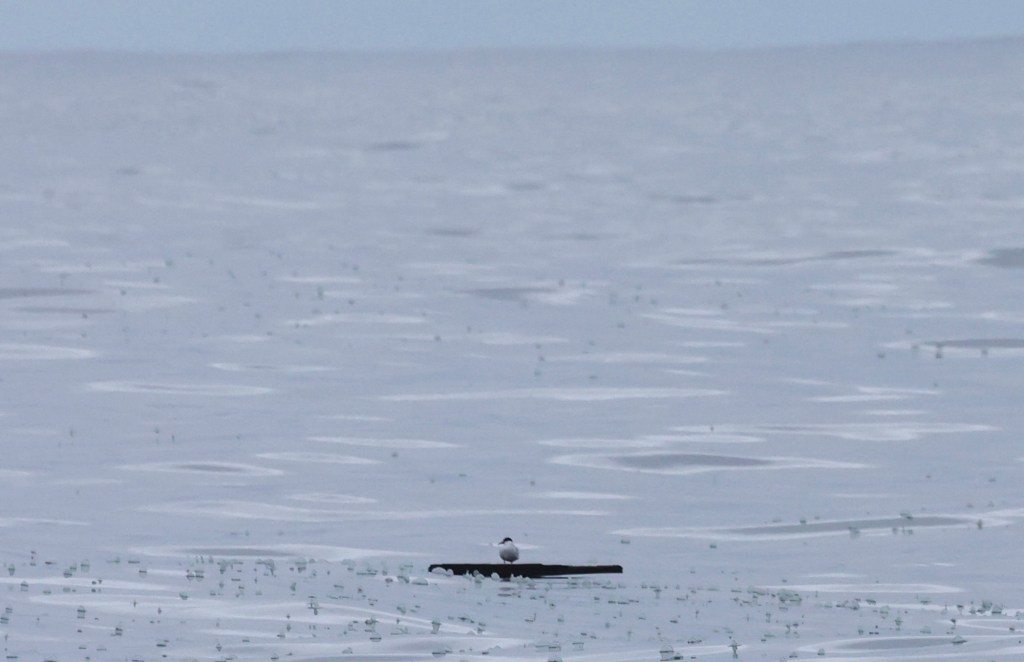
Common Tern, 40 miles west into the Pacific Ocean by Summer Mei Ling Lee, 2026

“ O Opal / your ear / in my heart / both hear / the glorious void, / preferring the birds.” Jim Harrison

04 Saturday May 2024

Posted by summermlee in Aesthetic philosophy, Art, Birds, Nature, poetry, Uncategorized

≈ 2 Comments

Tags

art, Étienne Souriau, bird watching, birding, birds, birdwatching, George Steiner, Jim Harrison, Martin Shaw, migration, painting, Paul Celan, poetry, Summer Lee, Summer Mei Ling Lee

Life-preserving but not life-giving, he says. Maybe the best critique of art I’ve ever heard. “Nothing is harmed but nothing is thriving either.” The people around here trained their eyes away from the gods, ancestral dead, magic — and sometimes even beauty. Everything is a utility or transaction for something else, and that’s not how the most important things come to exist. And, “The true entrance into us will not occur by an act of will.”

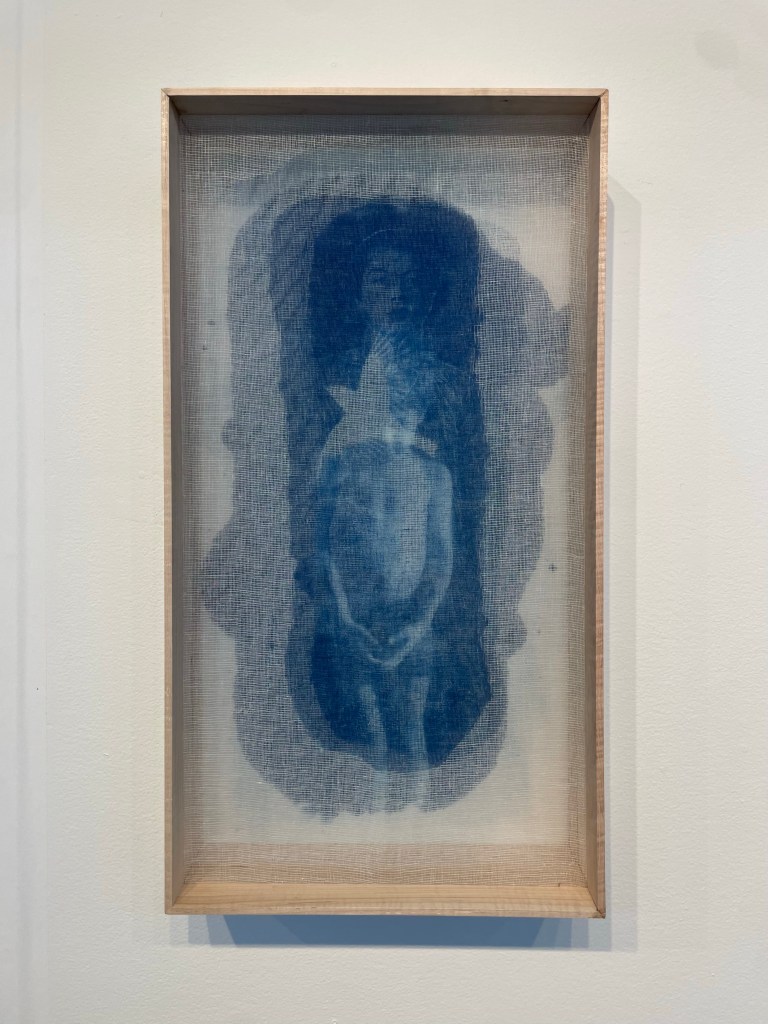
Into the Nearness of Distance, 2024. By Summer Mei Ling Lee. 28 x 15 inches. Cyanotype on three layers of Gauze, wood.

Myself, I want to dance with all that is wild and alive, but am just sometimes scared to. I realize now back on this sky-murdering plane home, full of doubts and in mistake-review mode, I was still greeted that day by gleaming Prairie Warbler, in all his breeding plumage glory. He popped up in front of me when there could have been nothing at all in that sickly, urban forest. Odds are more likely that he would have been a thousand miles further along into Canada, but he was right here. Exactly where I have met so many who I have loved and who have loved me. As he explains, those things we need most in this world are more tangible in the messy, uncertain wild.

Prairie Warbler, the other day.

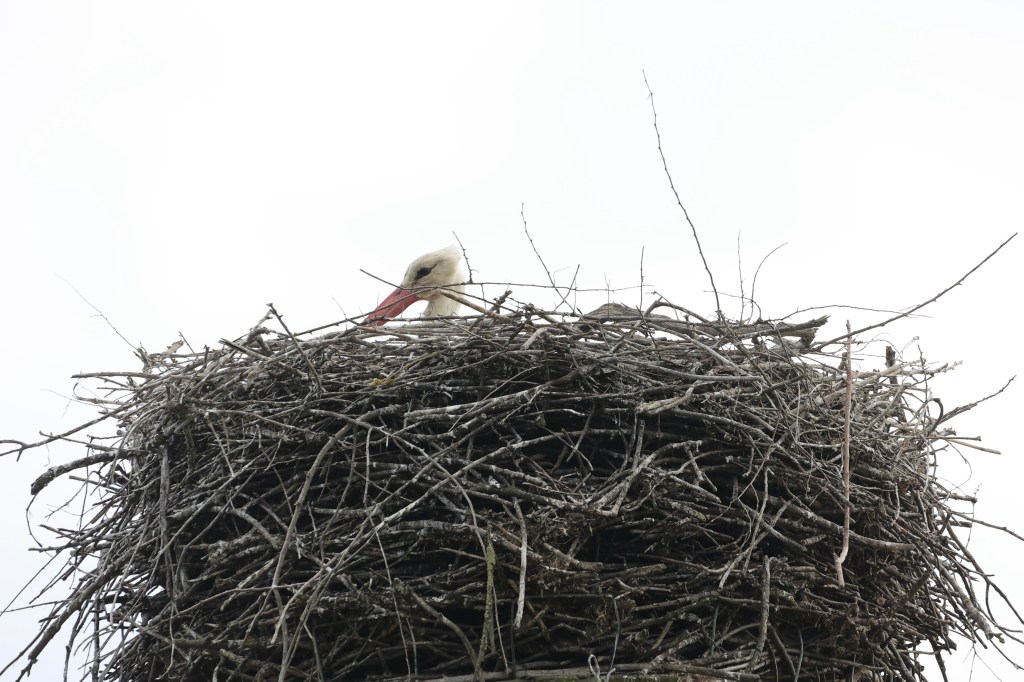
Just two weeks ago, blue-eyed Pietro drove me to a nature preserve that is now tragically a farm, where persists a pole at the side of the field with a platform on top. And up there in a roughly-woven basket structure she stares down at us, telling me something I don’t know how to write, something about fear but also just continuing on despite the hunters. She could live for forty years and knows how to squeeze water from moss into her thirsty chicks’ beaks. For what.

And then he takes me way out where the road barely can be made out anymore, to the last remaining colony of Lesser Kestrels in the eaves of a long-ago collapsed home. He jumps out of his tiny car when he spots them and shrieks like a boy. He delights in telling me when they fly back into view, for a period of time even longer than I still care. He can see them everyday and I will never see them again in my lifetime. And soon no one will. I know why he shrieks, but it’s impossible to write it, even though I feel it in my bones and try every time. I am deeply aware and sorry for that failure.

But after each word, it is impossible not to mention those that understand and keep me company — it’s why she has sent me a bird along her walk. And why he sends that line of poetry. Otherwise it can feel like the people here are dying mostly because they don’t even notice, nonetheless jump out of their car and shriek in delight. I think that’s why Celan threw himself into the Seine river, it becomes overwhelming that the rest of the world swings through the crowd like an ignorantly sharp elbow into a tender bruise.

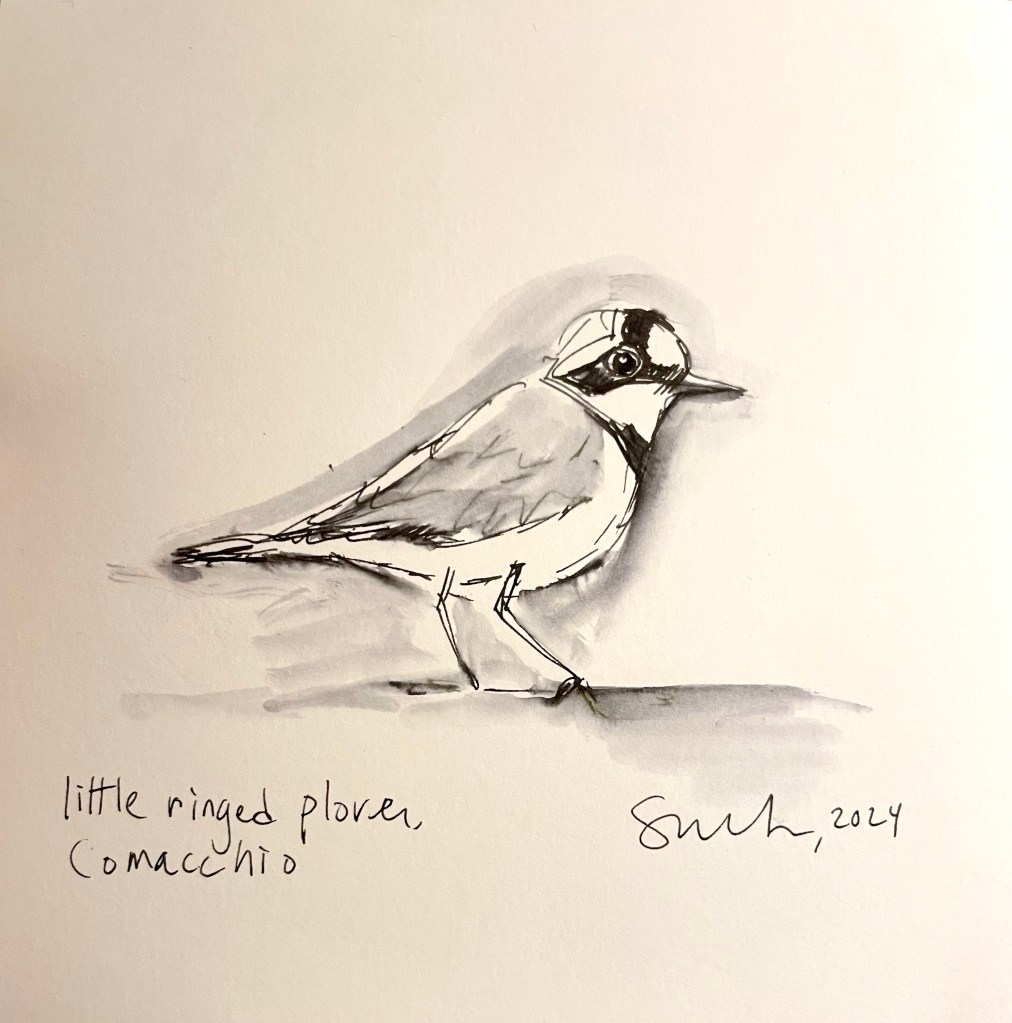
Little Ringed Plover for Fiorenza, by Summer Mei Ling Lee, 2024

She cried openly this time when I left the farm, weeks before the Bee Eaters arrive. This year, I gave her a Little Ringed Plover instead. I am trying to fashion band-aids out of the birds, those little gods and ancestors and bits of magic in the trees. Band-aids for those whose tendernesses in the crowd, including my own, I absurdly want to preserve.

“If we must be careful of any anthropomorphism when studying animals, it is not bad to sometimes do a little zoomorphism when studying man, whose lucidity and power of reasoning are often exaggerated.” (Étienne Souriau, The artistic sense of animals, 1963. My translation).

“Not tears of fear but of grief. She wept as we weep once or twice in our life. Tears that carry amniotic fluid and sea salt and the dreams of sirens in them, that hurl truth, sorrow and defiance into this world, all at once. As she wept, she wiped the tears over her bruised and muddied body. As the tears made tracks, her skin started to gleam. Clean and bright again.” Martin Shaw

31 Sunday Mar 2024

Posted by summermlee in Aesthetic philosophy, Art, Birds, Nature, philosophy, Uncategorized

≈ 3 Comments

Tags

art, birding, birds, birdwatching, grief, Martin Shaw, nature, painting, philosophy, poetry, Smokehole, Summer Lee, Summer Mei Ling Lee, wild, Wilderness, writing

Because the vagrant snow bunting had appeared in my yard before waking, I knew when she called that he was dead. And upon hearing her voice, I began sounding like a strange bird, just uttering no, no, no. As if songs can magically push out reality and hold back time for just a moment.

What’s hard about this one is that he was inside that cathedral with me for many years, and I can still see him running back for me when the most rarest or most gorgeous bird was ahead and I hadn’t caught up yet. And of course, how he told my sons the exact trees where the chickadees were waiting so they could feed them from their hands. How I would wake up and say let’s drive out hours into the prairie to see this lifer and he would always beat me there. And now without warning except for the apparition of a snow bunting we had seen one windy day together two years ago, the cathedral is more empty. With that disappearance, my ancient rituals — timed with spring and fall migrations to welcome the beings from thousands of miles away as they pass through — have fallen into obsolescence.

And here is the ritual of writing, which lately (I apologize) tends to be predictably filling out absences with words. Because he told me, nothing can better bring back a presence than by just the uttering of it.

Nathan sent me some words about the stories we need in our lives and are less and less being told. And in those time-tested tales there is always a moment when we are thrown into the belly of the whale or into the dark woods or what have you. The writer says we are most cautious now of that wilderness, even having chopped off our hands to stop touching what is alive, and asks us to go sit willingly in the wild places and listen to what speaks to us.

I am using words here to listen, deep in another wilderness, sent here by the loss of a soul that scaffolded me, who saw hundreds of birds by my side as I looked at them too. Who sent me birds in every form, and delighted in my birds. And tried as he could to birdwatch in these stupid writings here. I have nothing to offer here because I am still in the wilderness listening, covered in mud, bruised in the middle of me, and seeing ghostly figures in the distance, those who I miss. They somehow feel nearer and nearer to me as I approach my own disappearance.

And yet, by some grace, so much gratitude, there is thanks for those who are waiting in the nearby village, full of love and mercy and words and bird feathers for me. Coming back to tell me they also can hear a beautiful bird just ahead, and they will help me find it.

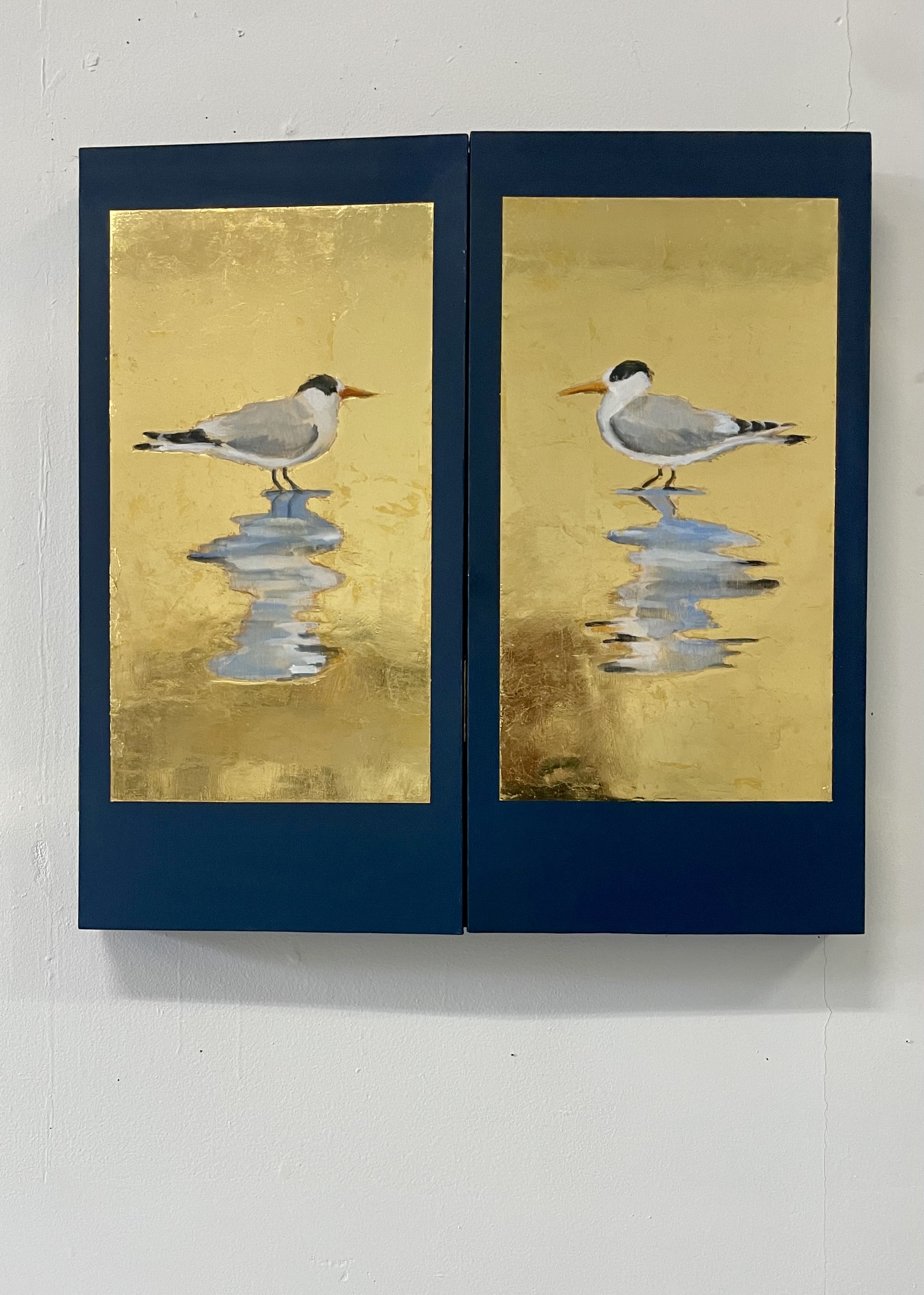
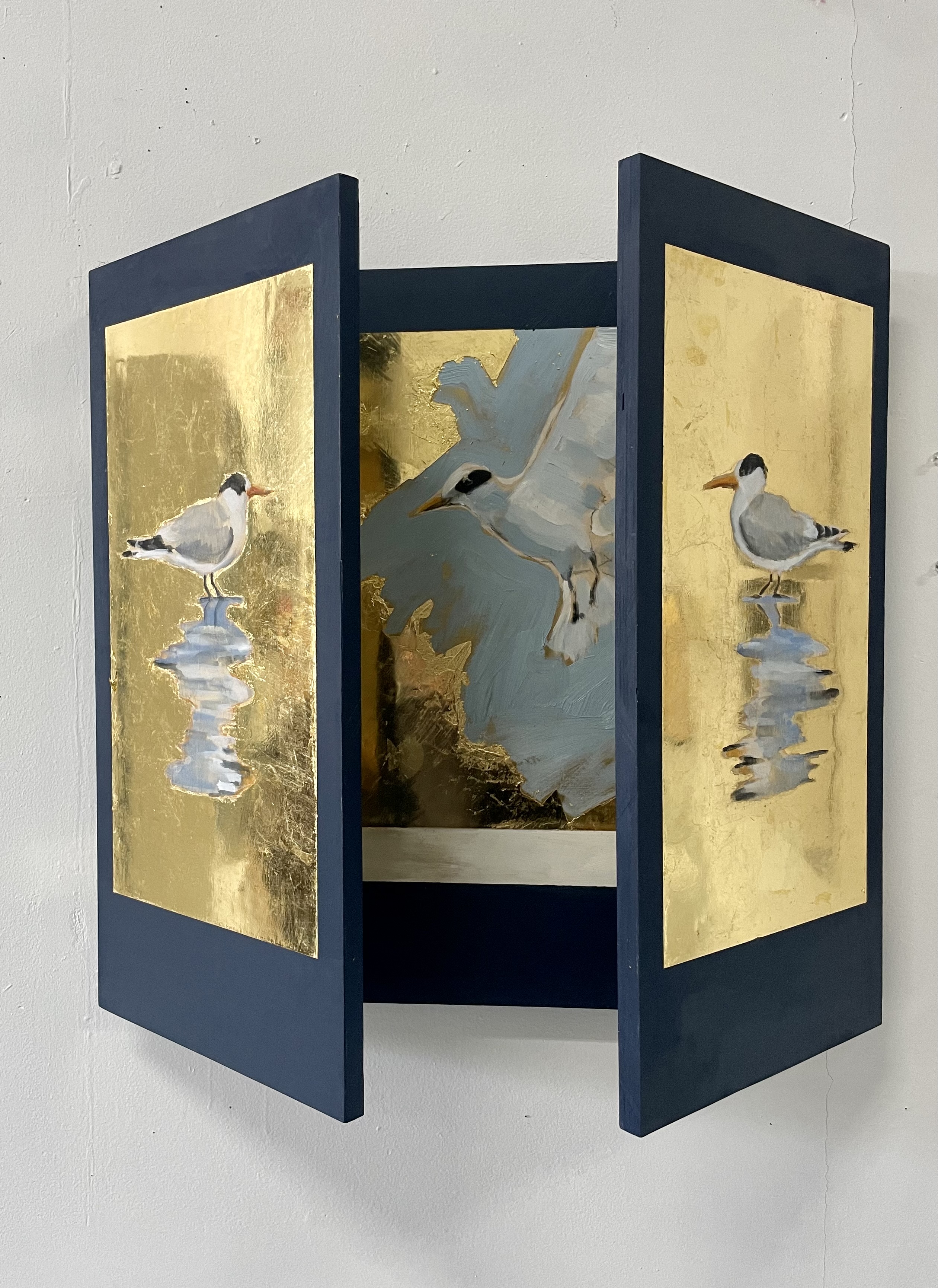
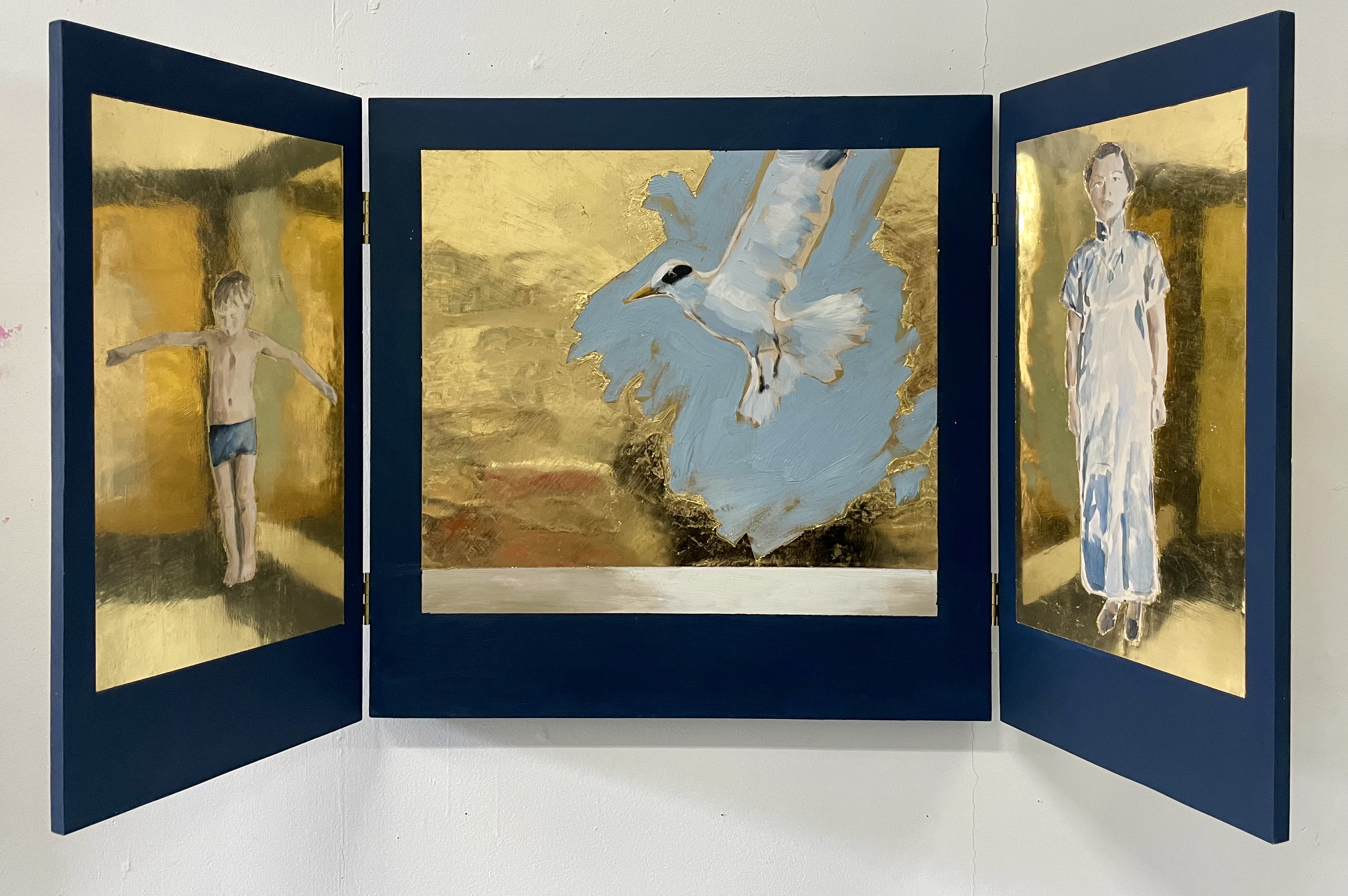
(Annunciation, 2024 by Summer Mei Ling Lee. 23.5 k gold, watercolor and oil paint on wood panels.)

“To be wedded to the wild means some part of you — maybe a large part — guards your solitude like we guard an endangered owl, tells stories as much for the benefit of the lively dead as the moribund living, makes wayward choices many view eccentric, is capable of sustained generosity, has flashed your teeth and counted costs, has dragged meat back to the cave under the moonlight, has stalked all of Russia with only a line of Anna Akhmatova for company. To be wedded to the wild means you have curated a doorway beyond societal expectation of the perpetual, grinding tic of acting nice. That you have recognized discipline as the essential companion of the wildness, that sobriety and ecstasy have made a pact.

That is how good art gets made.” Martin Shaw, Smokehole

“But these blinds birds made of paper could not recognize my father. In vain did he call them with the old formulas, in the forgotten language of the birds — they did not hear him nor see him. All of a sudden, stones began to whistle through the air. The merrymakers, the stupid, thoughtless people had begun to throw them into the fantastic bird-filled sky.” The Night of the Great Season, Bruno Schulz.

27 Friday Oct 2023

Posted by summermlee in Advice, Aesthetic philosophy, Art, Birds, Nature, philosophy, Uncategorized

≈ 2 Comments

Tags

Alice Bach, anthropocene, art, birds, birdwatching, Bruno Schulz, Connection, creative drive, creativity, Donna Haraway, nature, painting, philisophy, Summer Lee, Summer Mei Ling Lee, Vinciane Despret, writing

She asked me earnestly, in the context of a conversation about the war in the Middle East, does a bird I see also bring about the despair that birds are vanishing.

Counting birds is perhaps a futile defense against their disappearance. Even according to the software that I use to collect bird sightings, the bird closest to me doesn’t count. Neither do the birds in the wild who are escapees — and aren’t we all an escaped being of some sort? Nor do the birds who are introduced here and are considered invasive. Colonial human projections run everywhere, even into the bird world.

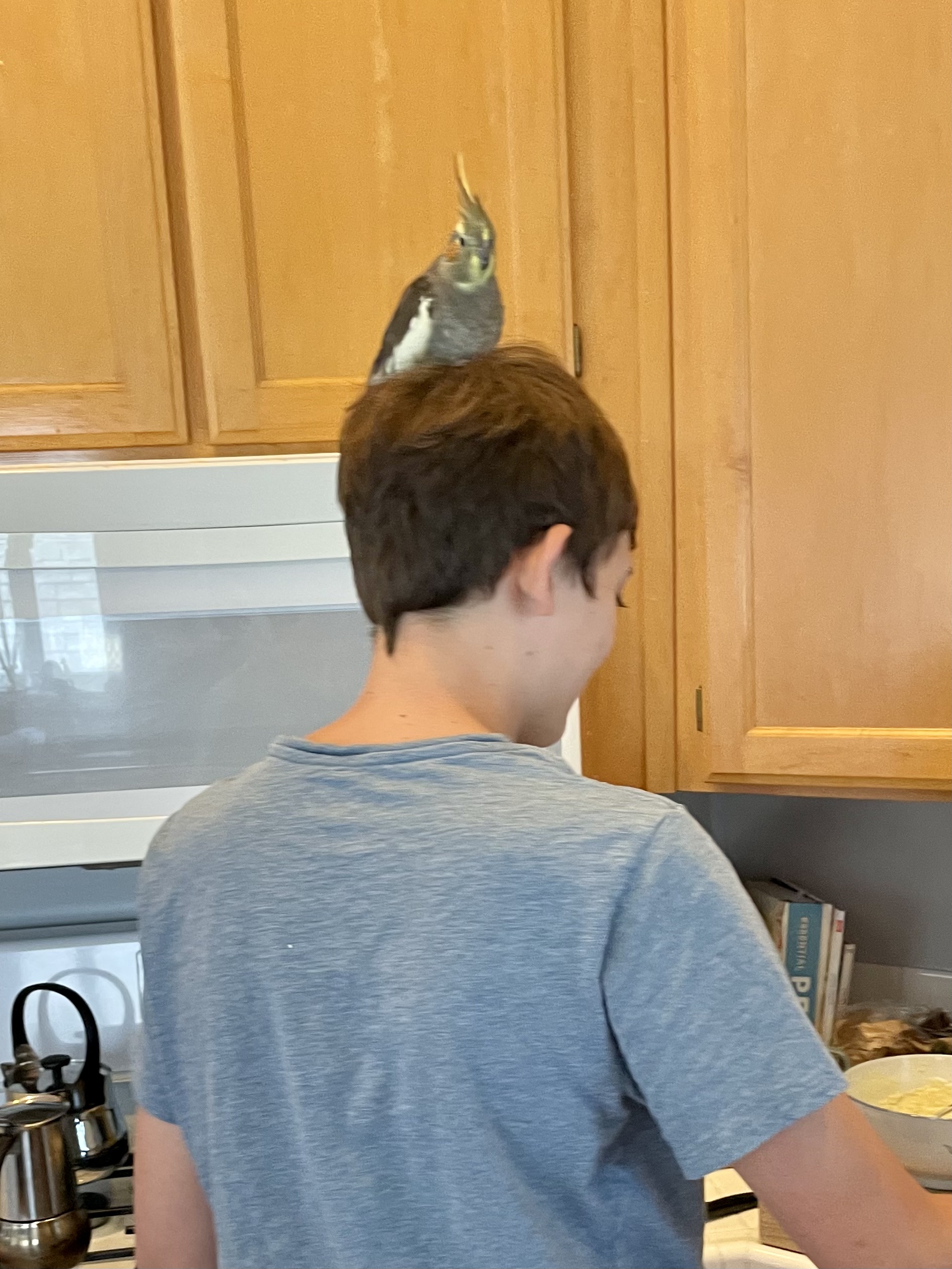
The bird in closest proximity, my son’s pet bird.

I listen to a lot of Vinciane Despret these days who speaks about the creative drive in relation to birds and the dead. She describes when a bird dies on the surface of the ocean it feeds life down into the depths of the ocean floor, and that for the natural world the ethical responsibility is that being alive gives existence to others.

Writing, a story, then puts words in a certain order to bring something into existence that was formerly a blank space on this screen. And some of us know that an animal can leave a similar trace, Despret describes, as in the way birds manage time with song, or a wolf paw print in the mud leaves pheromones. She adds, these traces are just the beginning of a story. And these are ephemeral stories (my favorite artists play with ephemerality), just like an oral history but no less important than the ones written down. She asks us, what capacities did the bird or the wolf have to acquire in order to live with each other. And as my great aunt Marguerite reminds us, what did the 5 generations of people before me enact upon each other, and is in turn enacted upon me?

Forgive me as I use more of these words to sweep up the mess of words I am creating.

Sometimes, the words people send me, the feathers they find, the scribbles, underlined passages, my memories of their presences and absences: they swirl into words and form a clearing where I glimpse the hidden pattern of things. And before it slips away I have to give testimony: these words, the paint, the connections we have, they all play upon me, just as pianists describe how a piano at some point plays them. Just like Alice, now gone, is still in my words reverberating here. Just how the birds in the field this morning made me late to the studio, where I hear the upstairs woman raging from her cage. And how my son chirps like his pet bird when he makes a bid for my connection.

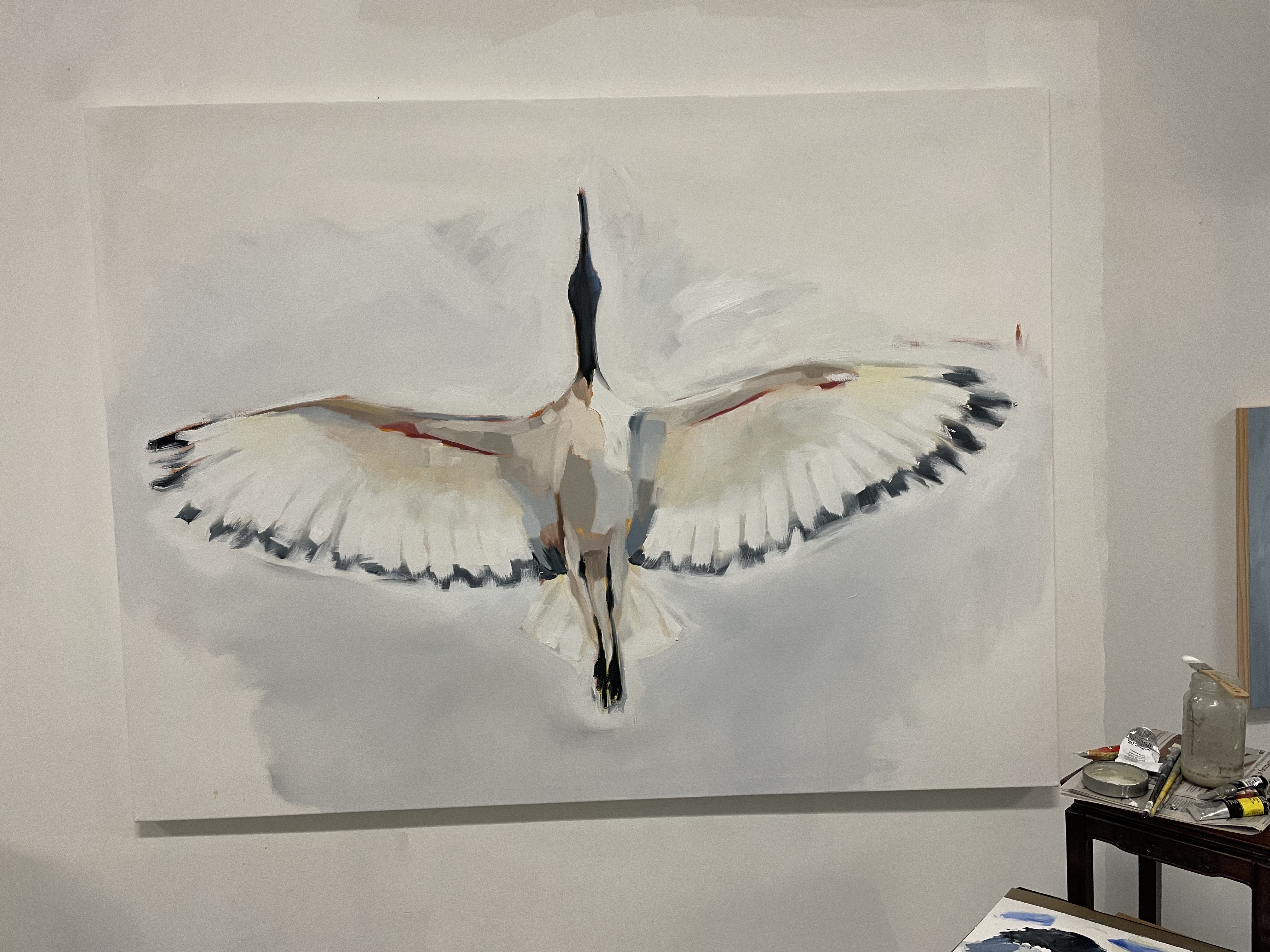
A painting in progress, 2023. Summer Mei Ling Lee.

What is wondrous is that there are luxuries and gifts that you and the birds have shown me. That a feather is for warmth, but it doesn’t need to glint in the sun as metallic blue only for survival. And when Caroline sends me the image of one fallen along her walk, there is a ballooning of connection to her and all things. As is when Nathan says the birds outside his home were reflected inside and every line of writing he has lovingly sent me. The image of a list of every creature that Eva painted onto a hidden board of a home she was leaving forever: There is pleasure in singing — and no, not every part of a song can be minimized down to utility or survival. If you have ever heard a bird sing outside of mating season, after a cold night when the low sun casts warmth, even before the bugs start rising, you know. What is extra, luxurious, is beauty. And now, through these words that will up and disappear, I can see some inkling of the productivity of my life, never measured by wage or even number of paintings, or for sure approval. I count “birds” because it reveals a network here available to me and those I love, but really available to all, some discovered beauty in living and singing it. And we never know for sure how it sinks to the bottom of an ocean and feeds another soul. (And if you have followed me this far you know this is not a beauty of artifice). I want to measure my life in terms of this beauty. “Life, she loves living.”

Picture of a bird I sent Alice on her bookshelf, 2017.

“The subject is only the transient addressee of a verb which seizes them.” — Donna Haraway

“What the river says, that is what I say.” – William Stafford, Ask Me.

01 Tuesday Aug 2023

Posted by summermlee in Aesthetic philosophy, Art, Birds, Nature, philosophy, poetry

≈ 5 Comments

Tags

Ask Me, bird-watching, birds, birdwatching, George Steiner, giotto, grief, grieving, Love, painting, Summer Mei Ling Lee, Szymborska, Takeyoshi Nishiuchi, William Stafford, wonder

591.

A bird took me by the wing once. Pregnant and in pain, afraid for the baby and afraid for me, I was trapped in bed and wanted to sleep away the remaining prison term. One night, a snowy white Egret visited me in my dream. I locked eyes onto how luminous she was even in the sheer darkness. I followed her up and out of my room, up the stairs, through the shuttered window and into the dense fog above my house. As if such wonder could be contained, I took stock of the immensely opaque ocean air, and then my thought of well, now what? immediately ended the ascent. With the heaviest of thuds I arrived back in my body, into the discomfort of being a body again, and incredulously awake from the dream.

I didn’t know that memory was what I was going to write. But maybe it appeared because along my commute here to this place I remembered he told me once: to be human, we must renounce paradise and accept ourselves as fallen.

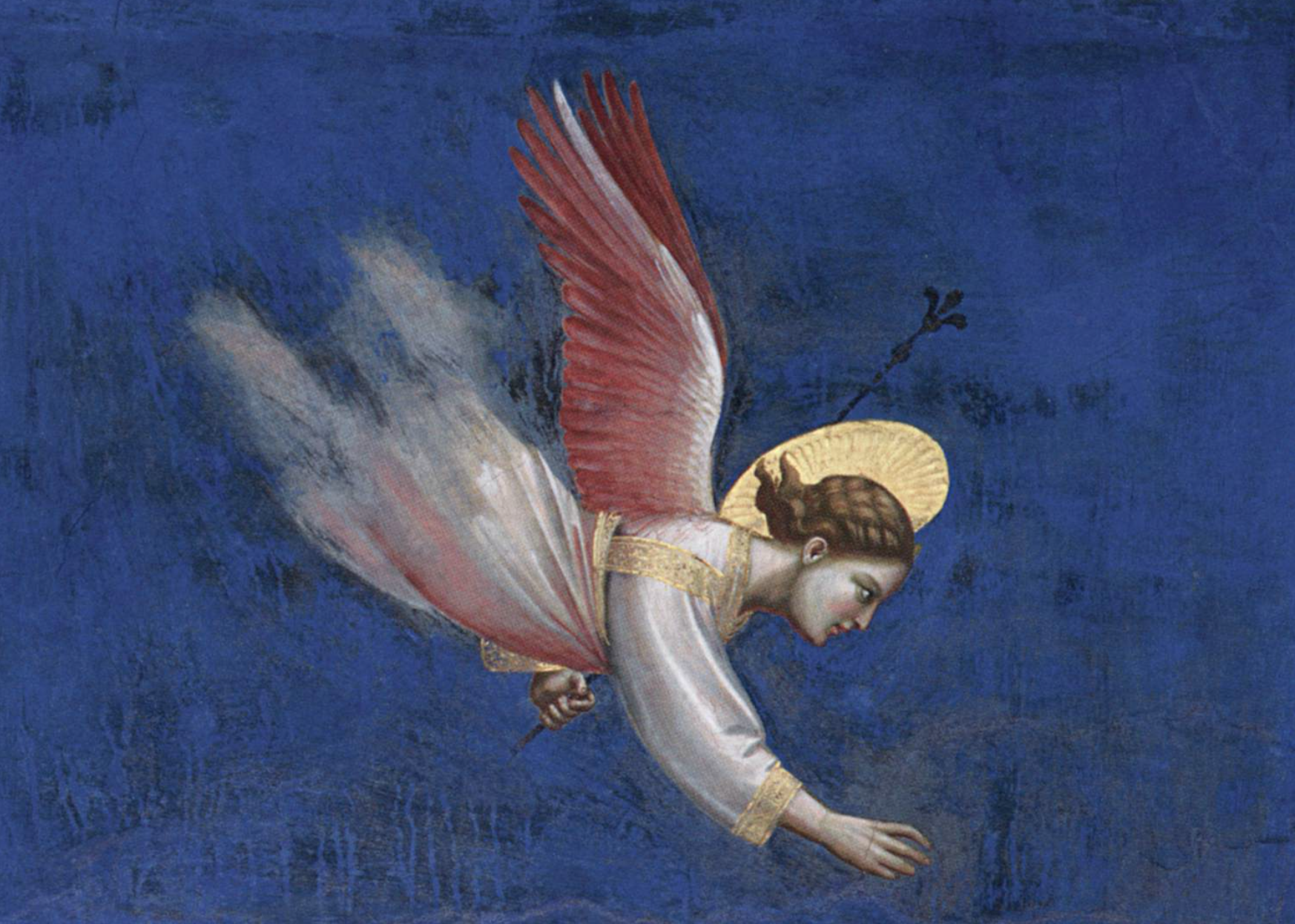
(Giotto, 1302. Scrovegni Chapel, Padova)

I can’t write about what I wish I could write about, but I could write about fallenness:

Her aggression hiding the need to be lovingly reassured. How I wanted to give him more love in the last hours than I had the rest of my life, and how there are no other words for it. How one evening we are laughing and she is a tipsy teenager again with lit-up Elton John glasses, and the next evening she slips below the water line and is gone. One week he asked me to teach his course for him because he knew I understood everything, and the next week I cannot fathom why he could take his last breath from himself. How such love and pleasure could follow in the year of someone else’s disappointment and regret. And just a few days ago, she tells me she witnessed a scene of a bird attacking a raptor who was in turn attacked and fell dead to her feet. We both knew what this meant — and just now, I receive some iridescent feathers she has sent me in the mail, from 2773 miles away.

But maybe most interesting of all, the little winged angel on the wall of the 14th century chapel, an angel whose bottom half is scumbled out with gray paint. As if to show we can try with paint or words to describe that dimension, and then as a result, something bigger than us, something more knowing than we are, arrives.

I don’t know what the 600th bird will be. 500 was the Bee Eaters from Africa who summer up north near the farm of the women who took me in, sick, a little lost, and with two sweet but wild boys. In the evening as we are eating in their garden, the Bee Eaters fly over us as if they are unscrolling stars on the chapel ceiling. Excited, they then yell to me in Italian and I don’t understand what they are saying, but it is to make sure I see them as they do — and something about how when I arrived, Summer arrived too. And then again, a year later, they tell me the Bee Eaters have arrived, and now they know, so will I.

I have no way to count the returning ones. It could be unending, they are events only half-way through.

And for those who followed me this far, and you don’t understand it all — I love you for it. I have hope that the nearer I am to it, the more mysterious it is. The more painful and yet the more beautiful. It just takes you by the wing.

This is why, for now, I am not afraid of the technologists who are coming after us with their machine-learning algorithms. Their logic cannot follow a bird that glows in the dark and flies into a house and through walls. Not just because the death of art is translation, he tells me, himself from behind the veil. But also because you and I still feel the “intolerable burden”, the beautiful burden, of the presence of something Other, and some of us have merely forgotten.

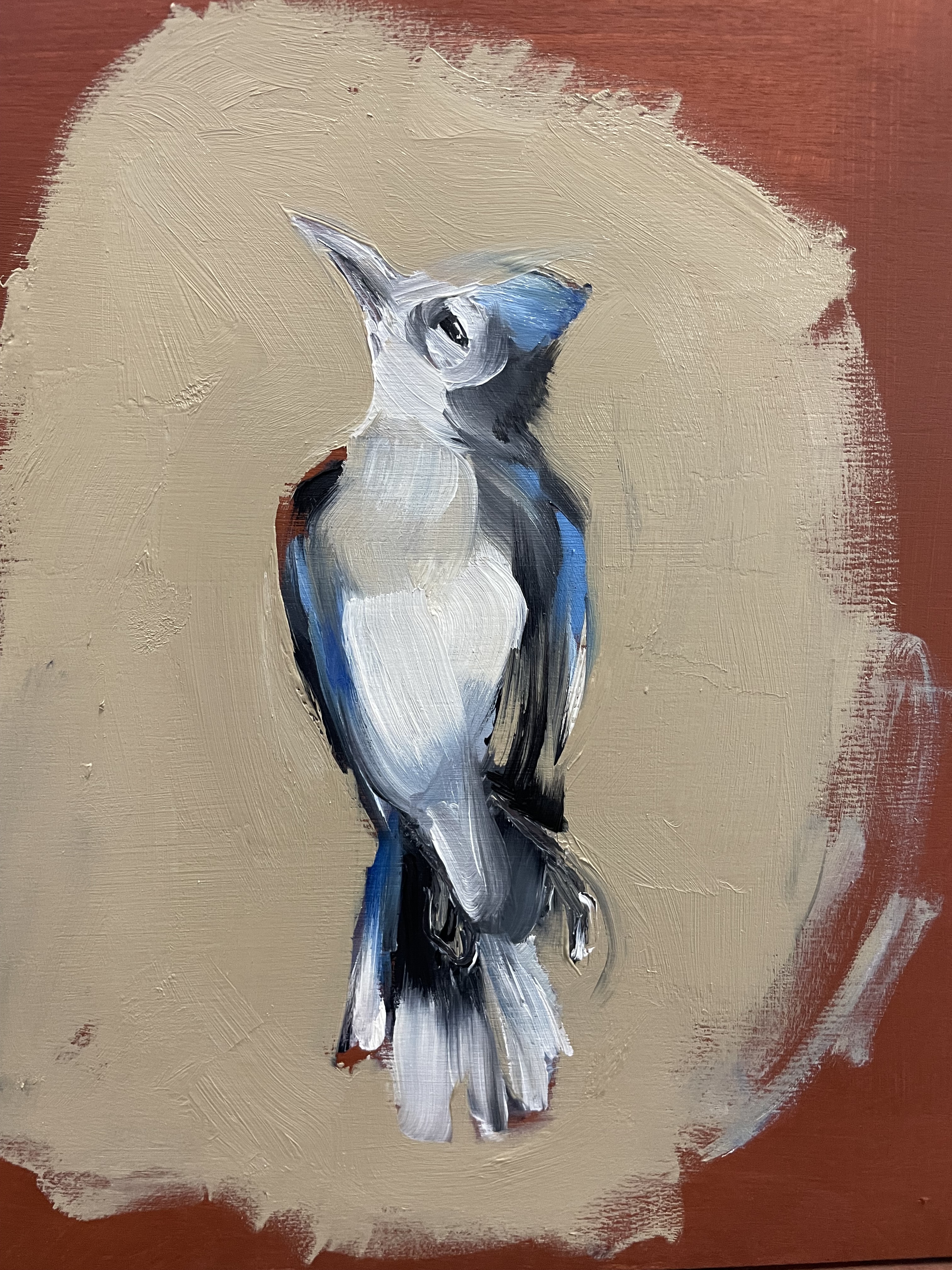
(Oil Painting of Leah’s bird by Summer Lee, 2023)

“Some time when the river is ice ask me

mistakes I have made. Ask me whether

what I have done is my life. Others

have come in their slow way into

my thought, and some have tried to help

or to hurt: ask me what difference

their strongest love or hate has made.

I will listen to what you say.

You and I can turn and look

at the silent river and wait. We know

the current is there, hidden; and there

are comings and goings from miles away

that hold the stillness exactly before us.

What the river says, that is what I say.”

— William Stafford, Ask Me.

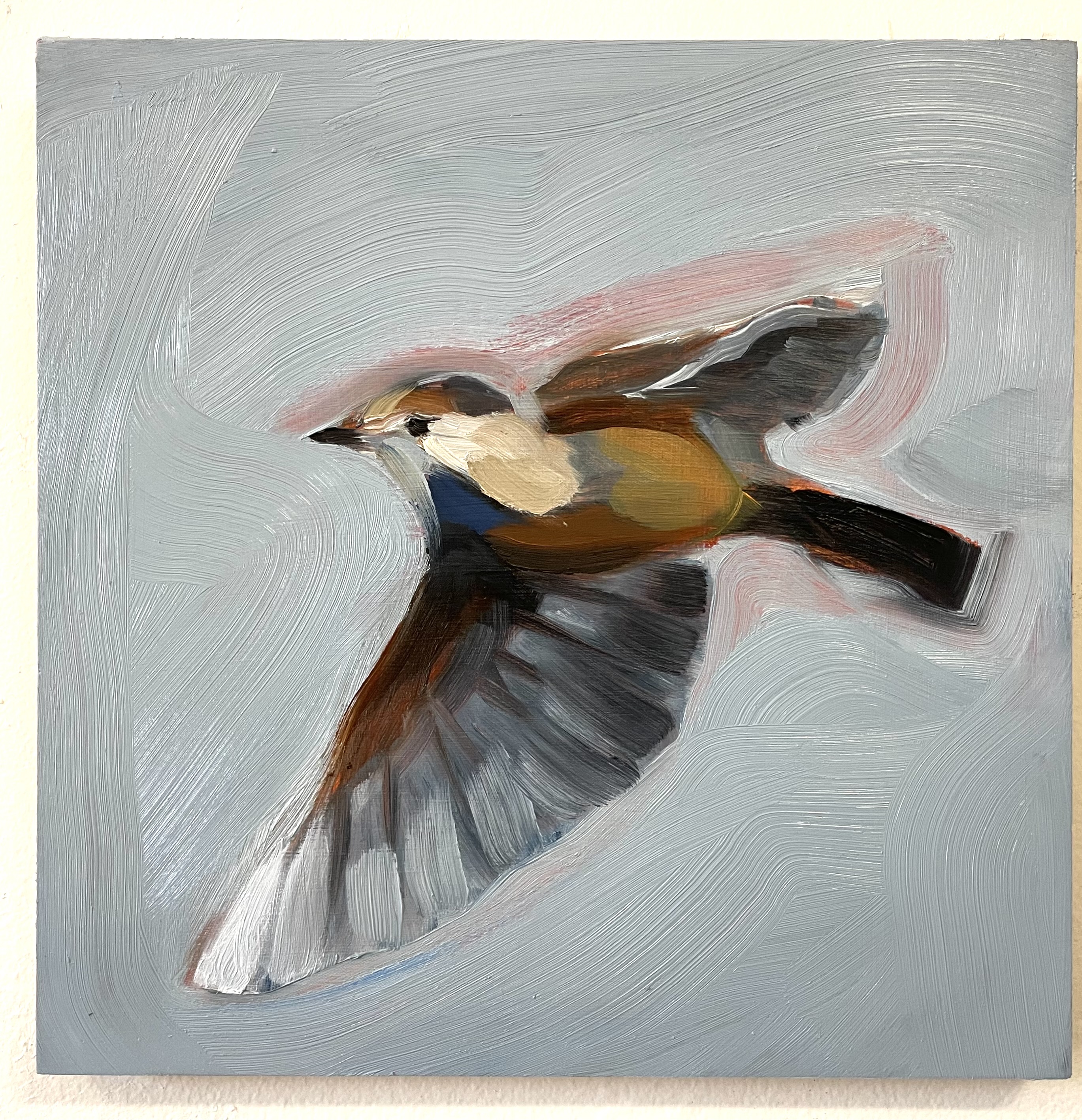
(Oil Painting by Summer Lee, 2023)

“The Infinite Cage” — Joron

07 Tuesday Feb 2023

Posted by summermlee in Aesthetic philosophy, Art, Birds, Nature, philosophy, poetry

≈ 5 Comments

Tags

art, bird watching, birds, birdwatching, death, Home, memoir, migration, nature, painting, philosophy, Photography, poetry, Summer Lee, Summer Mei Ling Lee, words, writing

(With a few words in a note to me, she tore open the blank space here, and asked me to write again. Her gesture brought tears, in both senses of the word, and so it starts with tears — because it involves breaking the icy river, the cowardly reluctance to thaw it, to think it isn’t always flowing underneath.)

(Santa Croce ceiling bird.)

Beauty, Nathan reminds me.

What of my small experiences wants words to land them here. What birds would touch down from untouchable sky in order for me to see them, count them, photograph them, devote myself to them.

Because now these birds seem wild and unbelonging like the work that sits months waiting for me in my studio.

Last week we made a strange reunion of local birders on the back porch of a stranger’s house, to peer over a fence into the neighbor’s yard to glimpse a young Summer Tanager eating desperately at the feeder. He was undoubtedly wayward and far from home territory because of the onslaught of coastal storms. We were welcomed into that space and to each other, with only a quick mention of the mass shooting that had happened the day before shattering our small town. Then, the bird arrived, and as Eva describes, we wandered into the center of the circle of wonder. Summer Tanager was the greeting.

How often I delude myself to be disconnected from it all. And as Eva exclaims more loudly, impatiently, because the most obvious is the most difficult — we are always in the circle of wonder, never outside it — and we can indeed find center. Never by our own narrow volition, but by wandering.

(Red Phalarope by Summer Lee, a pelagic bird brought inland by storms, 2023.)

But I want words for those birds, those moments — not the ones where I tenderly helped unclench his fingers from the hospital bed, or the impatient coldness I can turn towards my own children, or how exhilaration smothered grief when driving away from her hopeless apartment for the last time. Not for the woman who rocked her body in prayer before every beautiful dinner she served and told me, this is not the life I expected for myself. And even still, not the gift of my children’s joy that persists despite me, or how I can burrow into the surrendered miracle of my new, unexpected lover.

Somehow there should rather be words for the Virginia Rail that crept out from its perennial hiding place to the spot below the window of my car. And how we caught eyes, one being welcoming another.

The people in that odd backyard meeting, with undoubtedly their own sufferings and joys, would understand. The Virginia Rail is basically all we talk about for hours and hours, even though long ago and long gone — until the next improbable Beauty arrives. And of course, those far away but close to my heart who send me words fluttering down from the sky, out of nowhere perfectly on time — thank god they understand too.

(The Virginia Rail. January 2023.)

In these birds, these words, these friends, I know is the paradox of faith, and how it takes care of us by destroying us.

I will taper down this roughly thawed cascade of words to say that 77 unique species of birds have visited my yard in the 20 or so years I have lived at this home. And I wonder about what I missed in the times I drifted away. Once a group of us chased a vagrant Dusky Warbler across a field of dried fennel, a man’s long camera lens thunking against my head to capture the bird, preventing me from photographing it well. The bird flew off confused, and we stayed to celebrate, for me the 560th species. A bewildered boy next to me scanned over the expanse of chaparral and said, just think how many dusky warblers might be out there and we would never know.

(The Dusky Warbler)

So maybe in my silence, where words haven’t been, is a backwards way to acknowledge some secrets. Not about the “yoke of perishing” we come into being with. More like finally seeing the Prairie Warbler next to the local sewage plant. That time, it took minutes to see his yellow light darting in the scrub, when the year before I spent weeks, thousands of miles away, to no avail. How some things will always escape, even as I am coming closer and closer, and reveal secrets of me that are unknown to myself even. Dufourmantelle cautions, mystery is not an enigma to be solved but prayed to, and truth is only a veil.

“Endure, o mystery of being, so that I might pull threads from your veil.” – Wislawa Szymborska

“We are in the midst of reality, responding with joy.” — Agnes Martin

23 Sunday Jun 2013

Posted by summermlee in Aesthetic philosophy, Art, music, Nature, philosophy

≈ 8 Comments

Tags

Agnes Martin, art, chapel of the chimes, death, Garden of Memory, George Steiner, Heidegger, painting, summer solstice

A year later and I am back visiting the dead, this time questioning the responsibility of putting new life into the world.

Weaving in and out of the crypts and private chapels, the walls are lined with vessels holding ashes, shelves holding caskets, and the letters of names. It takes a strain of my imagination to fill-in the entire arc of a life that now sits in mostly forgotten urns, placeholders. Once behind the names were fleshes of personality, interactions that effected causality, relational change, consequences in the environment, impressions on the psyches of others — and then they were gone. Except for a spot in a tiny little box aside thousands of others, now also mere words.

Painting by Agnes Martin

(Painting, “Tremolo,” by Agnes Martin, 1967.)

This year, it struck me that the cast of musicians performing here and there among the dead were stand-ins, intermediaries. They attracted hordes of the living into this solemn place on the longest day of the year to challenge the human aloofness towards the dead, to weigh the untranslatable meanings behind those words. With mixed success. Even though evidence of death towers on all sides, our finite narratives and rehearsed terminal endings at the end of every sentence — we remain distracted from our own dying.

We committed to one dark grotto of those born in the early 1800’s. A professional cellist sat inside with her laptop and synthesizer. Sometime while she was tuning her cello and tapping on her laptop, it dawned on us that she was in high performance. The ambiguous noises were experiments against the classical instrument’s boundaries: a stutter and screech here, a falling note there, a computer’s response, and the cellist’s retort. When she finished her “tuning” performance and nodded her head to applause, we understood that the provisional and dissonant duet between cellist and computer highlighted the aleatory relationship between existence and not-existence — and was indeed beautiful music. As Steiner says, art reminds us that there is something rather than nothing, only by virtue of grace.

The scene seared into my heart the ruminating words I had read that day of my dear friend’s husband having only days to live. They were going down their road until a few weeks ago, their life was sideswiped by illness and overturned into a tragic twilight. At home in hospice care, they are surrounded by friends and family who improvise themselves into a blanket of love and support for his last moments. There is no score or predictable soundtrack here. Nor, as Pamela says, is this life a dress rehearsal. But at best we merely hear the music at all.

Painting by Agnes Martin

(Painting, “Trumpet,” by Agnes Martin, 1967)

My friend this evening and I jest that it is just as much the beauty of the performer as it is the melodic tunes (amidst many dissonant-sounding experimental musicians) that has drawn a thick crowd into side room of the columbarium. Sitting on the stone floor in vulnerable elegance, she plays odd, unrecognizable instruments in classical improvisations. And we, the living, over a trickling fountain lined with pertly pink and red impatiens, “watch” her fill the space of the eternally invisible with unseen timbres and undulating wavelengths of passionate percussion. When she breathes into a bamboo flute with an electronic lung holding a previous refrain to which she responds in turn, a strange but pleasing chorus emerges into a rhythm of labored breath, a futile and yet beautiful resuscitation.

(In the stairwell from one chapel to another, we overhear a woman remark that this is what people from the rest of the country think Californians do everyday.)

But the true entrance into me does not occur by that willful anticipation of art, just as much as predicted words here do not alight, but sink. Instead it happened when an unexpected noise entered the back of our music-filled worship. It announced the entrance of a young, disabled girl with the cognition of a child ten years younger. She burst into this delicate space, hugging a 3-foot Barney and two teddy bears, and proceeded to march directly to within inches of the musician. The performer was startled but without missing a note, welcomed her softly with her eyes. And the girl of a strange grammar, much to my held breath’s relief, plopped herself front and center with no further histrionics. While the music pulsed along, the girl’s father sat down in the back, occasionally waving a connective hello to his girl. But she is now entranced by the familiarly foreign music, playing seriously with one of the bear’s ears — because afterall, this is about our ears.

And I, the helicopter parent, who constantly restricts my exuberant son in a cloying distrust and tiresome fear of violating the perceived comfort of everyone around me, orchestrating him here and there so as to fit who-knows-what expectations, I succumbed to this scene. Yes, a carnival of existence among the backdrop of non-existence, of Nothingness — but mostly of trusting surrender. There in front of the dead, the distracted living, too — and because of the little bit of life under my domain that is there despite me — my heart busted itself into tears.

“As the shrine of Nothing, death is the shelter of Being.” — Heidegger

Painting by Agnes Martin(Agnes Martin’s last painting, “Untitled,” 2004)

“One can never pretend to comprehend completely –: that would disrespect in the face of the Unknown that inhabits — or comes to inhabit — the poet; that would be to forget that poetry is something that breathes; that poetry breathes you in.” Paul Celan to René Char

21 Sunday Apr 2013

Posted by summermlee in Aesthetic philosophy, Art, Birds, Nature, philosophy, poetry, Uncategorized

≈ 7 Comments

Tags

art, death, Leigh Hyams, painting, Paul Celan, poetry, San Miguel de Allende, Stephane Mallarme, teachers

Since I was the youngest by 3 or 4 decades, my traveling companions were relieved it was me who, drained from travel and the stifling heat (and a sip of the local margarita), interrupted pleasantries to declare that I might pass out. Our host for the week escorted me to the warm cement sidewalk of a dirt street outside the humble restaurant and waited until the cool breeze of the desert night revived me. She asked me polite questions, mostly trying to ease my embarrassment, but also to indirectly resolve how it is that at not even 30 years old, I had become close friends and travel companions with a cadre of women in their 60’s.

The babel of barking dogs woke me the next morning, which was after the night of dreaming she came to hold me. Somehow, the dark sensuality of this woman a half-century older did not alarm me.

In the morning painting session, I start with images and colors I have known before, but they don’t cooperate. As I paint canvases full of utterly conventional crap, I find myself at the edge of tears. There in the shade of her turquoise and pink adobe courtyard, tendrils of bougainvillea cling to the walls closing in on me, mocking my vulnerability and failure — like the stuffing has fallen out of my bra and the world sees me trying to put it back.

She sees the paintings and since I cannot dare the gracelessness needed to throw them over the fence,  I wish for once they could tell a lie. She moves like a dancer around them and critiques them with the fists of a boxer. I am politely mute, in turn, hating my own politeness. I want to hate her but she is just the conduit.

Painting. By Leigh Hyams(Painting by Leigh Hyams)

Plus, San Miguel de Allende overwhelms my sensitivity. I know why the dogs bark. All of them trying to simplify and drown out the brightly jarring colors, the incessant music from blocks away, the dead heat, the spirit voices, the craving for something other. The unreachable ocean.

The next night I dream that my neighbor’s contractor tears out my yard. All my cherished plants are missing, upturned soil exposes eviscerated roots. I experience an abyss where there once had been logic and rationality. Before hitting bottom, I wake to the pre-dawn storm of bird songs.

My dream is clear to her. She tells me in deep tones and direct terms that this unknown is the place where I want to be. Because of this and the buzz in her words, I start crying as she speaks, releasing all the tears that started bubbling in the courtyard. Tears that were neatly packaged screams against my mediocrity, my mundane banality, my safety. Tears that were cages holding a fearful but overgrown child wanting out into the wilderness. My painter friends look on tenderly, thinking it is because I’m sad. But I am beyond sad or happy, I am approaching otherness.

They think she is only speaking to me.

She says, this crying business, as if to be disdainful and compassionate at the same time, is something that only artists can understand.

I would return years later for an extended time considering the small city, my being in the midst of fertility treatment, and the lack of communication to my home from this gritty, foreign country. I was prisoner again to my own painting in her light-drenched studio, but she was a gentle and stern warden. We had many conversations here and there, aside a parade of indigenous costume-wearing tribes, over breakfasts in teeming gardens, after a dip in the local mineral springs, and hopping along the cobblestones incongruently filling the roads.

Sensing her increased frailty and watching her meticulous devotion to a series of sparsely charcoaled paintings of local ruins — to me obvious elegies to past magnanimous accomplishment — I asked if she was questioning her mortality. She, sitting in the improbably verdant backdrop of a sumptuous, water-filled courtyard garden gleaming in desert light and singing heat, answered with a smile, and maybe a slight disingenuousness: not anymore than I always have.

Painting by Leigh Hyams
(Painting by Leigh Hyams)

Some mornings new art books would appear at my breakfast table, always with unspoken pertinence. I loaned her my copy of Mary Oliver’s recent Evidence — a book of searching poems comprised of terse words around what cannot be buried, even spoken, after a loss, or death.

So I can imagine exactly how it was when she died a few weeks ago. Her bed is overlooking her wildly tended garden. She is arms-distance to her favorite art pieces ranging from profoundly poetic to those with playful certainty, and those, maybe her favorite, continually in serious questioning. I can see the washed out colors of early Mexican spring, feel the light-headed air of the high altitude aggressively dancing with the dust lifted and levitating in her richly alive, medieval Latin city. And I hear a liturgy from the birds of her neighborhood, of course, taking over the tinny brass horns droning from distant radios. The birds alone can accept that someone who loved life so much should have to leave it.  As a consolation, when dawn breaks leaving an emptiness for the rest of us, they send jewels of ephemeral birdsong down to earth to adorn her.

“Toute chose sacrée et qui veut demeurer sacrée s’enveloppe de mystère.” Stephane Mallarmé

Painting, by Leigh Hyams

(Painting by Leigh Hyams)

“Why then do we not despair?” — Anna Akhmatova

17 Monday Dec 2012

Posted by summermlee in Aesthetic philosophy, Art, philosophy, poetry

≈ 2 Comments

Tags

anna Akhmatova, art, funeral, Jay DeFeo, painting, poetry, The Rose, Women

The incense burns itself into the sinuses and forms a memory of her passing and these funerary rituals, so that for at least a few days, the smoky smell is a remembrance of a being who is no longer with us. The fading smell is the inevitable process of honoring a person we eventually can’t remember often enough. Indeed, memory is one way to ease the constant anxiety we future-oriented, unsatiated beings live with. We just can’t hold on.

So instead another image wants to write itself here in the space opened up by writing, by memory.

20121217-155808.jpg

(Painting, “Dove One,” by Jay DeFeo, in the SFMOMA retrospective)

In an orange jumpsuit, he sits across from me in a dingy jail interview cell. He is young, tall, strong, and mentally quite unstable. So in my callow role as his caseworker I make sure to stay arms length from the emergency call button, and closest to the door. It doesn’t help that his movements are abrupt, his voice loud, and he can only speak of fighting others, sometimes even aliens. Ju-Jitsu moves, karate techniques, kicking and punching and more threats of violence. Not towards me, though. He just wants me to hear him, I begin to understand, but attempts towards conversation provide only bizarre digressions that stubbornly return to more Ju-Jitsu talk.

It’s our third such meeting, and I bring my colleague, for safety, yes, but also because I want a witness to his instability and any insight as to why I was making no real progress with him. This time, I decide to just listen, leave my intentions and fears with my colleague sitting in quiet interest next to me.

As usual, he begins his intense litany of karate stories, of people he once punched and kicked. But suddenly, in a moment I’ve only since experienced as artistic inspiration, in a moment of self-forgetting, I have joined him. His language appears to me as a simple story-telling code. And just as I am about to weep at his stories of years in foster care and institutions, at his outpouring of traumatic recall, my colleague breaks her silence to remind him that violence is not ok. It is then I realize I had slipped into his world without her and she does not understand the code. Her words transport me back to where he is that man so strange, intimidating and inaccessible to me. To everyone.

Like the moment I stopped planting seeds in the shelter garden because a Korean resident wants to show me using gestures how she and her family had crouched under tents on their farmland in the rain, when they lost their home to war. And how our gardening together healed something, I will never know.

And how it is that a vast canvas holding 1500 pounds of gobs of oil paint and the aura of 8 years of creative toil, can also yet contain in a breath-turn the most fragile, most unearthly of passages. The same fragility that recalls the image of a woman finding refuge from military invasion inside a temple. She is mortally injured, parts of her body are missing, and it is there she nurses her baby.

In my mind she will stay there like the sentinel that is Jay DeFeo’s Rose standing guard over us. Because if you have followed me this far, you also understand she must, no matter how painful it is.

In the metaphor of gift-giving, there exists no stronger, no more difficult example.

Fortunately, there are easier exchanges, like the smiles of my friends, my fellow colleagues, as we chant together in the incense cloud hovering over Tu-Minh’s mother’s funeral. These are the same faces that appear to me in memories of my own family funerals. That some people are so indelibly present, heart-burstingly present, in the reel turning out life events.

Such is the mark of women drawn to a certain kind of work, how to describe it, I’m not sure. Yes here I’ve made some words for it, but they don’t hold, like the leaves of paper money falling behind our funeral procession into the winter wind.

And the miraculous comes so close
to the ruined, dirty houses —
something not known to anyone at all,
but wild in our breast for centuries.
— Anna Akhmatova

20121217-155835.jpgP

“Believe in the holy contour of life.” Jack Kerouac

05 Friday Oct 2012

Posted by summermlee in Aesthetic philosophy, Art, Nature, philosophy, poetry, Uncategorized

≈ 5 Comments

Tags

art, Heidegger, Jacques Prevert, painting, poetry, To Paint a Portrait of a Bird

Pour faire le portrait d’un oiseau

— Jacques Prévert

Peindre d’abord une cage
avec une porte ouverte
peindre ensuite
quelque chose de joli
quelque chose de simple
quelque chose de beau
quelque chose d’utile
pour l’oiseau
placer ensuite la toile contre un arbre
dans un jardin
dans un bois
ou dans une forêt
se cacher derrière l’arbre
sans rien dire
sans bouger…
Parfois l’oiseau arrive vite
mais il peut aussi bien mettre de longues années
avant de se décider
Ne pas se décourager
attendre
attendre s’il faut pendant des années
la vitesse ou la lenteur de l’arrivée de l’oiseau
n’ayant aucun rapport
avec la réussite du tableau
Quand l’oiseau arrive
s’il arrive
observer le plus profond silence
attendre que l’oiseau entre dans la cage
et quand il est entré
fermer doucement la porte avec le pinceau
puis
effacer un à un tous les barreaux
en ayant soin de ne toucher aucune des plumes de l’oiseau
Faire ensuite le portrait de l’arbre
en choisissant la plus belle de ses branches
pour l’oiseau
peindre aussi le vert feuillage et la fraîcheur du vent
la poussière du soleil
et le bruit des bêtes de l’herbe dans la chaleur de l’été
et puis attendre que l’oiseau se décide à chanter
Si l’oiseau ne chante pas
c’est mauvais signe
signe que le tableau est mauvais
mais s’il chante c’est bon signe
signe que vous pouvez signer
Alors vous arrachez tout doucement
une des plumes de l’oiseau
et vous écrivez votre nom dans un coin du tableau.

——–

To Paint a Picture of a Bird

First you paint a cage
With its door open
Then paint
Something nice
Something simple
Something lovely
Something useful
For the bird
Then set the canvas against a tree
In a garden
In a grove
Or in a forest
Hide behind the tree
Without speaking
Or moving…
Sometimes a bird arrives quickly
But equally it may take many years
Before it chooses to
Don’t be discouraged
Wait
Wait many years if needed
The speed or tardiness of its arrival
Has nothing to do
With the success of the picture
When the bird arrives
If it arrives
Observe the most profound silence
Wait till the bird enters the cage
And when it has
Gently close the door with your brush
Then
Erase all the bars one by one
Taking care not to touch a feather of the bird
Then paint a picture of the tree
Choosing the loveliest branches
For the bird
Paint the green leaves too and the wind’s coolness
The dust in the sunlight
The sound of insects, in the grass, in the summer heat
Then wait for the bird to choose to sing
If the bird won’t sing
That’s an adverse sign
A sign that the painting is bad
But if it sings it’s a good sign
A sign you can sign your name
Then very gently you’ll detach
A feather from the bird
And write your name in a corner of the painting.

“We never come to thoughts. They come to us.” Heidegger
← Older posts

Enter your email address to subscribe to this blog and receive notifications of new posts by email.

Join 618 other subscribers

Recent Posts

  • “The terrifying groundlessness, the eradication of all violences. To be embraced by that which doesn’t know us and in that unknowing caresses us and truly loves us. We might become anything at all, something wildly other than what we are encountered by. A world that truly loves us by not presuming what we want or what shape we will take before we show up… We will be held when we are not known from the start.” — Dr. Marquis Bey
  • Images dream within us, a reverie is a world of expansion.
  • “For the natural world, the ethical responsibility is that being alive gives existence to others.” Vinciane Despret
  • “We meet in the freedoms of each other.” – Takeyoshi Nishiuchi
  • “Those with wings, those without, / the ghosts of the heart / — whose hunger is a dress for my song.” — Brigit Pegan Kelly

Archived Posts

Blog at WordPress.com.

  • Subscribe Subscribed
    • Unwanted Advice: Reflections from a Self-Appointed Life Counselor
    • Join 214 other subscribers
    • Already have a WordPress.com account? Log in now.
    • Unwanted Advice: Reflections from a Self-Appointed Life Counselor
    • Subscribe Subscribed
    • Sign up
    • Log in
    • Report this content
    • View site in Reader
    • Manage subscriptions
    • Collapse this bar

Loading Comments...