Tags
art, birding, birds, birdwatching, death, Loss, Memory, nature, Paul Celan, philosophy, Photography, poetry, Shakespeare, Summer Lee, Summer Mei Ling Lee, Vinciane Despret, wildlife
681.
To measure a life from the periphery.
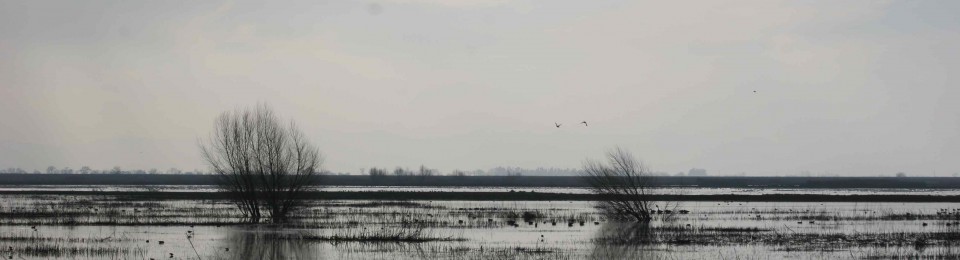
The periphery is where birds live now, eking out existence in our built environment. Vinciane Despret also explains the periphery as where two conflicting demands can be held together in a vitalization resulting from those clashes and stimulation. It is where birds sing their territory. It is where nature and human modernity meet. It is the veil through which we mortals greet our disappearance. In its intensification of the things that aren’t yet perceived, the periphery is the place of artistic creation.
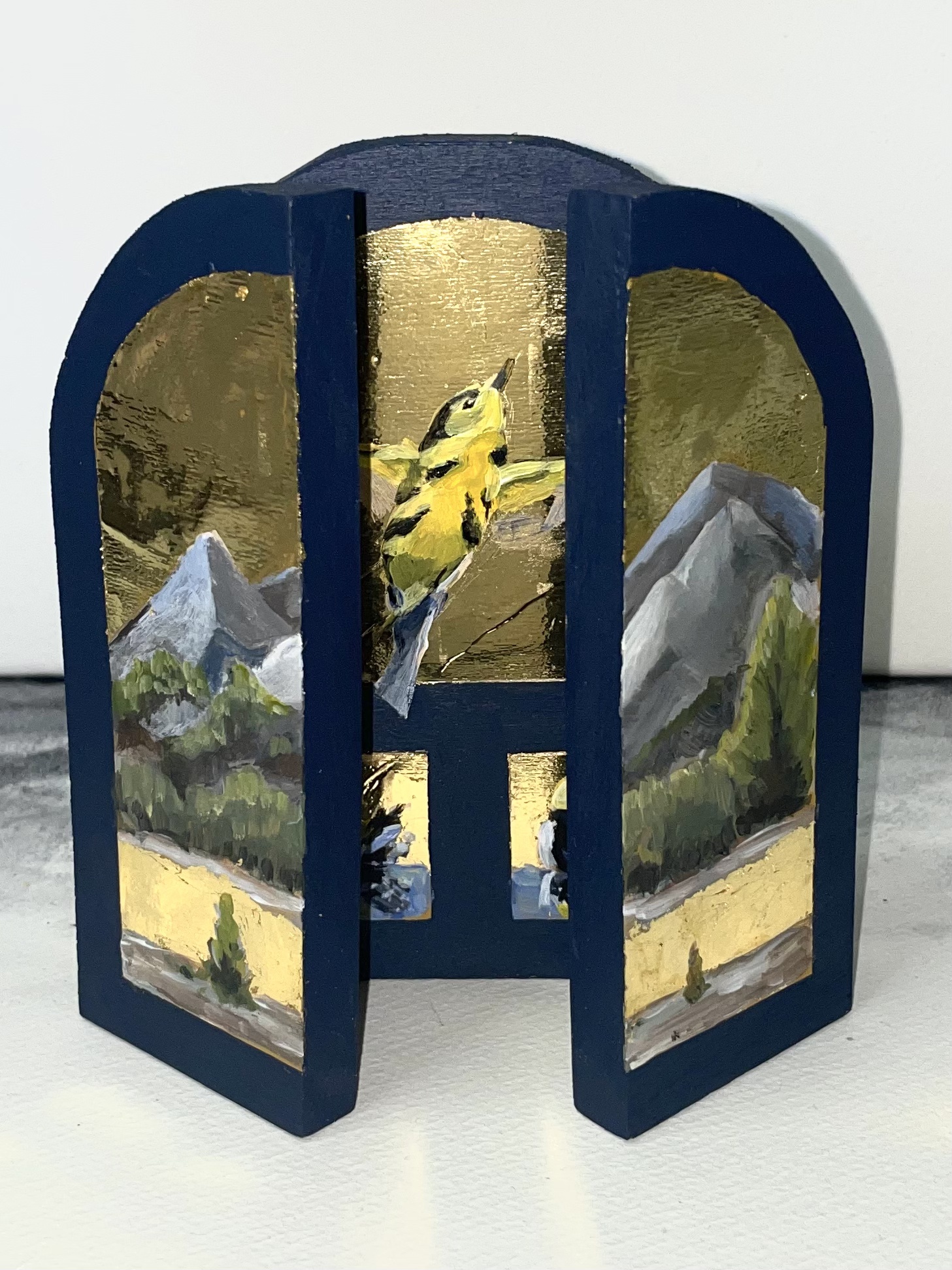
Once I was at the periphery where on one side I would be ok, the other I would not. The place one arrives to after the loss of beloved things, which mostly reveals the limitations of my scaffolding and confabulations. I ended up in her office. She was a midwesterner, a plain and small, older woman who had come out of the managed healthcare system. I plainly admitted that my terror was that I couldn’t be helped.
The best healers do not make interpretations behind the backs of their patients. They resist the “simulacrum of intelligence on the back of the stupidity of others.” There on that clinical couch of her spartan and chilly office, just when I trembled in the anxiety of being a lost cause, she rolled her chair towards me and she reached her hand to firmly hold mine. She said sternly and confidently that she could help me. By grabbing me, she broke through that boundary of professional etiquette. But even more I registered that she didn’t know she was going to do that. She had the strength to answer to the moment. And that spontaneous responsiveness was real strength that no one can train for or read about or theorize.
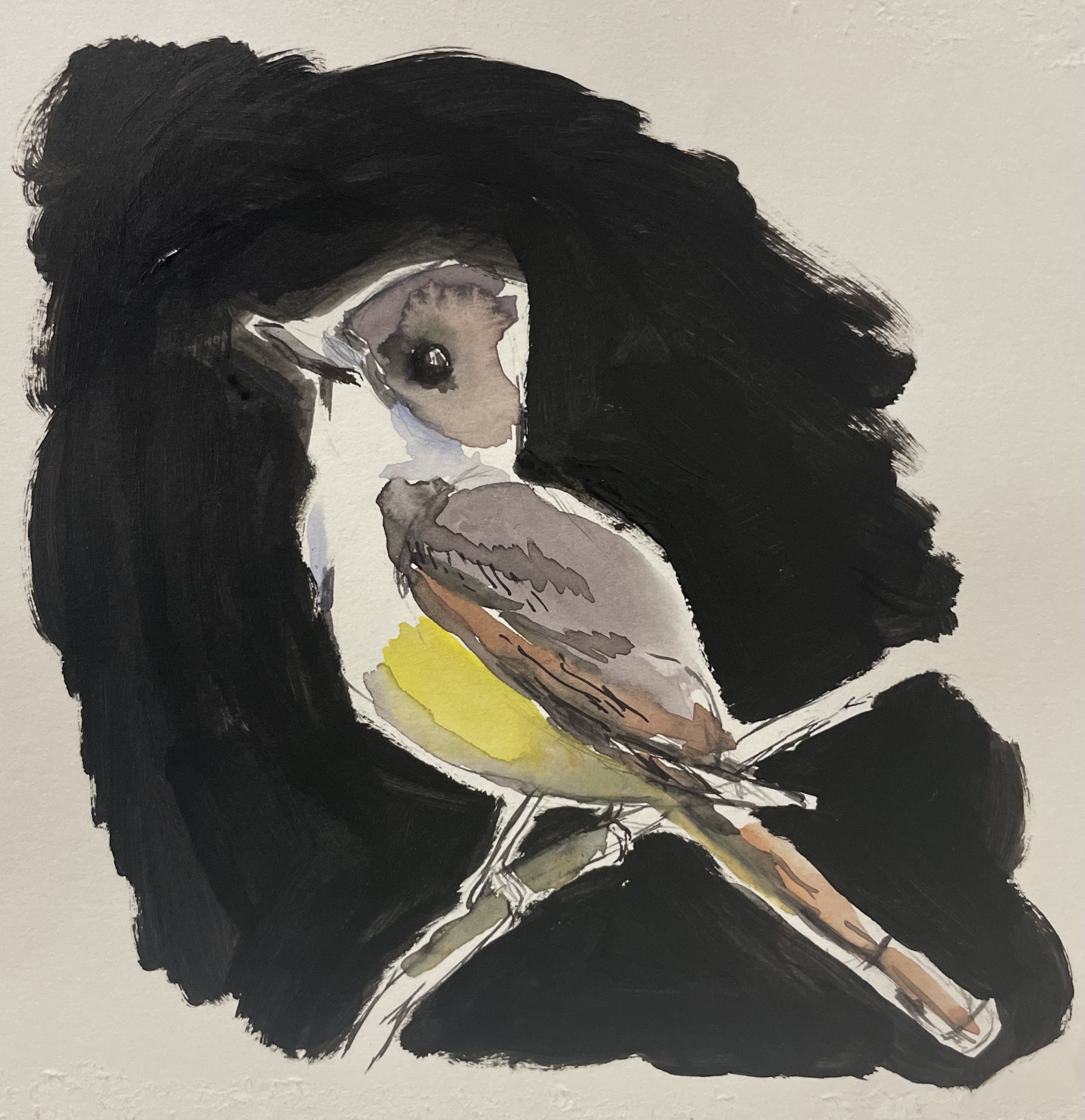
After 10 years of seeing her, and after the last three years of nudges to fledge me, her cancer returned. She retired and flung me out into the wilderness. There is nothing more I could say or ask for — there is nothing left to explain. I drew a bird and sent it to her.
I might have been satisfied by the 35 or so anytime in my yard, but this past year I saw 277 different species of birds, right here in my own county, where I was born and raised. I saw 481 different species everywhere I wandered off to. In perspective, this year there were 4 other birders in my county who saw more birds than I did, and hundreds who saw more than I did throughout the world. Still, I abandoned myself to an attention that brought me into an intimacy with my native land outside my immediate yard.
This native land consists of precise sachets of memories as much as ecological specialization. One particular species of gull prefers one beach over the others, because the fresh water they need to survive pours into the ocean where the sands are flatter and can host more crustaceans they are specialized in eating. It is one beach out of dozens where we sifted through hundreds of gulls to try to find one rare gull, the first Siberian visitor to the continental US. It was the same beach where I was many times a near-hypothermic child who couldn’t resist the Pacific water tumbling over my feet, watching the sand bubble up where those crustaceans bury themselves before the next wave.
For 7 years in a row, Tufted Duck, off-course from Europe, wintered on a pond near an athletic club, where for our last day of high school our entire class spent the night, one last time together, signing yearbooks and playing ping pong. And then the next morning we dispersed into the rest of our lives. This year, Tufted Duck did not return.
While I was in the void 30 miles west on the Pacific Ocean, far from any landforms on the horizon, looking for migrating Arctic Terns and Sabine’s Gulls, thousands of dolphins suddenly broke the surface of the water as far as one could see. Just as quickly as they had rendered us ecstatic, they disappeared back into the void.
And along the ridge on which at 16 years old I first kissed a woman, there is a migratory path for Varied Thrushes, and when we were greeting them, a species of Crossbill touched down into a small pine in front of us — Cassia Crossbill, for the first time ever recorded, had immigrated into my county, crossing over the Sierras from its decimated forests of Idaho. The only way to know is by recording their calls and sending it in for confirmation from those who obscurely dedicate themselves to such distinctions.
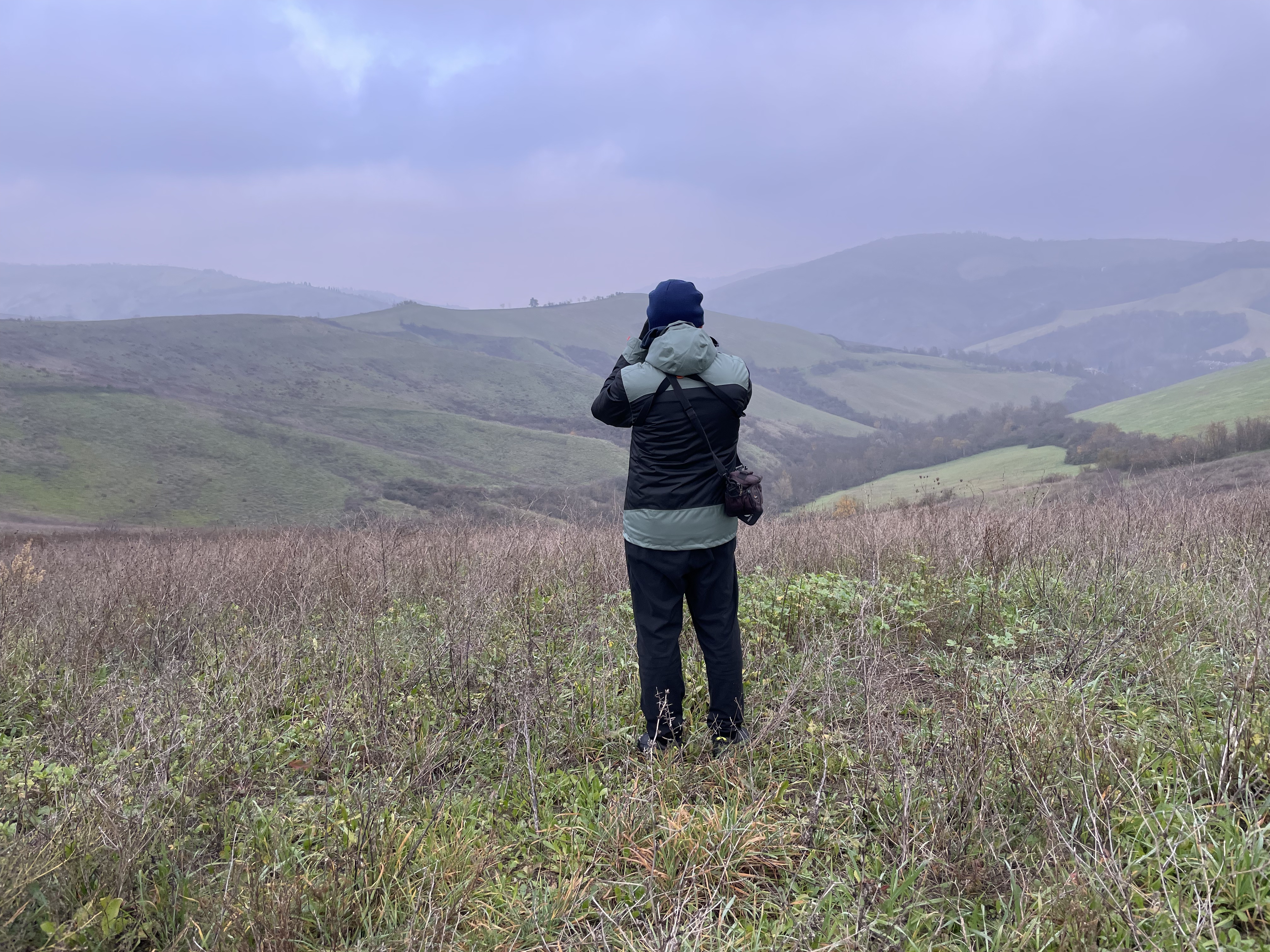
I won’t bore you much longer, but maybe it is more imaginable now why Pietro and I sharing only broken English could spend two straight days together, seeing 102 species in a delta half-way between Africa and Siberia, and never stop talking about them. A Little Owl in the early dawn light, perched on the eave of an abandoned building, then the warming updrafts conjured a Red Kite over the hills. Until sitting in the dark in a field behind his hometown, as shadows of Eurasian Woodcocks sailed over us from the stand of pines into their nightly roost in the plowed field. And even later than that, owls circled around us, barely perceptible like swirling apparitions of the imagination. Whether they were one species or another, and all the stories in between, was more than enough to fill a conversation on the rural roads back to my farmstead.
A man a continent away who knows what arrives on different directions of winds, who prefers the slopes of certain beaches, and what happens on foreign trees and in pockets of warm air of his region — as I am coming to know mine. We also witness too closely, bird by bird, the horrors of modernity — the loss of habitat to human profit, the flippant carelessness away from Being — threatening to ruin it all.
As things slip away, like Tufted Duck, as they do when one realizes life in years is more over than it is beginning, time on the periphery becomes more precious and any aliveness, wretched or wonderful, can be understood as bittersweet. Abundance. And god help me, there is also the sting of every time I fell short of love.
“It gleamed.” Tenebrae, by Paul Celan


I read you and I look for words
on how to say thank you…
–
you, there
in the periphery
loving the skies and birds
means being less alone
–
and if I’ve wished I was that gull
or some other deep-knowing soul
I still feel like sand or feather
that’s carried by the winds of time
ever wondering about grace…
–
and had I grown up as you have
I too would have wanted
– as cold as it might get –
the caress of the sea…
–
thank you for the beauty, Summer
I can’t imagine to be birding without your words and your company out here in the wilderness, along your river and sidewalks. All love and light to you, Caroline.
And all the same to you, my friend.
delighted to see Unwanted Advice has arrived. will have dinner with it tonight!