
Tags
art, birds, death, Gaston Bachelard, George Steiner, philosophy, poetry, reverie, Summer Lee, Summer Mei Ling Lee
unwantedadvice.wordpress.com/2012/08/04/words-are-little-houses-bachelard/
(Looking for a blank page, I wandered into a moment of my 13-year old musing below, asking for new birds and another flight.)
“Words… are little houses” — Bachelard
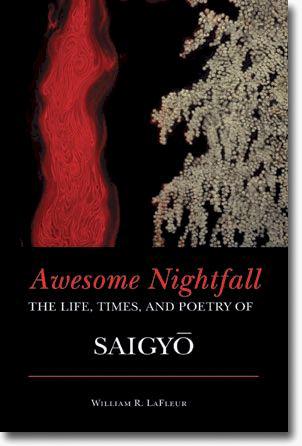
The 12th century Japanese poet, Saigyo, lived in horrific times of war, chaos, and scandal. He descended from a lineage of warriors, and after violent service to the Emperor, he took up the robes of a monk and the pen of a poet to both understand and release the straits of human-ness, his metaphorical and literal bloodstained past, the limits that all humans are born into.
Bird in my Journal, by Summer Mei Ling Lee, 2025
In both life and writing, he became a homeless wanderer. And it was during these unceasing peregrinations between mountainous temple sites and towns that he used the ability of nature’s images to capture all that matters through deceivingly simple words.
An ancient field
and in the sole tree starkly
rising to its side
sits a dove, calling to its mate:
the awesome nightfall.
In his poems, words as single ideographs balloon with layers of meaning, and no one meaning stabilizes over another. What we think is important becomes indistinguishable as night falls. What remains there is the gift of the dove’s birdsong lilting in the dissolution of light — into awesome darkness. As Sam Hamill writes, thoroughly intimate with Saigyo and profoundly aware that song might be the last thing heard, that words are the springboard into nothingness: Those that I love are more beautiful because one of us will die.
I recall the moment driving home from the hospital after giving birth to our son, a process that even in good circumstances is seismic to the foundation. And in my case, I exhausted myself to the point of an acuity of my mortality. So there I was, dispossessed, with one foot still in the non-world, while my family packed up the days-old baby asleep into his carseat, also with one foot in the non-world. We were heading home.
Oddly, our destination in my mind’s eye was my childhood home. Driving down the familiar coastal route, I only saw my childhood living room with the wretched, green upholstered chair that I spent so many hours in, there under the expansive pane of glass through which was our neglected garden, littered with robins pecking at unwanted cherries. Even when it became clear that this was not indeed where we were heading, that the last time I stepped foot in this house was decades ago, I could not understand how to get to my current home, the one “known” for the last third of my life. I experienced a moment of homelessness.
Of course my literary hero, George Steiner, drawing on writers ranging from pre-classical Chinese poets to Holocaust survivors, professes this homelessness, that we are always guestworkers, “frontaliers in the boardinghouse of life,” regardless any distraction from this eventuality. It is the same for Dante, in his love for Beatrice, who travels through the three realms of the dead. And that the epic narration of Odysseus is in his journey, the textual death occurs when he reaches home. Chuang tzu’s free and easy wandering, which is incredibly not free, nor easy.
Because we are human. We need a home. If we are to have a home, according to Bachelard, it would be like the fragile nest. Every precariously woven-together twig and dried straw comprise our human desire to hope for the future, and the precious eggs it cradles — but also the acceptance of its propensity to decay, fall apart, to be destroyed — to be ephemeral. The nest acknowledges the potential for me to be without the soul-killing need to push against Being, distracted from where the beauty of it lies. I have exhausted myself in my will to make things certain — because, as I am reminded in my changeling son, the infinite little losses in my body, my relationships, my art-making, and how in this moment right here is the possibility of perishing — words are anything but certain.
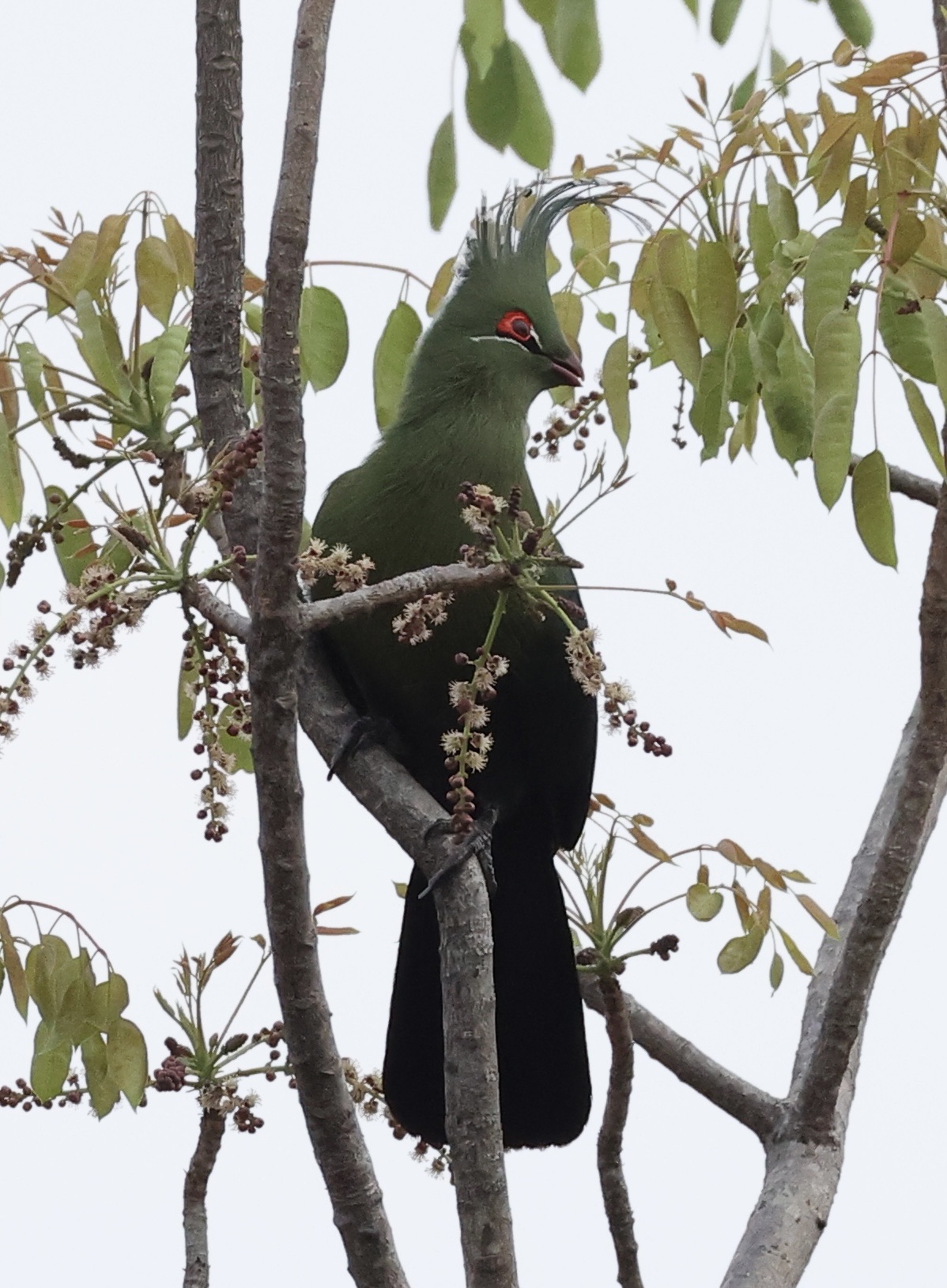
Schalow’s Turaco, Zambia. By Summer Mei Ling Lee, 2025
“When you are philosophizing, you have to descend into primeval chaos, and feel at home there.” Wittgenstein.


Yes, more beautiful because one of us will die…
All out of chaos, light, nightfall, sleeplessness – and the oddness, the grand oddness of love. The very so ephemeral. And never do I feel so home than when I know how much I am but just a part, a tiny part of days that are, thus without hold on any sort of certainty, and better yet, when I know that I am somehow almost or certainly maybe and forever always… ;o)… like those faraway stars – already gone. Changelings know, don’t they. Thank you, my friend. For your birds of beauty. And for your ever song of love. love.
How you, Caroline, create reverie for me with your poetry, that always speaks to me of this space and puts my heart back in the center of the river. Even if I want to clutch the banks, with all the doubt and darkness at times. Thank you for being someone who so gracefully reminds me. Love to you.
Thank you for your soulful words!