• About

Unwanted Advice: Reflections from a Self-Appointed Life Counselor

~ Caminante, no hay camino. Se hace camino al andar. Wayfarer, there is no way. You make a way as you go. (Antonio Machado)

Unwanted Advice: Reflections from a Self-Appointed Life Counselor

Tag Archives: George Steiner

Images dream within us, a reverie is a world of expansion.

06 Saturday Dec 2025

Posted by summermlee in Aesthetic philosophy, Art, Birds, Nature, philosophy, poetry, Uncategorized

≈ 3 Comments

Tags

art, birds, death, Gaston Bachelard, George Steiner, philosophy, poetry, reverie, Summer Lee, Summer Mei Ling Lee

unwantedadvice.wordpress.com/2012/08/04/words-are-little-houses-bachelard/

(Looking for a blank page, I wandered into a moment of my 13-year old musing below, asking for new birds and another flight.)

“Words… are little houses” — Bachelard

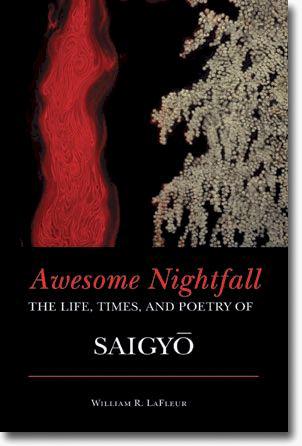
The 12th century Japanese poet, Saigyo, lived in horrific times of war, chaos, and scandal. He descended from a lineage of warriors, and after violent service to the Emperor, he took up the robes of a monk and the pen of a poet to both understand and release the straits of human-ness, his metaphorical and literal bloodstained past, the limits that all humans are born into.

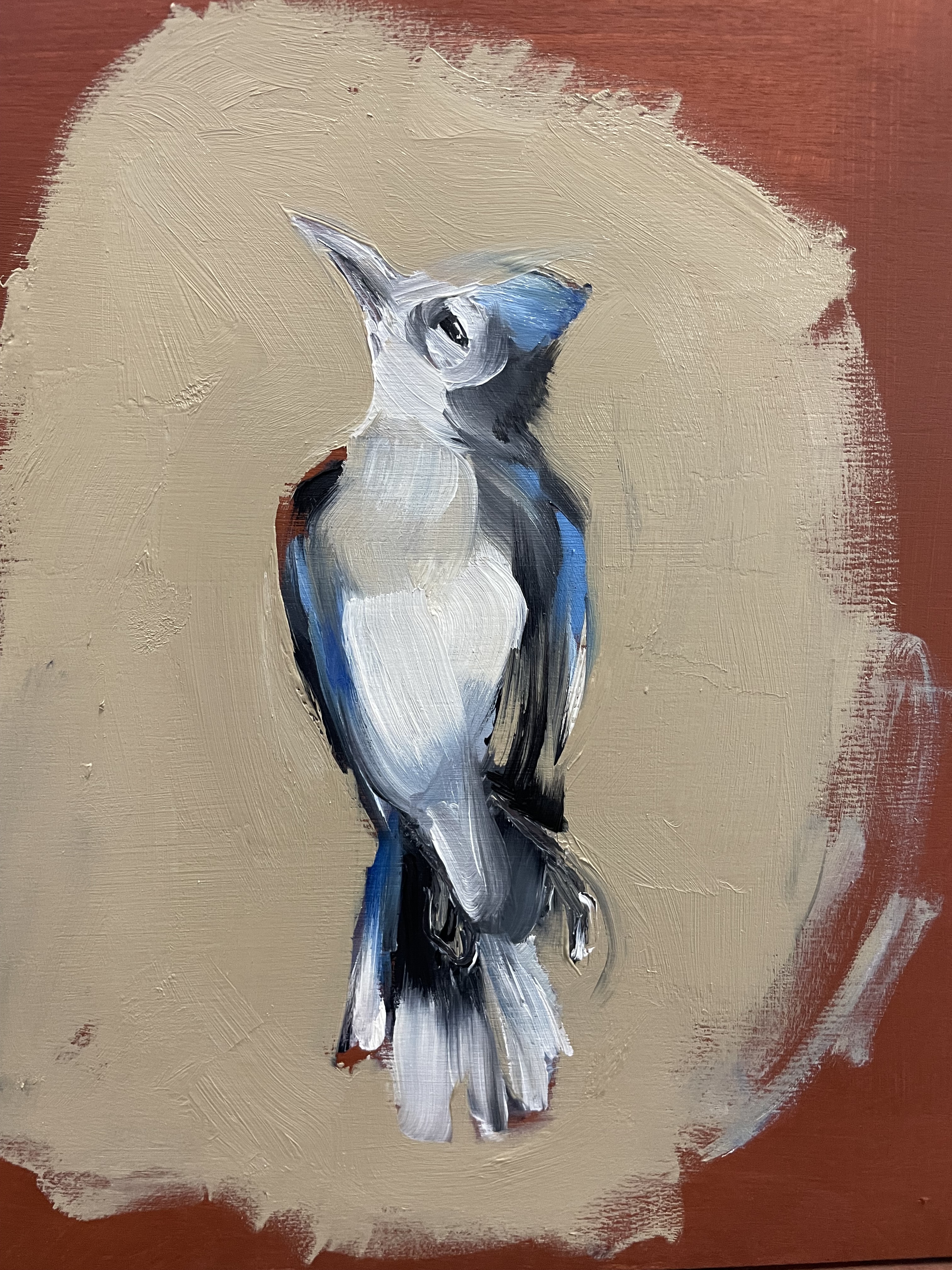
Bird in my Journal, by Summer Mei Ling Lee, 2025

In both life and writing, he became a homeless wanderer. And it was during these unceasing peregrinations between mountainous temple sites and towns that he used the ability of nature’s images to capture all that matters through deceivingly simple words.

An ancient field

and in the sole tree starkly

rising to its side

sits a dove, calling to its mate:

the awesome nightfall.

In his poems, words as single ideographs balloon with layers of meaning, and no one meaning stabilizes over another. What we think is important becomes indistinguishable as night falls. What remains there is the gift of the dove’s birdsong lilting in the dissolution of light — into awesome darkness.  As Sam Hamill writes, thoroughly intimate with Saigyo and profoundly aware that song might be the last thing heard, that words are the springboard into nothingness:  Those that I love are more beautiful because one of us will die.

I recall the moment driving home from the hospital after giving birth to our son, a process that even in good circumstances is seismic to the foundation. And in my case, I exhausted myself to the point of an acuity of my mortality. So there I was, dispossessed, with one foot still in the non-world, while my family packed up the days-old baby asleep into his carseat, also with one foot in the non-world. We were heading home.

Oddly, our destination in my mind’s eye was my childhood home. Driving down the familiar coastal route, I only saw my childhood living room with the wretched, green upholstered chair that I spent so many hours in, there under the expansive pane of glass through which was our neglected garden, littered with robins pecking at unwanted cherries. Even when it became clear that this was not indeed where we were heading, that the last time I stepped foot in this house was decades ago, I could not understand how to get to my current home, the one “known” for the last third of my life. I experienced a moment of homelessness.

Of course my literary hero, George Steiner, drawing on writers ranging from pre-classical Chinese poets to Holocaust survivors, professes this homelessness, that we are always guestworkers, “frontaliers in the boardinghouse of life,” regardless any distraction from this eventuality. It is the same for Dante, in his love for Beatrice, who travels through the three realms of the dead. And that the epic narration of Odysseus is in his journey, the textual death occurs when he reaches home.  Chuang tzu’s free and easy wandering, which is incredibly not free, nor easy.

Because we are human. We need a home. If we are to have a home, according to Bachelard, it would be like the fragile nest. Every precariously woven-together twig and dried straw comprise our human desire to hope for the future, and the precious eggs it cradles — but also the acceptance of its propensity to decay, fall apart, to be destroyed — to be ephemeral. The nest acknowledges the potential for me to be without the soul-killing need to push against Being, distracted from where the beauty of it lies. I have exhausted myself in my will to make things certain — because, as I am reminded in my changeling son, the infinite little losses in my body, my relationships, my art-making, and how in this moment right here is the possibility of perishing — words are anything but certain.

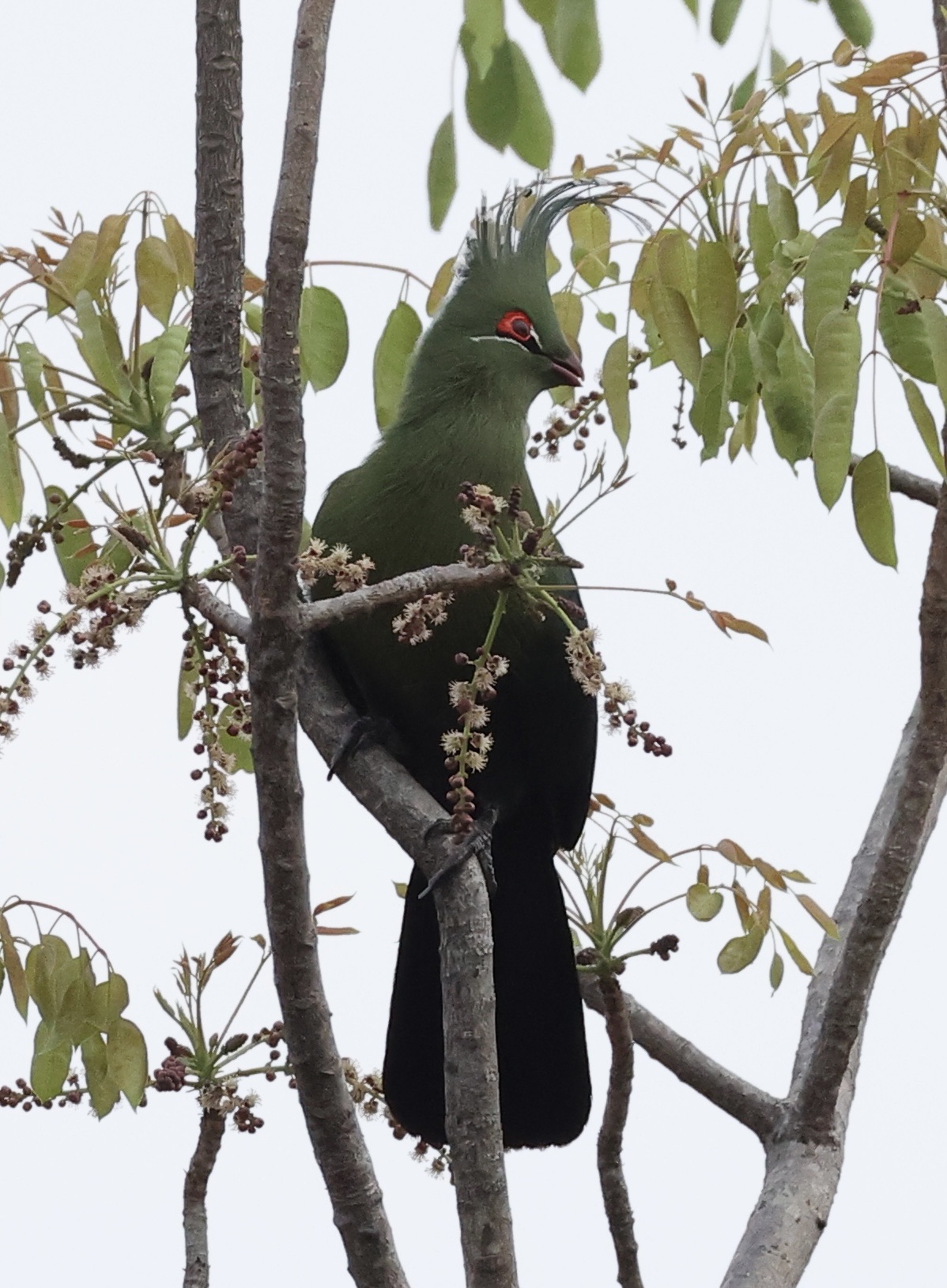
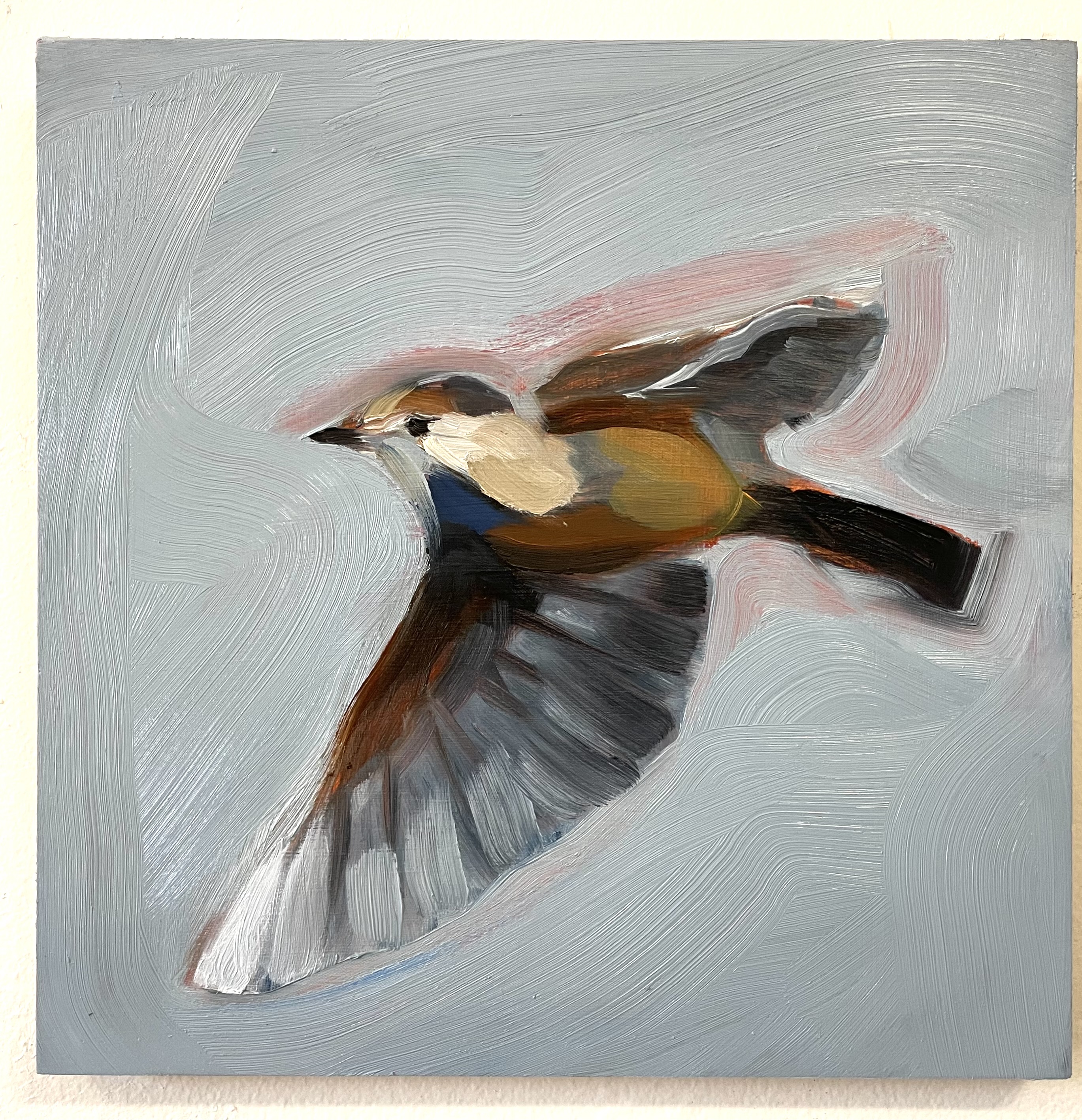
Schalow’s Turaco, Zambia. By Summer Mei Ling Lee, 2025

“When you are philosophizing, you have to descend into primeval chaos, and feel at home there.” Wittgenstein.

“We meet in the freedoms of each other.” – Takeyoshi Nishiuchi

02 Sunday Mar 2025

Posted by summermlee in Aesthetic philosophy, Art, Birds, Nature, philosophy, poetry, Uncategorized

≈ 3 Comments

Tags

birding, birds, birdwatching, climate change, Endangered Species, environmental activism, George Steiner, Joy, nature, oligarchy, philisophy, poetry, Qi Bashi, Rumi, Summer Lee, Takeyoshi Nishiuchi, tech, Vinciane Despret, wildlife

Joy, she said way before any of this happened, is the enemy of fascism, as totalitarianism capitalizes on anger and despair.

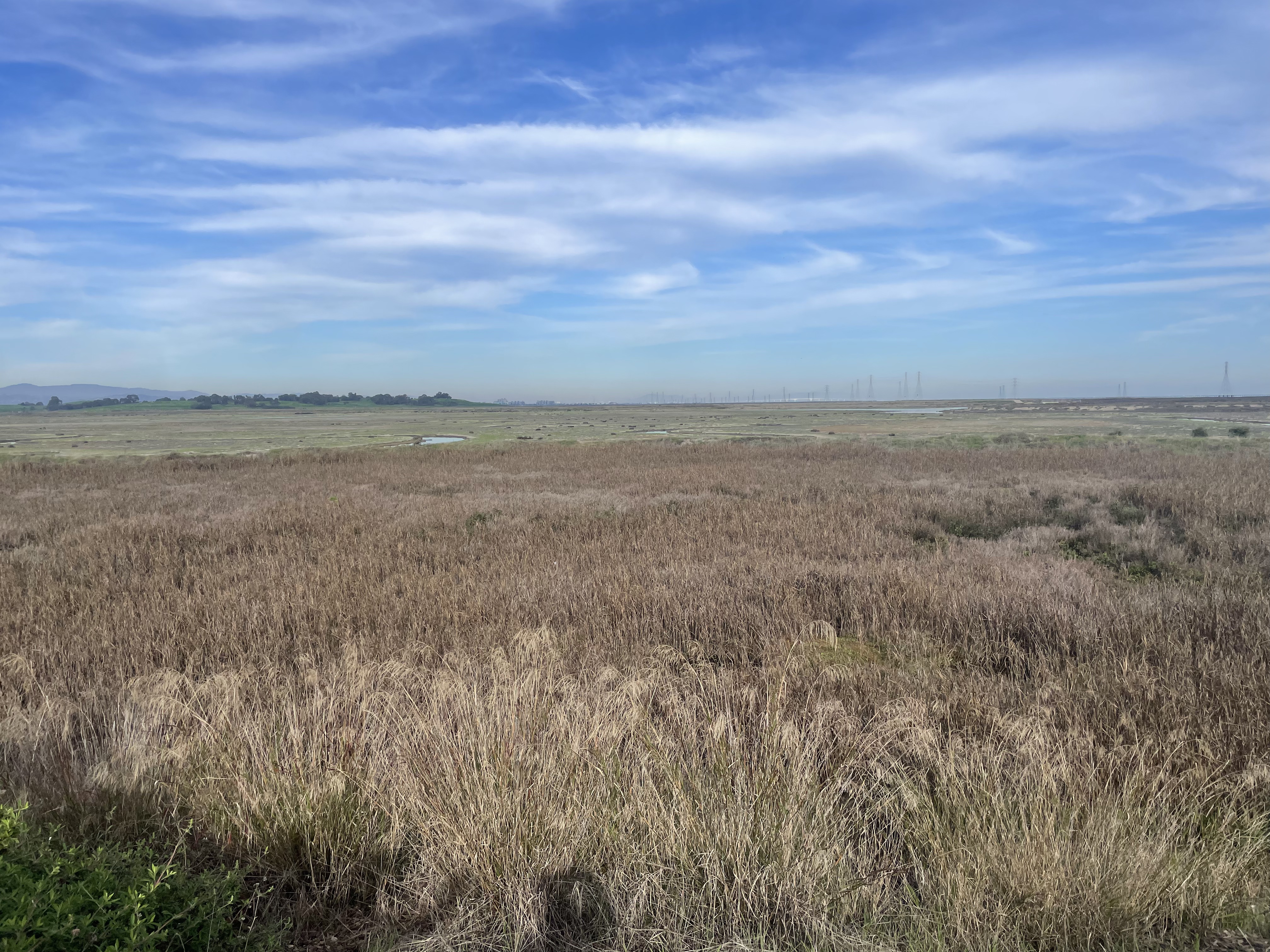
The poisoning of our country has not yet seeped into the living and dining rooms of most people here yet. So it is in that collective cloud of comfort and yet palpable menace, I am standing in the miraculous California February sun, on the periphery between a Silicon Valley oligarch’s “campus” (George Steiner would connect their bastardization of words to our current godlessness) and the tidal estuary that remains at the edge of the San Francisco Bay. The serpentine line between the dystopic tech “architecture” and the diminishing marshland wilderness is this narrow crushed granite trail, the perverted indexical residue of environmental activists’ defeat — “put a nature trail on it.”

It is today, here on that consolation trail for birdwatchers, where my friend Chris heard what was thought to be extinct in our county: a Black Rail, a bird no bigger than a mouse, last heard nonetheless seen 15 years ago. So when my friend notified a few others, Ron went out immediately, the top county birder many generations over. Yes, these birders are temples of knowledge.

In his reverie, Ron cursed the tech company, but cried in joy. The persistence of a little marsh bird, a bird that only vocalizes for a couple of weeks a year in preparation for mating, in its hope of continuing its lineage since the dinosaur era, in a territory that in my lifetime with rising sea waters will be gone.

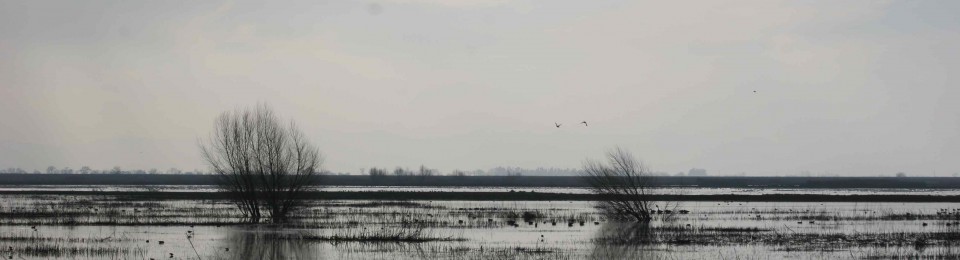
Photo by Summer Lee, where we heard the Black Rail. 2025.

But the computer world, no matter how much they built into our Bay, will always be mere simulacrum of what is sensate and experiential. It will always be the lesser substitute for life. My friend Leah’s psychoanalytic school shares two talks in the same week: “Submission as a response to trauma” and “Psychoanalytic perspectives on the unfolding global environmental catastrophe.” Children (we are all of us still children) accept abuse if it means we will survive, and we are unable to accept the slow violence of environmental degradation — the disavowal of our connection to each other and the natural world. She describes these talks as a series for an emotionally devastating curriculum.

So: Joy, joy and enthusiasm.

To find joy in the presence of other living things, Despret tells us. Our ethical obligation as living beings is to give existence to other living beings. That vestigial impulse is what sets me out here with these little words and paintings. Let me give exuberant breath to that friend who died, to those feathers she sent me, to that bird I only could hear but whose plaintive chirps filled my imagination with a wondrous swirl of hope and persistence — and with it, the fragile dignity of humanity. Right there in that crushed granite borderland between marsh and man, that periphery. Under the embrace of the California sun, next to the San Francisco Bay were once an ancient civilization thrived, today on the precipice of another unknown season, whether migratory or breeding.

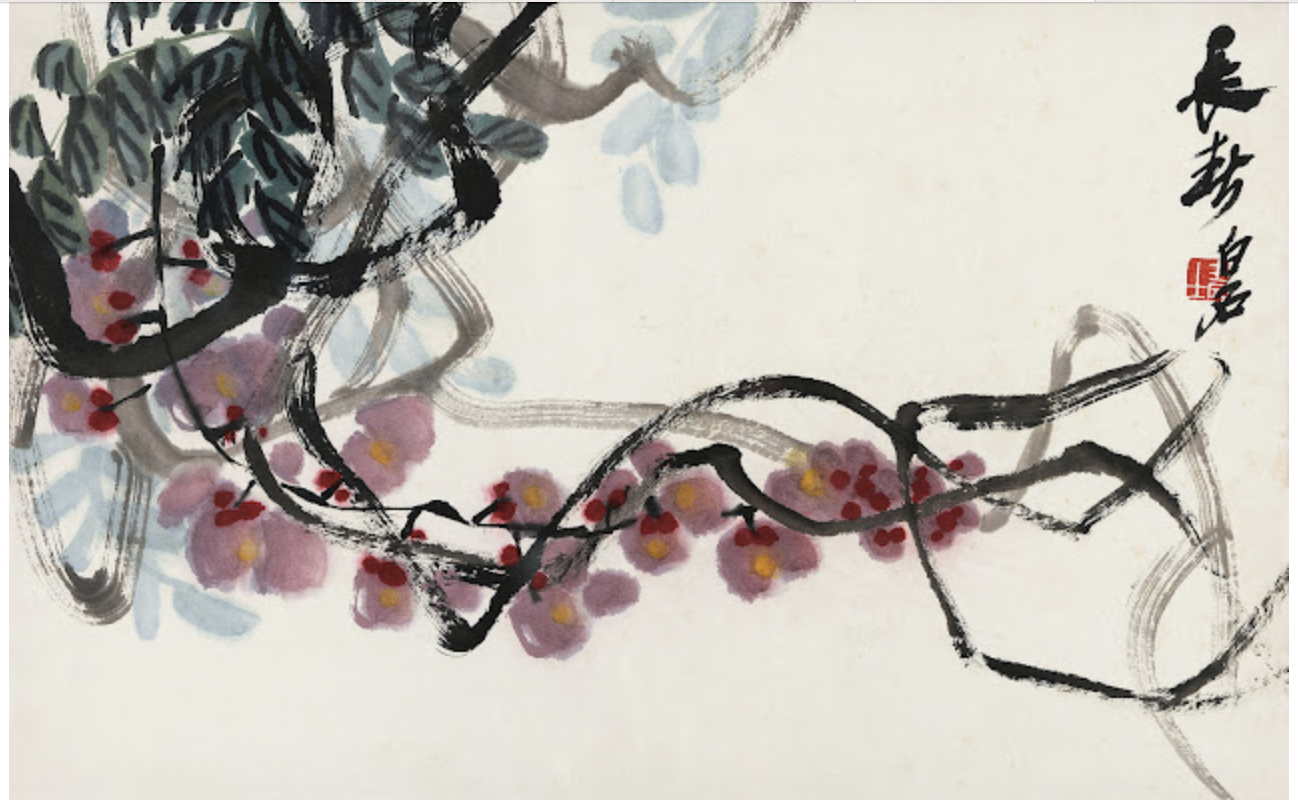
Ink Painting by Qi Bashi (1864-1957)

“What if a man cannot be made to say anything?
How do you learn his hidden nature?

I sit in front of him in silence,
and set up a ladder made of patience,
and if in his presence a language from beyond joy
and beyond grief begins to pour from my chest,
I know that his soul is as deep and bright
as the star Canopus rising over Yemen.

And so when I start speaking a powerful right arm
of words sweeping down, I know him from what I say,
and how I say it, because there’s a window open
between us, mixing the night air of our beings.”

— Rumi

“ O Opal / your ear / in my heart / both hear / the glorious void, / preferring the birds.” Jim Harrison

04 Saturday May 2024

Posted by summermlee in Aesthetic philosophy, Art, Birds, Nature, poetry, Uncategorized

≈ 2 Comments

Tags

art, Étienne Souriau, bird watching, birding, birds, birdwatching, George Steiner, Jim Harrison, Martin Shaw, migration, painting, Paul Celan, poetry, Summer Lee, Summer Mei Ling Lee

Life-preserving but not life-giving, he says. Maybe the best critique of art I’ve ever heard. “Nothing is harmed but nothing is thriving either.” The people around here trained their eyes away from the gods, ancestral dead, magic — and sometimes even beauty. Everything is a utility or transaction for something else, and that’s not how the most important things come to exist. And, “The true entrance into us will not occur by an act of will.”

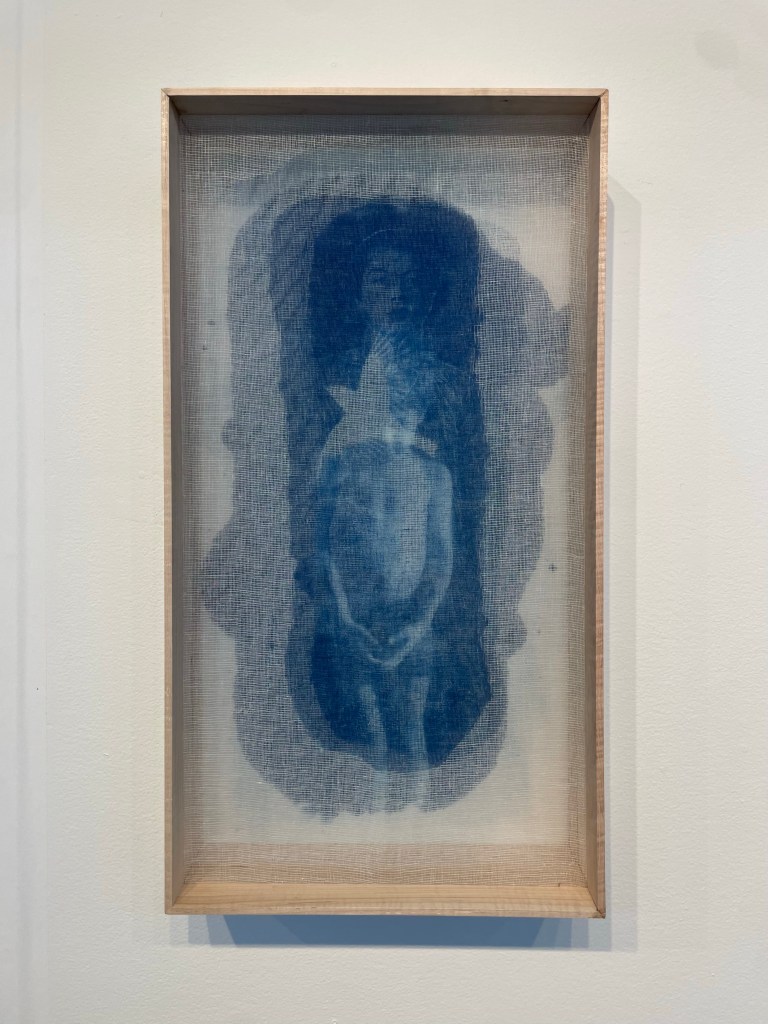
Into the Nearness of Distance, 2024. By Summer Mei Ling Lee. 28 x 15 inches. Cyanotype on three layers of Gauze, wood.

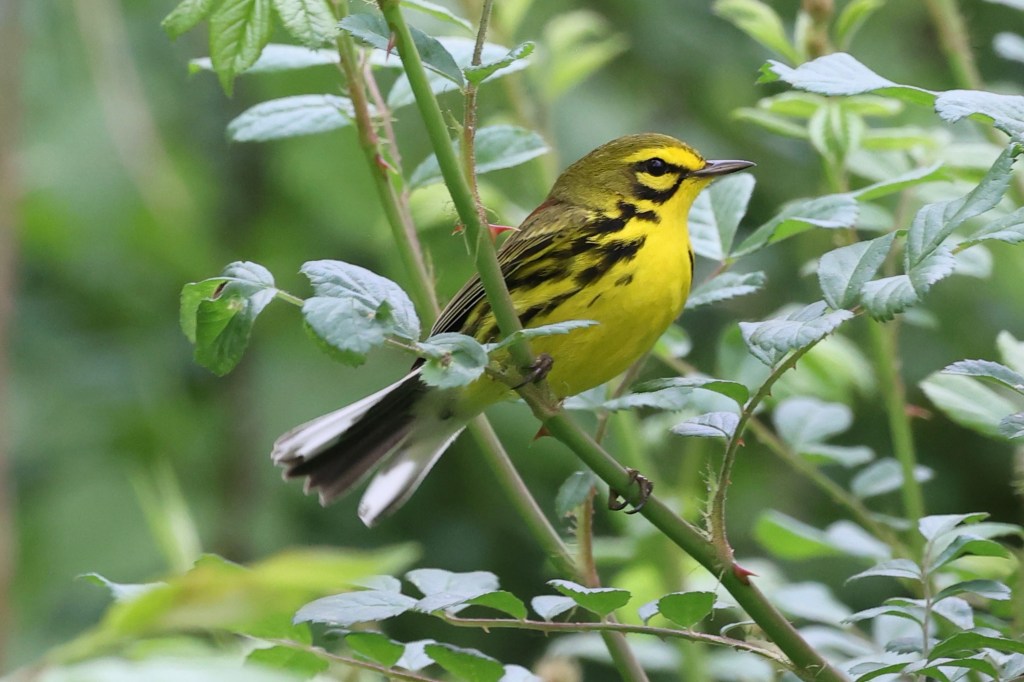
Myself, I want to dance with all that is wild and alive, but am just sometimes scared to. I realize now back on this sky-murdering plane home, full of doubts and in mistake-review mode, I was still greeted that day by gleaming Prairie Warbler, in all his breeding plumage glory. He popped up in front of me when there could have been nothing at all in that sickly, urban forest. Odds are more likely that he would have been a thousand miles further along into Canada, but he was right here. Exactly where I have met so many who I have loved and who have loved me. As he explains, those things we need most in this world are more tangible in the messy, uncertain wild.

Prairie Warbler, the other day.

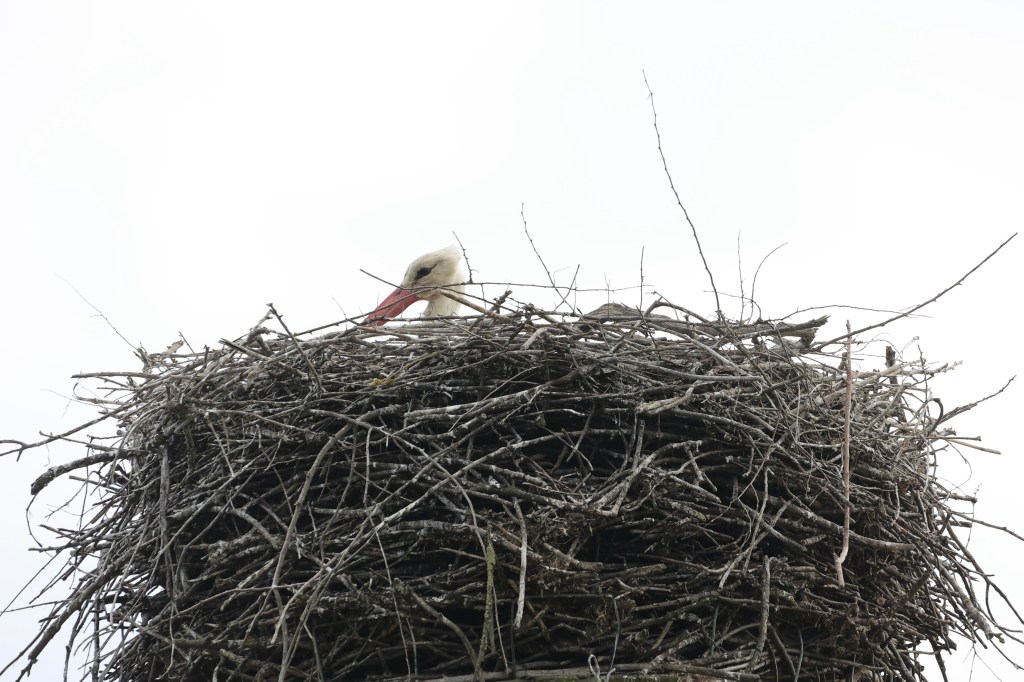
Just two weeks ago, blue-eyed Pietro drove me to a nature preserve that is now tragically a farm, where persists a pole at the side of the field with a platform on top. And up there in a roughly-woven basket structure she stares down at us, telling me something I don’t know how to write, something about fear but also just continuing on despite the hunters. She could live for forty years and knows how to squeeze water from moss into her thirsty chicks’ beaks. For what.

And then he takes me way out where the road barely can be made out anymore, to the last remaining colony of Lesser Kestrels in the eaves of a long-ago collapsed home. He jumps out of his tiny car when he spots them and shrieks like a boy. He delights in telling me when they fly back into view, for a period of time even longer than I still care. He can see them everyday and I will never see them again in my lifetime. And soon no one will. I know why he shrieks, but it’s impossible to write it, even though I feel it in my bones and try every time. I am deeply aware and sorry for that failure.

But after each word, it is impossible not to mention those that understand and keep me company — it’s why she has sent me a bird along her walk. And why he sends that line of poetry. Otherwise it can feel like the people here are dying mostly because they don’t even notice, nonetheless jump out of their car and shriek in delight. I think that’s why Celan threw himself into the Seine river, it becomes overwhelming that the rest of the world swings through the crowd like an ignorantly sharp elbow into a tender bruise.

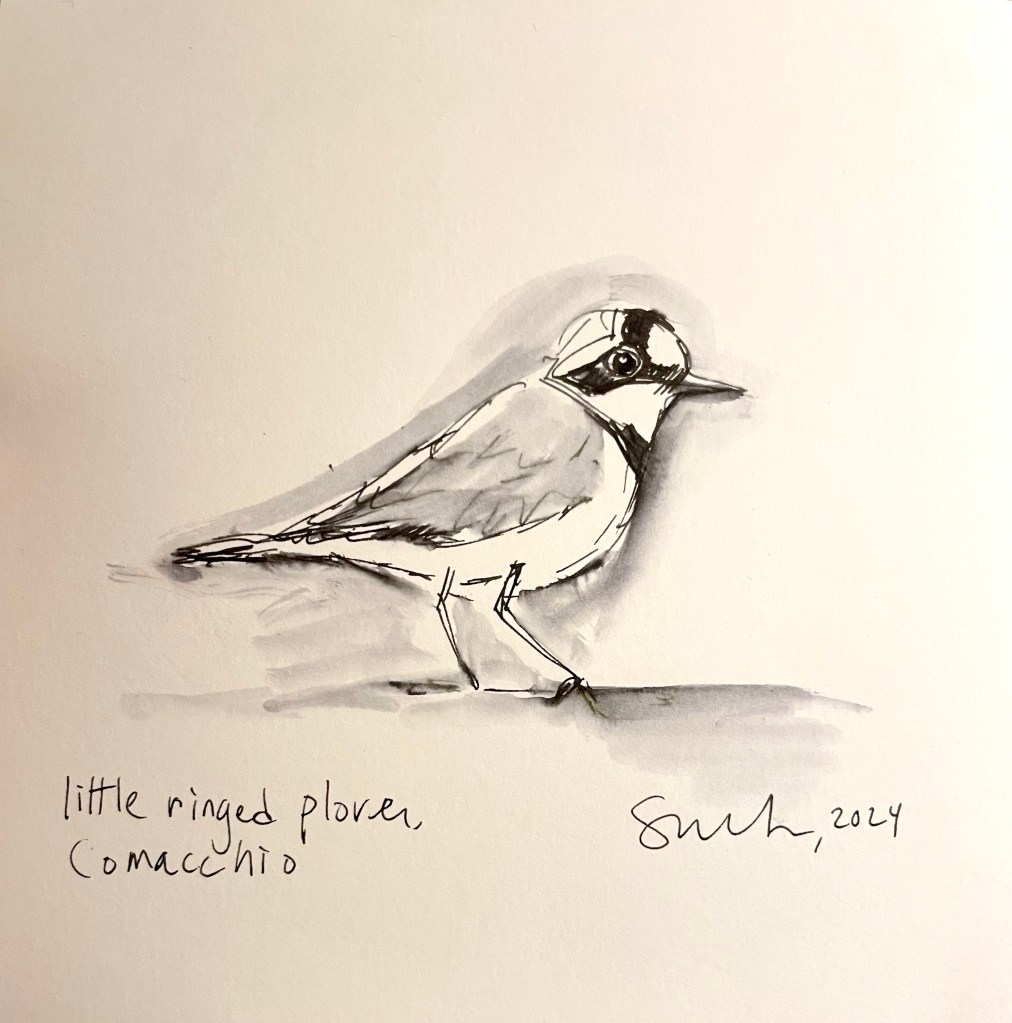
Little Ringed Plover for Fiorenza, by Summer Mei Ling Lee, 2024

She cried openly this time when I left the farm, weeks before the Bee Eaters arrive. This year, I gave her a Little Ringed Plover instead. I am trying to fashion band-aids out of the birds, those little gods and ancestors and bits of magic in the trees. Band-aids for those whose tendernesses in the crowd, including my own, I absurdly want to preserve.

“If we must be careful of any anthropomorphism when studying animals, it is not bad to sometimes do a little zoomorphism when studying man, whose lucidity and power of reasoning are often exaggerated.” (Étienne Souriau, The artistic sense of animals, 1963. My translation).

“What the river says, that is what I say.” – William Stafford, Ask Me.

01 Tuesday Aug 2023

Posted by summermlee in Aesthetic philosophy, Art, Birds, Nature, philosophy, poetry

≈ 5 Comments

Tags

Ask Me, bird-watching, birds, birdwatching, George Steiner, giotto, grief, grieving, Love, painting, Summer Mei Ling Lee, Szymborska, Takeyoshi Nishiuchi, William Stafford, wonder

591.

A bird took me by the wing once. Pregnant and in pain, afraid for the baby and afraid for me, I was trapped in bed and wanted to sleep away the remaining prison term. One night, a snowy white Egret visited me in my dream. I locked eyes onto how luminous she was even in the sheer darkness. I followed her up and out of my room, up the stairs, through the shuttered window and into the dense fog above my house. As if such wonder could be contained, I took stock of the immensely opaque ocean air, and then my thought of well, now what? immediately ended the ascent. With the heaviest of thuds I arrived back in my body, into the discomfort of being a body again, and incredulously awake from the dream.

I didn’t know that memory was what I was going to write. But maybe it appeared because along my commute here to this place I remembered he told me once: to be human, we must renounce paradise and accept ourselves as fallen.

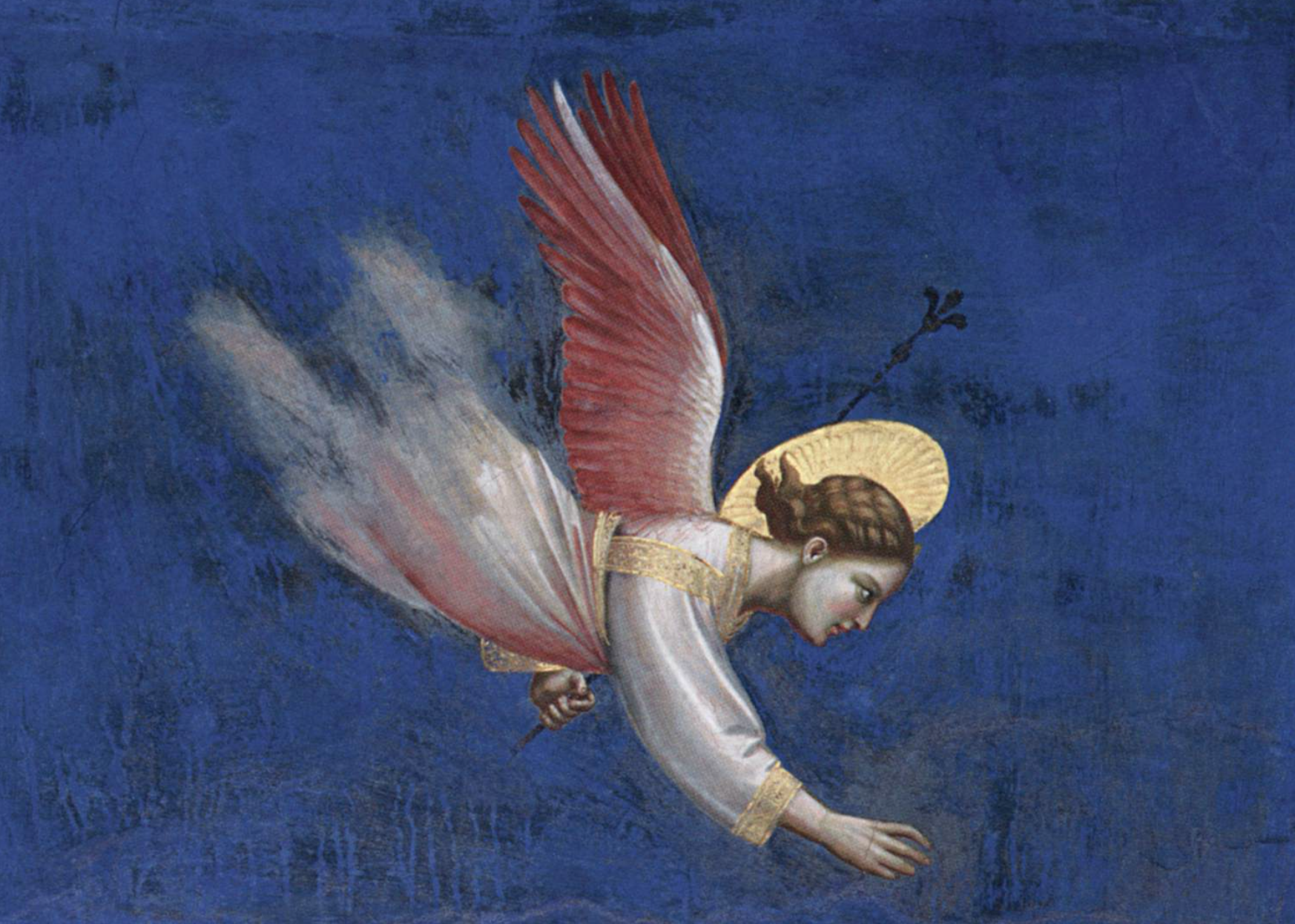
(Giotto, 1302. Scrovegni Chapel, Padova)

I can’t write about what I wish I could write about, but I could write about fallenness:

Her aggression hiding the need to be lovingly reassured. How I wanted to give him more love in the last hours than I had the rest of my life, and how there are no other words for it. How one evening we are laughing and she is a tipsy teenager again with lit-up Elton John glasses, and the next evening she slips below the water line and is gone. One week he asked me to teach his course for him because he knew I understood everything, and the next week I cannot fathom why he could take his last breath from himself. How such love and pleasure could follow in the year of someone else’s disappointment and regret. And just a few days ago, she tells me she witnessed a scene of a bird attacking a raptor who was in turn attacked and fell dead to her feet. We both knew what this meant — and just now, I receive some iridescent feathers she has sent me in the mail, from 2773 miles away.

But maybe most interesting of all, the little winged angel on the wall of the 14th century chapel, an angel whose bottom half is scumbled out with gray paint. As if to show we can try with paint or words to describe that dimension, and then as a result, something bigger than us, something more knowing than we are, arrives.

I don’t know what the 600th bird will be. 500 was the Bee Eaters from Africa who summer up north near the farm of the women who took me in, sick, a little lost, and with two sweet but wild boys. In the evening as we are eating in their garden, the Bee Eaters fly over us as if they are unscrolling stars on the chapel ceiling. Excited, they then yell to me in Italian and I don’t understand what they are saying, but it is to make sure I see them as they do — and something about how when I arrived, Summer arrived too. And then again, a year later, they tell me the Bee Eaters have arrived, and now they know, so will I.

I have no way to count the returning ones. It could be unending, they are events only half-way through.

And for those who followed me this far, and you don’t understand it all — I love you for it. I have hope that the nearer I am to it, the more mysterious it is. The more painful and yet the more beautiful. It just takes you by the wing.

This is why, for now, I am not afraid of the technologists who are coming after us with their machine-learning algorithms. Their logic cannot follow a bird that glows in the dark and flies into a house and through walls. Not just because the death of art is translation, he tells me, himself from behind the veil. But also because you and I still feel the “intolerable burden”, the beautiful burden, of the presence of something Other, and some of us have merely forgotten.

(Oil Painting of Leah’s bird by Summer Lee, 2023)

“Some time when the river is ice ask me

mistakes I have made. Ask me whether

what I have done is my life. Others

have come in their slow way into

my thought, and some have tried to help

or to hurt: ask me what difference

their strongest love or hate has made.

I will listen to what you say.

You and I can turn and look

at the silent river and wait. We know

the current is there, hidden; and there

are comings and goings from miles away

that hold the stillness exactly before us.

What the river says, that is what I say.”

— William Stafford, Ask Me.

(Oil Painting by Summer Lee, 2023)

The Dialogue with the Dead Cannot Stop Until They Hand Over the Future that has been Buried with Them. — Heiner Müller

18 Friday Aug 2017

Posted by summermlee in Aesthetic philosophy, Art, Birds, Nature, philosophy

≈ 4 Comments

Tags

China, Chinese Bone Repatriation, death, Derrida, George Steiner, Home, immigration, migration, philosophy, Summer Mei Ling Lee, Takeyoshi Nishiuchi, Toisan, travel

I am not ready to talk about their immigrant bones, or the difficult stories that each bone box tells. And besides, most are missing, disappeared on the wayward routes returning home, displaced even after death. Or they are in almost-forgotten fields marked by stones that don’t hold names anymore, nonetheless narratives. Sometimes just numbers, sometimes just the memory held by someone’s grandson who saw him bury them over there under there somewhere. And in there could have been my non-existence. As we peered into one unearthed bone urn, the top exposed to the sky cracked open by neglect, he said, there is the way into the underworld.

I need to listen.

I am aware that each word here is an act of listening, opening a new space for the next word. And of my failings of projections and memory and desire and convention, so that some words spill out overwhelmed by chatter and are already dead. Listening, like love, comprises a reverberation between self and other, where words and acts seem to fall out gracefully and illuminated and are received as a welcomed guest.

“It takes two freedoms to make one.”

Even if my grandmother has been gone for twenty years, she speaks to me in a certain way. When she was here she couldn’t explain anything about her childhood or her crossing to the United States, except that she had a favorite brother who died young, she didn’t know how.

By dint of so many unlikely arrangements to explain here, she brought me last week to a 700 year-old village in southern China. A group of villagers greeted me with their own generous hospitality to take what evidence I had and prove it was her home. Easily, she could’ve been from a village destroyed long ago, or one where no one could help. Instead, she knew somehow. What they wanted of her to want of me to know. So I could sit in front of her burned brick house with the gift of her brother in a bone box of a suitcase I brought from his grave in Chicago. So I could witness as nothing and everything took place. I had given nothing. In a long string of no’s, I just had to say yes.

fra angelico prado 3

(detail from Fra Angelico’s Annunciation, Prado)

They asked me if it felt like my homecoming, and it didn’t. I don’t belong there in any way, or really anywhere these days.  For now, I feel I belong to her retreating voice hurled through different time zones. Or when my sons resign their sleepy bodies near mine. It wasn’t my homecoming but it was his, and hers to give him. At the modest home’s ancestral altar, she had returned her sweet, young brother to where he had just left months before he died, at age 21. He knew of no other home. Even if that year was 1924, it was last week.

In that moment of offering inside my grandmother’s childhood home, and earlier on that slave mountain where we hiked for hours with that suitcase to their humble tombs, I asked about home. The calls of the flightless geese from the farms surrounding the village were deafening. Eventually, I understood that he belongs with my grandmother on her mountain overlooking this ocean. Some migrations are irreversible.

There is a lot of fear in listening, of unanswerability, of surrendering to silences too long to bear. In her words, it is the absence that the child can tolerate from the mother and no longer. It wants to choose a withdrawal into a security rather than the uncertainty of new countries, new losses, a new home. Maybe in those spaces created by fear is where unhousedness began, because security is a delusion we need to rest in.  The beginning lines of a tragedy. But a great awakening is at the bottom of a tragic flaw. Tragedy reminds us of our human dignity, opening us up to all possibilities, whereas fear has us only hear what we don’t want.

In southern China where my grandmother is from, more people have left than live there today. Thousands of years ago, her earliest Han ancestors brought their family bones when they migrated from the north to the south. Still now they practice a second burial tradition, where years after the first funeral, bones are cleaned and moved to an ancestral tomb. During the first waves of overseas immigration, arduous arrangements were made for those who died abroad to have their bones returned to their ancestral villages, tens of thousands of bone boxes crossing oceans and borders. But then history changed and almost all of the bones don’t come back anymore. Some I visited are stuck in transit and have been for a hundred years. The odds they will go back to their ancestral homes are near-impossible, but they are a living-dead memorial that continues to cry out for all of us, I want to go home.

IMG_9786

(Bone boxes in Tung Wah Coffin Home, Hong Kong, awaiting repatriation.)

So I can forgive those who won’t go, won’t listen, whether they immigrate or not. They don’t go, because maybe the risk is just too much unknown, too much disappointment, the fear that some pain is bigger than us. The greater the connection, the greater the vulnerability when it becomes absent. When I think of moments when I didn’t think I would survive, I remember the scary way my son was brought into the world, when I wanted to be nowhere near what I was experiencing. After losing a lot of blood, I asked my mom to not let me cross over. I discovered then that the over there is so close. Even though I bore it, it was too much to bear.

An angel appeared soon after and spent time with me.

I expected she would say, oh stop, you weren’t even close to going over.

Instead she said, you were close to there, and you could have gone over. But, she added, I know you would have returned. It wasn’t your time. And it shifted something and the nightmares ended, but I understood. We all have our mundane annunciations.

“The wisdom of love is that it isn’t always safe but it is always truthful.”

All of them, alive or in bone boxes, are telling me stories of un-home and home, and underwriting my own restless search for one. Home is certainly not in these small houses of cautionary being, toppled by each new intrusion of life. If so, my sons would not be here. I wouldn’t be here either, along with all the moments when immense gratitude and beauty overwhelmed me. Home seems to transmute from the relentless feeling of loneliness and displacement. Nathan said maybe we hover home, and reminded me that home, if it exists, enters only in the here and now and leaves. And it does seem to be a here of reception and not fear, even if the guest turns despotic or worse. “But without the gamble on welcome, no door can be opened when freedom knocks.”

Who knows what I will hear next.

In leaving China back to my temporary un-home, I followed her original route over an uncertain ocean. And I could imagine their bone boxes passing, going the other way. They pass by me, holding things I realized I had also lost, maybe continually losing as I keep living, and they are returning to the spaces I just left.

The same man who taught me most directly about tragedy, and therefore the beautiful fragility of presence, gave me a life-long address for this route: In welcoming a guest, you have found your home.

“Such a caring for death, an awakening that keeps vigil over death, a conscience that looks death in the face, is another name for freedom.” — Derrida

IMG_9503.jpg

Dai Wan Village cemetery, Toisan.

“I come to give you something, and it is the gift of my own beaten self.” — Oedipus at Colonnus

03 Monday Aug 2015

Posted by summermlee in Aesthetic philosophy, Art, Birds, Nature, philosophy

≈ 10 Comments

Tags

art, Burial at Sea, dead whales, George Steiner, J. M. Turner, Pacifica, tragedy

IMG_3528(My son looking over a piece of whale blubber, April 2015)

For the third time since April, small crowds gather at the beach near my home to see yet another corpse of a dead whale washed ashore. Even for gawkers, an homage of solemnity surrounds this image of great defeat. A gentle and magical beast once gracefully at home in the mysterious reaches of ocean inaccessible to us, is now a heap of rotting surrender, rocking gently in the most derelict of slumbers by the relentless waves. Feet away from our local strip mall.

When we read Oedipus, he pointed out the passive structure of the line — the gift of my own beaten self. Because that is what happens when our will fails, we can no longer act. In those moments when we worry about the increasingly acidic and inhospitable ocean, we pick garbage off the beach, we sign petitions, ban plastic bags, we are careful about what sloughs off into our gutters leading to the sea. And I can’t help but think that this third beacon, a totem of majesty now throroughly exhausted, signifies that it doesn’t matter. And a part of me is like that slumped over dark mass of hopelessness, filling me with deep apology. And like a true gift, there is only a response of stillness — not transaction — just acceptance.

The first whale in April was a headliner. It was a 49-foot sperm whale, a species rarely washed ashore because they are at home so far from land. My son and I stood at the perimeter to pay our respects. In the meanwhile, scientists butchered the prized corpse for data. “Why did it die?,” my son asked. A spokesperson from the Academy of Sciences fielded questions, for some reason focusing mostly on a British vacationing family, whose youngest son was poking irreverently at a dead, starved seal pup a few yards away. While we eavesdropped, the spokesperson told them some facts about the sperm whale and what the scientists were looking for. “Why did it die?,” again. She recounted that the whale was later in life, because his teeth were worn down significantly. “Why did it die?” Then she added that although emaciated, the whale had a big meal of squid in his entrails. “Why did it…?” Finally she addressed my son, mostly to stop the grating repetition known only to young children who are ignored and don’t realize the futility of trying not to be. “We don’t know.”

Analysis is a form of subordination, of trying to assert a superiority. Steiner asks, do you ever find a representative from a faraway subsistent tribe in the middle of a North American city, studying our first-world behaviors? Most thinking is indeed a form of self-establishment, of self-congealing.

In real thinking, he said, you almost disappear. There is an intense turning towards — and it is to be in love with everything around you. But here, I go back and forth, wanting to know why so many dead things are being hurled against our shore, and I am met with a harsh refusal.

It is a crisis of consciousness to try to make beautiful things in what can be described as very unbeautiful times. As Steiner says, music never says no. And my god, there are so many seductions coaxing me away from real-art making, even just the projection of myself into this very writing — which Steiner says is an act of a minor craftsman falling short of any originality. But I must give testimony, for the hope that art happens and shows us the freedom not to be. A freedom that sometimes enters after the beaten self is off-stage, dissolving slowly into the sea.

“whatever we lose like a you or a me
it’s always ourselves we find in the sea” — ee cummings

Detail of Turner's Burial at Sea

(Detail from Turner’s Burial at Sea painting, 1842)

Be faithful Go

17 Saturday Aug 2013

Posted by summermlee in Art, philosophy, poetry, Uncategorized

≈ Leave a comment

Tags

Adam Hathaway, art, Emily Hughes, faith, George Steiner, journey of a photograph, Karen Hathaway, Photography, Summer Lee, Zbigniew Herbert

Art, even with its inward mystery, and maybe because of it, has a way of illuminating. Here is my contribution to this wonderful collaborative project.

Journey of a photograph, by Summer Lee, 2013.

Read about it here:

http://journeyofaphotograph.com/2013/08/17/be-faithful-go/

Aside

To discover one’s own absence is to discover one’s immortality…

20 Saturday Jul 2013

Posted by summermlee in Aesthetic philosophy, Art, Birds, Nature, philosophy, poetry, Uncategorized

≈ Leave a comment

Tags

Agnes Martin, art, birds, George Steiner, mystery, nature, poetry, San Pedro Valley

Another entry for my new project: Here is Where We Meet. http://thebirdsofsanpedrovalley.wordpress.com/2013/07/20/to-discover-ones-own-absence-is-to-discover-ones-immortality/ Photo, by Summer Lee

“We are in the midst of reality, responding with joy.” — Agnes Martin

23 Sunday Jun 2013

Posted by summermlee in Aesthetic philosophy, Art, music, Nature, philosophy

≈ 8 Comments

Tags

Agnes Martin, art, chapel of the chimes, death, Garden of Memory, George Steiner, Heidegger, painting, summer solstice

A year later and I am back visiting the dead, this time questioning the responsibility of putting new life into the world.

Weaving in and out of the crypts and private chapels, the walls are lined with vessels holding ashes, shelves holding caskets, and the letters of names. It takes a strain of my imagination to fill-in the entire arc of a life that now sits in mostly forgotten urns, placeholders. Once behind the names were fleshes of personality, interactions that effected causality, relational change, consequences in the environment, impressions on the psyches of others — and then they were gone. Except for a spot in a tiny little box aside thousands of others, now also mere words.

Painting by Agnes Martin

(Painting, “Tremolo,” by Agnes Martin, 1967.)

This year, it struck me that the cast of musicians performing here and there among the dead were stand-ins, intermediaries. They attracted hordes of the living into this solemn place on the longest day of the year to challenge the human aloofness towards the dead, to weigh the untranslatable meanings behind those words. With mixed success. Even though evidence of death towers on all sides, our finite narratives and rehearsed terminal endings at the end of every sentence — we remain distracted from our own dying.

We committed to one dark grotto of those born in the early 1800’s. A professional cellist sat inside with her laptop and synthesizer. Sometime while she was tuning her cello and tapping on her laptop, it dawned on us that she was in high performance. The ambiguous noises were experiments against the classical instrument’s boundaries: a stutter and screech here, a falling note there, a computer’s response, and the cellist’s retort. When she finished her “tuning” performance and nodded her head to applause, we understood that the provisional and dissonant duet between cellist and computer highlighted the aleatory relationship between existence and not-existence — and was indeed beautiful music. As Steiner says, art reminds us that there is something rather than nothing, only by virtue of grace.

The scene seared into my heart the ruminating words I had read that day of my dear friend’s husband having only days to live. They were going down their road until a few weeks ago, their life was sideswiped by illness and overturned into a tragic twilight. At home in hospice care, they are surrounded by friends and family who improvise themselves into a blanket of love and support for his last moments. There is no score or predictable soundtrack here. Nor, as Pamela says, is this life a dress rehearsal. But at best we merely hear the music at all.

Painting by Agnes Martin

(Painting, “Trumpet,” by Agnes Martin, 1967)

My friend this evening and I jest that it is just as much the beauty of the performer as it is the melodic tunes (amidst many dissonant-sounding experimental musicians) that has drawn a thick crowd into side room of the columbarium. Sitting on the stone floor in vulnerable elegance, she plays odd, unrecognizable instruments in classical improvisations. And we, the living, over a trickling fountain lined with pertly pink and red impatiens, “watch” her fill the space of the eternally invisible with unseen timbres and undulating wavelengths of passionate percussion. When she breathes into a bamboo flute with an electronic lung holding a previous refrain to which she responds in turn, a strange but pleasing chorus emerges into a rhythm of labored breath, a futile and yet beautiful resuscitation.

(In the stairwell from one chapel to another, we overhear a woman remark that this is what people from the rest of the country think Californians do everyday.)

But the true entrance into me does not occur by that willful anticipation of art, just as much as predicted words here do not alight, but sink. Instead it happened when an unexpected noise entered the back of our music-filled worship. It announced the entrance of a young, disabled girl with the cognition of a child ten years younger. She burst into this delicate space, hugging a 3-foot Barney and two teddy bears, and proceeded to march directly to within inches of the musician. The performer was startled but without missing a note, welcomed her softly with her eyes. And the girl of a strange grammar, much to my held breath’s relief, plopped herself front and center with no further histrionics. While the music pulsed along, the girl’s father sat down in the back, occasionally waving a connective hello to his girl. But she is now entranced by the familiarly foreign music, playing seriously with one of the bear’s ears — because afterall, this is about our ears.

And I, the helicopter parent, who constantly restricts my exuberant son in a cloying distrust and tiresome fear of violating the perceived comfort of everyone around me, orchestrating him here and there so as to fit who-knows-what expectations, I succumbed to this scene. Yes, a carnival of existence among the backdrop of non-existence, of Nothingness — but mostly of trusting surrender. There in front of the dead, the distracted living, too — and because of the little bit of life under my domain that is there despite me — my heart busted itself into tears.

“As the shrine of Nothing, death is the shelter of Being.” — Heidegger

Painting by Agnes Martin(Agnes Martin’s last painting, “Untitled,” 2004)

“Literary criticism has about it neither rigour nor proof. Where it is honest, it is passionate, private experience seeking to persuade.”George Steiner

08 Saturday Dec 2012

Posted by summermlee in Aesthetic philosophy, philosophy

≈ 1 Comment

Tags

fiction, George Steiner, literary criticsm, lterature, Mo Yan, nobel lecture, nobel prize, stories

Nobel Lecture

7 December, 2012

(by Mo Yan, harshly criticized since his award. Res ipsa loquitur — the thing speaks for itself — and his speech here is beautifully written as it is profoundly moving. Res ipsa loquitur — the criticism of his detractors, no matter how  right they feel they are politically, speaks criticism. Not art. )

Storytellers

Distinguished members of the Swedish Academy, Ladies and Gentlemen:

Through the mediums of television and the Internet, I imagine that everyone here has at least a nodding acquaintance with far-off Northeast Gaomi Township. You may have seen my ninety-year-old father, as well as my brothers, my sister, my wife and my daughter, even my granddaughter, now a year and four months old. But the person who is most on my mind at this moment, my mother, is someone you will never see. Many people have shared in the honor of winning this prize, everyone but her.

My mother was born in 1922 and died in 1994. We buried her in a peach orchard east of the village. Last year we were forced to move her grave farther away from the village in order to make room for a proposed rail line. When we dug up the grave, we saw that the coffin had rotted away and that her body had merged with the damp earth around it. So we dug up some of that soil, a symbolic act, and took it to the new gravesite. That was when I grasped the knowledge that my mother had become part of the earth, and that when I spoke to mother earth, I was really speaking to my mother.

I was my mother’s youngest child.

My earliest memory was of taking our only vacuum bottle to the public canteen for drinking water. Weakened by hunger, I dropped the bottle and broke it. Scared witless, I hid all that day in a haystack. Toward evening, I heard my mother calling my childhood name, so I crawled out of my hiding place, prepared to receive a beating or a scolding. But Mother didn’t hit me, didn’t even scold me. She just rubbed my head and heaved a sigh.

My most painful memory involved going out in the collective’s field with Mother to glean ears of wheat. The gleaners scattered when they spotted the watchman. But Mother, who had bound feet, could not run; she was caught and slapped so hard by the watchman, a hulk of a man, that she fell to the ground. The watchman confiscated the wheat we’d gleaned and walked off whistling. As she sat on the ground, her lip bleeding, Mother wore a look of hopelessness I’ll never forget. Years later, when I encountered the watchman, now a gray-haired old man, in the marketplace, Mother had to stop me from going up to avenge her.

“Son,” she said evenly, “the man who hit me and this man are not the same person.”

My clearest memory is of a Moon Festival day, at noontime, one of those rare occasions when we ate jiaozi at home, one bowl apiece. An aging beggar came to our door while we were at the table, and when I tried to send him away with half a bowlful of dried sweet potatoes, he reacted angrily: “I’m an old man,” he said. “You people are eating jiaozi, but want to feed me sweet potatoes. How heartless can you be?” I reacted just as angrily: “We’re lucky if we eat jiaozi a couple of times a year, one small bowlful apiece, barely enough to get a taste! You should be thankful we’re giving you sweet potatoes, and if you don’t want them, you can get the hell out of here!” After (dressing me down) reprimanding me, Mother dumped her half bowlful of jiaozi into the old man’s bowl.

My most remorseful memory involves helping Mother sell cabbages at market, and me overcharging an old villager one jiao – intentionally or not, I can’t recall – before heading off to school. When I came home that afternoon, I saw that Mother was crying, something she rarely did. Instead of scolding me, she merely said softly, “Son, you embarrassed your mother today.”

Mother contracted a serious lung disease when I was still in my teens. Hunger, disease, and too much work made things extremely hard on our family. The road ahead looked especially bleak, and I had a bad feeling about the future, worried that Mother might take her own life. Every day, the first thing I did when I walked in the door after a day of hard labor was call out for Mother. Hearing her voice was like giving my heart a new lease on life. But not hearing her threw me into a panic. I’d go looking for her in the side building and in the mill. One day, after searching everywhere and not finding her, I sat down in the yard and cried like a baby. That is how she found me when she walked into the yard carrying a bundle of firewood on her back. She was very unhappy with me, but I could not tell her what I was afraid of. She knew anyway. “Son,” she said, “don’t worry, there may be no joy in my life, but I won’t leave you till the God of the Underworld calls me.”

I was born ugly. Villagers often laughed in my face, and school bullies sometimes beat me up because of it. I’d run home crying, where my mother would say, “You’re not ugly, Son. You’ve got a nose and two eyes, and there’s nothing wrong with your arms and legs, so how could you be ugly? If you have a good heart and always do the right thing, what is considered ugly becomes beautiful.” Later on, when I moved to the city, there were educated people who laughed at me behind my back, some even to my face; but when I recalled what Mother had said, I just calmly offered my apologies.

My illiterate mother held people who could read in high regard. We were so poor we often did not know where our next meal was coming from, yet she never denied my request to buy a book or something to write with. By nature hard working, she had no use for lazy children, yet I could skip my chores as long as I had my nose in a book.

A storyteller once came to the marketplace, and I sneaked off to listen to him. She was unhappy with me for forgetting my chores. But that night, while she was stitching padded clothes for us under the weak light of a kerosene lamp, I couldn’t keep from retelling stories I’d heard that day. She listened impatiently at first, since in her eyes professional storytellers were smooth-talking men in a dubious profession. Nothing good ever came out of their mouths. But slowly she was dragged into my retold stories, and from that day on, she never gave me chores on market day, unspoken permission to go to the marketplace and listen to new stories. As repayment for Mother’s kindness and a way to demonstrate my memory, I’d retell the stories for her in vivid detail.

It did not take long to find retelling someone else’s stories unsatisfying, so I began embellishing my narration. I’d say things I knew would please Mother, even changed the ending once in a while. And she wasn’t the only member of my audience, which later included my older sisters, my aunts, even my maternal grandmother. Sometimes, after my mother had listened to one of my stories, she’d ask in a care-laden voice, almost as if to herself: “What will you be like when you grow up, son? Might you wind up prattling for a living one day?”

I knew why she was worried. Talkative kids are not well thought of in our village, for they can bring trouble to themselves and to their families. There is a bit of a young me in the talkative boy who falls afoul of villagers in my story “Bulls.” Mother habitually cautioned me not to talk so much, wanting me to be a taciturn, smooth and steady youngster. Instead I was possessed of a dangerous combination – remarkable speaking skills and the powerful desire that went with them. My ability to tell stories brought her joy, but that created a dilemma for her.

A popular saying goes “It is easier to change the course of a river than a person’s nature.” Despite my parents’ tireless guidance, my natural desire to talk never went away, and that is what makes my name – Mo Yan, or “don’t speak” – an ironic expression of self-mockery.

After dropping out of elementary school, I was too small for heavy labor, so I became a cattle- and sheep-herder on a nearby grassy riverbank. The sight of my former schoolmates playing in the schoolyard when I drove my animals past the gate always saddened me and made me aware of how tough it is for anyone – even a child – to leave the group.

I turned the animals loose on the riverbank to graze beneath a sky as blue as the ocean and grass-carpeted land as far as the eye could see – not another person in sight, no human sounds, nothing but bird calls above me. I was all by myself and terribly lonely; my heart felt empty. Sometimes I lay in the grass and watched clouds float lazily by, which gave rise to all sorts of fanciful images. That part of the country is known for its tales of foxes in the form of beautiful young women, and I would fantasize a fox-turned-beautiful girl coming to tend animals with me. She never did come. Once, however, a fiery red fox bounded out of the brush in front of me, scaring my legs right out from under me. I was still sitting there trembling long after the fox had vanished. Sometimes I’d crouch down beside the cows and gaze into their deep blue eyes, eyes that captured my reflection. At times I’d have a dialogue with birds in the sky, mimicking their cries, while at other times I’d divulge my hopes and desires to a tree. But the birds ignored me, and so did the trees. Years later, after I’d become a novelist, I wrote some of those fantasies into my novels and stories. People frequently bombard me with compliments on my vivid imagination, and lovers of literature often ask me to divulge my secret to developing a rich imagination. My only response is a wan smile.

Our Taoist master Laozi said it best: “Fortune depends on misfortune.
Misfortune is hidden in fortune.” I left school as a child, often went hungry, was constantly lonely, and had no books to read. But for those reasons, like the writer of a previous generation, Shen Congwen, I had an early start on reading the great book of life. My experience of going to the marketplace to listen to a storyteller was but one page of that book.

After leaving school, I was thrown uncomfortably into the world of adults, where I embarked on the long journey of learning through listening. Two hundred years ago, one of the great storytellers of all time – Pu Songling – lived near where I grew up, and where many people, me included, carried on the tradition he had perfected. Wherever I happened to be – working the fields with the collective, in production team cowsheds or stables, on my grandparents’ heatedkang, even on oxcarts bouncing and swaying down the road, my ears filled with tales of the supernatural, historical romances, and strange and captivating stories, all tied to the natural environment and clan histories, and all of which created a powerful reality in my mind.

Even in my wildest dreams, I could not have envisioned a day when all this would be the stuff of my own fiction, for I was just a boy who loved stories, who was infatuated with the tales people around me were telling. Back then I was, without a doubt, a theist, believing that all living creatures were endowed with souls. I’d stop and pay my respects to a towering old tree; if I saw a bird, I was sure it could become human any time it wanted; and I suspected every stranger I met of being a transformed beast. At night, terrible fears accompanied me on my way home after my work points were tallied, so I’d sing at the top of my lungs as I ran to build up a bit of courage. My voice, which was changing at the time, produced scratchy, squeaky songs that grated on the ears of any villager who heard me.

I spent my first twenty-one years in that village, never traveling farther from home than to Qingdao, by train, where I nearly got lost amid the giant stacks of wood in a lumber mill. When my mother asked me what I’d seen in Qingdao, I reported sadly that all I’d seen were stacks of lumber. But that trip to Qingdao planted in me a powerful desire to leave my village and see the world.

In February 1976 I was recruited into the army and walked out of the Northeast Gaomi Township village I both loved and hated, entering a critical phase of my life, carrying in my backpack the four-volume Brief History of China my mother had bought by selling her wedding jewelry. Thus began the most important period of my life. I must admit that were it not for the thirty-odd years of tremendous development and progress in Chinese society, and the subsequent national reform and opening of her doors to the outside, I would not be a writer today.

In the midst of mind-numbing military life, I welcomed the ideological emancipation and literary fervor of the nineteen-eighties, and evolved from a boy who listened to stories and passed them on by word of mouth into someone who experimented with writing them down. It was a rocky road at first, a time when I had not yet discovered how rich a source of literary material my two decades of village life could be. I thought that literature was all about good people doing good things, stories of heroic deeds and model citizens, so that the few pieces of mine that were published had little literary value.

In the fall of 1984 I was accepted into the Literature Department of the PLA Art Academy, where, under the guidance of my revered mentor, the renowned writer Xu Huaizhong, I wrote a series of stories and novellas, including: “Autumn Floods,” “Dry River,” “The Transparent Carrot,” and “Red Sorghum.” Northeast Gaomi Township made its first appearance in “Autumn Floods,” and from that moment on, like a wandering peasant who finds his own piece of land, this literary vagabond found a place he could call his own. I must say that in the course of creating my literary domain, Northeast Gaomi Township, I was greatly inspired by the American novelist William Faulkner and the Columbian Gabriel García Márquez. I had not read either of them extensively, but was encouraged by the bold, unrestrained way they created new territory in writing, and learned from them that a writer must have a place that belongs to him alone. Humility and compromise are ideal in one’s daily life, but in literary creation, supreme self-confidence and the need to follow one’s own instincts are essential. For two years I followed in the footsteps of these two masters before realizing that I had to escape their influence; this is how I characterized that decision in an essay: They were a pair of blazing furnaces, I was a block of ice. If I got too close to them, I would dissolve into a cloud of steam. In my understanding, one writer influences another when they enjoy a profound spiritual kinship, what is often referred to as “hearts beating in unison.” That explains why, though I had read little of their work, a few pages were sufficient for me to comprehend what they were doing and how they were doing it, which led to my understanding of what I should do and how I should do it.

What I should do was simplicity itself: Write my own stories in my own way. My way was that of the marketplace storyteller, with which I was so familiar, the way my grandfather and my grandmother and other village old-timers told stories. In all candor, I never gave a thought to audience when I was telling my stories; perhaps my audience was made up of people like my mother, and perhaps it was only me. The early stories were narrations of my personal experience: the boy who received a whipping in “Dry River,” for instance, or the boy who never spoke in “The Transparent Carrot.” I had actually done something bad enough to receive a whipping from my father, and I had actually worked the bellows for a blacksmith on a bridge site. Naturally, personal experience cannot be turned into fiction exactly as it happened, no matter how unique that might be. Fiction has to be fictional, has to be imaginative. To many of my friends, “The Transparent Carrot” is my very best story; I have no opinion one way or the other. What I can say is, “The Transparent Carrot” is more symbolic and more profoundly meaningful than any other story I’ve written. That dark-skinned boy with the superhuman ability to suffer and a superhuman degree of sensitivity represents the soul of my entire fictional output. Not one of all the fictional characters I’ve created since then is as close to my soul as he is. Or put a different way, among all the characters a writer creates, there is always one that stands above all the others. For me, that laconic boy is the one. Though he says nothing, he leads the way for all the others, in all their variety, performing freely on the Northeast Gaomi Township stage.

A person can experience only so much, and once you have exhausted your own stories, you must tell the stories of others. And so, out of the depths of my memories, like conscripted soldiers, rose stories of family members, of fellow villagers, and of long-dead ancestors I learned of from the mouths of old-timers. They waited expectantly for me to tell their stories. My grandfather and grandmother, my father and mother, my brothers and sisters, my aunts and uncles, my wife and my daughter have all appeared in my stories. Even unrelated residents of Northeast Gaomi Township have made cameo appearances. Of course they have undergone literary modification to transform them into larger-than-life fictional characters.

An aunt of mine is the central character of my latest novel, Frogs. The announcement of the Nobel Prize sent journalists swarming to her home with interview requests. At first, she was patiently accommodating, but she soon had to escape their attentions by fleeing to her son’s home in the provincial capital. I don’t deny that she was my model in writing Frogs, but the differences between her and the fictional aunt are extensive. The fictional aunt is arrogant and domineering, in places virtually thuggish, while my real aunt is kind and gentle, the classic caring wife and loving mother. My real aunt’s golden years have been happy and fulfilling; her fictional counterpart suffers insomnia in her late years as a result of spiritual torment, and walks the nights like a specter, wearing a dark robe. I am grateful to my real aunt for not being angry with me for how I changed her in the novel. I also greatly respect her wisdom in comprehending the complex relationship between fictional characters and real people.

After my mother died, in the midst of almost crippling grief, I decided to write a novel for her.Big Breasts and Wide Hips is that novel. Once my plan took shape, I was burning with such emotion that I completed a draft of half a million words in only eighty-three days.

In Big Breasts and Wide Hips I shamelessly used material associated with my mother’s actual experience, but the fictional mother’s emotional state is either a total fabrication or a composite of many of Northeast Gaomi Township’s mothers. Though I wrote “To the spirit of my mother” on the dedication page, the novel was really written for all mothers everywhere, evidence, perhaps, of my overweening ambition, in much the same way as I hope to make tiny Northeast Gaomi Township a microcosm of China, even of the whole world.

The process of creation is unique to every writer. Each of my novels differs from the others in terms of plot and guiding inspiration. Some, such as “The Transparent Carrot,” were born in dreams, while others, like The Garlic Ballads have their origin in actual events. Whether the source of a work is a dream or real life, only if it is integrated with individual experience can it be imbued with individuality, be populated with typical characters molded by lively detail, employ richly evocative language, and boast a well crafted structure. Here I must point out that in The Garlic Ballads I introduced a real-life storyteller and singer in one of the novel’s most important roles. I wish I hadn’t used his real name, though his words and actions were made up. This is a recurring phenomenon with me. I’ll start out using characters’ real names in order to achieve a sense of intimacy, and after the work is finished, it will seem too late to change those names. This has led to people who see their names in my novels going to my father to vent their displeasure. He always apologizes in my place, but then urges them not to take such things so seriously. He’ll say: “The first sentence in Red Sorghum, ‘My father, a bandit’s offspring,’ didn’t upset me, so why should you be unhappy?”

My greatest challenges come with writing novels that deal with social realities, such as The Garlic Ballads, not because I’m afraid of being openly critical of the darker aspects of society, but because heated emotions and anger allow politics to suppress literature and transform a novel into reportage of a social event. As a member of society, a novelist is entitled to his own stance and viewpoint; but when he is writing he must take a humanistic stance, and write accordingly. Only then can literature not just originate in events, but transcend them, not just show concern for politics but be greater than politics.

Possibly because I’ve lived so much of my life in difficult circumstances, I think I have a more profound understanding of life. I know what real courage is, and I understand true compassion. I know that nebulous terrain exists in the hearts and minds of every person, terrain that cannot be adequately characterized in simple terms of right and wrong or good and bad, and this vast territory is where a writer gives free rein to his talent. So long as the work correctly and vividly describes this nebulous, massively contradictory terrain, it will inevitably transcend politics and be endowed with literary excellence.

Prattling on and on about my own work must be annoying, but my life and works are inextricably linked, so if I don’t talk about my work, I don’t know what else to say. I hope you are in a forgiving mood.

I was a modern-day storyteller who hid in the background of his early work; but with the novelSandalwood Death I jumped out of the shadows. My early work can be characterized as a series of soliloquies, with no reader in mind; starting with this novel, however, I visualized myself standing in a public square spiritedly telling my story to a crowd of listeners. This tradition is a worldwide phenomenon in fiction, but is especially so in China. At one time, I was a diligent student of Western modernist fiction, and I experimented with all sorts of narrative styles. But in the end I came back to my traditions. To be sure, this return was not without its modifications.Sandalwood Death and the novels that followed are inheritors of the Chinese classical novel tradition but enhanced by Western literary techniques. What is known as innovative fiction is, for the most part, a result of this mixture, which is not limited to domestic traditions with foreign techniques, but can include mixing fiction with art from other realms. Sandalwood Death, for instance, mixes fiction with local opera, while some of my early work was partly nurtured by fine art, music, even acrobatics.

Finally, I ask your indulgence to talk about my novel Life and Death Are Wearing Me Out. The Chinese title comes from Buddhist scripture, and I’ve been told that my translators have had fits trying to render it into their languages. I am not especially well versed in Buddhist scripture and have but a superficial understanding of the religion. I chose this title because I believe that the basic tenets of the Buddhist faith represent universal knowledge, and that mankind’s many disputes are utterly without meaning in the Buddhist realm. In that lofty view of the universe, the world of man is to be pitied. My novel is not a religious tract; in it I wrote of man’s fate and human emotions, of man’s limitations and human generosity, and of people’s search for happiness and the lengths to which they will go, the sacrifices they will make, to uphold their beliefs. Lan Lian, a character who takes a stand against contemporary trends, is, in my view, a true hero. A peasant in a neighboring village was the model for this character. As a youngster I often saw him pass by our door pushing a creaky, wooden-wheeled cart, with a lame donkey up front, led by his bound-foot wife. Given the collective nature of society back then, this strange labor group presented a bizarre sight that kept them out of step with the times. In the eyes of us children, they were clowns marching against historical trends, provoking in us such indignation that we threw stones at them as they passed us on the street. Years later, after I had begun writing, that peasant and the tableau he presented floated into my mind, and I knew that one day I would write a novel about him, that sooner or later I would tell his story to the world. But it wasn’t until the year 2005, when I viewed the Buddhist mural “The Six Stages of Samsara” on a temple wall that I knew exactly how to go about telling his story.

The announcement of my Nobel Prize has led to controversy. At first I thought I was the target of the disputes, but over time I’ve come to realize that the real target was a person who had nothing to do with me. Like someone watching a play in a theater, I observed the performances around me. I saw the winner of the prize both garlanded with flowers and besieged by stone-throwers and mudslingers. I was afraid he would succumb to the assault, but he emerged from the garlands of flowers and the stones, a smile on his face; he wiped away mud and grime, stood calmly off to the side, and said to the crowd:

For a writer, the best way to speak is by writing. You will find everything I need to say in my works. Speech is carried off by the wind; the written word can never be obliterated. I would like you to find the patience to read my books. I cannot force you to do that, and even if you do, I do not expect your opinion of me to change. No writer has yet appeared, anywhere in the world, who is liked by all his readers; that is especially true during times like these.

Even though I would prefer to say nothing, since it is something I must do on this occasion, let me just say this:

I am a storyteller, so I am going to tell you some stories.

When I was a third-grade student in the 1960s, my school organized a field trip to an exhibit of suffering, where, under the direction of our teacher, we cried bitter tears. I let my tears stay on my cheeks for the benefit of our teacher, and watched as some of my classmates spat in their hands and rubbed it on their faces as pretend tears. I saw one student among all those wailing children – some real, some phony – whose face was dry and who remained silent without covering his face with his hands. He just looked at us, eyes wide open in an expression of surprise or confusion. After the visit I reported him to the teacher, and he was given a disciplinary warning. Years later, when I expressed my remorse over informing on the boy, the teacher said that at least ten students had done what I did. The boy himself had died a decade or more earlier, and my conscience was deeply troubled when I thought of him. But I learned something important from this incident, and that is: When everyone around you is crying, you deserve to be allowed not to cry, and when the tears are all for show, your right not to cry is greater still.

Here is another story: More than thirty years ago, when I was in the army, I was in my office reading one evening when an elderly officer opened the door and came in. He glanced down at the seat in front of me and muttered, “Hm, where is everyone?” I stood up and said in a loud voice, “Are you saying I’m no one?” The old fellow’s ears turned red from embarrassment, and he walked out. For a long time after that I was proud about what I consider a gutsy performance. Years later, that pride turned to intense qualms of conscience.

Bear with me, please, for one last story, one my grandfather told me many years ago: A group of eight out-of-town bricklayers took refuge from a storm in a rundown temple. Thunder rumbled outside, sending fireballs their way. They even heard what sounded like dragon shrieks. The men were terrified, their faces ashen. “Among the eight of us,” one of them said, “is someone who must have offended the heavens with a terrible deed. The guilty person ought to volunteer to step outside to accept his punishment and spare the innocent from suffering. Naturally, there were no volunteers. So one of the others came up with a proposal: Since no one is willing to go outside, let’s all fling our straw hats toward the door. Whoever’s hat flies out through the temple door is the guilty party, and we’ll ask him to go out and accept his punishment.” So they flung their hats toward the door. Seven hats were blown back inside; one went out the door. They pressured the eighth man to go out and accept his punishment, and when he balked, they picked him up and flung him out the door. I’ll bet you all know how the story ends: They had no sooner flung him out the door than the temple collapsed around them.

I am a storyteller.

Telling stories earned me the Nobel Prize for Literature.

Many interesting things have happened to me in the wake of winning the prize, and they have convinced me that truth and justice are alive and well.

So I will continue telling my stories in the days to come.

Thank you all.

Translated by Howard Goldblatt
TO CITE THIS PAGE:
MLA style: “Mo Yan – Nobel Lecture: Storytellers”. Nobelprize.org. 9 Dec 2012 http://www.nobelprize.org/nobel_prizes/literature/laureates/2012/yan-lecture_en.html
← Older posts

Enter your email address to subscribe to this blog and receive notifications of new posts by email.

Join 618 other subscribers

Recent Posts

  • “The terrifying groundlessness, the eradication of all violences. To be embraced by that which doesn’t know us and in that unknowing caresses us and truly loves us. We might become anything at all, something wildly other than what we are encountered by. A world that truly loves us by not presuming what we want or what shape we will take before we show up… We will be held when we are not known from the start.” — Dr. Marquis Bey
  • Images dream within us, a reverie is a world of expansion.
  • “For the natural world, the ethical responsibility is that being alive gives existence to others.” Vinciane Despret
  • “We meet in the freedoms of each other.” – Takeyoshi Nishiuchi
  • “Those with wings, those without, / the ghosts of the heart / — whose hunger is a dress for my song.” — Brigit Pegan Kelly

Archived Posts

Blog at WordPress.com.

  • Subscribe Subscribed
    • Unwanted Advice: Reflections from a Self-Appointed Life Counselor
    • Join 214 other subscribers
    • Already have a WordPress.com account? Log in now.
    • Unwanted Advice: Reflections from a Self-Appointed Life Counselor
    • Subscribe Subscribed
    • Sign up
    • Log in
    • Report this content
    • View site in Reader
    • Manage subscriptions
    • Collapse this bar

Loading Comments...