• About

Unwanted Advice: Reflections from a Self-Appointed Life Counselor

~ Caminante, no hay camino. Se hace camino al andar. Wayfarer, there is no way. You make a way as you go. (Antonio Machado)

Unwanted Advice: Reflections from a Self-Appointed Life Counselor

Tag Archives: Takeyoshi Nishiuchi

“We meet in the freedoms of each other.” – Takeyoshi Nishiuchi

02 Sunday Mar 2025

Posted by summermlee in Aesthetic philosophy, Art, Birds, Nature, philosophy, poetry, Uncategorized

≈ 3 Comments

Tags

birding, birds, birdwatching, climate change, Endangered Species, environmental activism, George Steiner, Joy, nature, oligarchy, philisophy, poetry, Qi Bashi, Rumi, Summer Lee, Takeyoshi Nishiuchi, tech, Vinciane Despret, wildlife

Joy, she said way before any of this happened, is the enemy of fascism, as totalitarianism capitalizes on anger and despair.

The poisoning of our country has not yet seeped into the living and dining rooms of most people here yet. So it is in that collective cloud of comfort and yet palpable menace, I am standing in the miraculous California February sun, on the periphery between a Silicon Valley oligarch’s “campus” (George Steiner would connect their bastardization of words to our current godlessness) and the tidal estuary that remains at the edge of the San Francisco Bay. The serpentine line between the dystopic tech “architecture” and the diminishing marshland wilderness is this narrow crushed granite trail, the perverted indexical residue of environmental activists’ defeat — “put a nature trail on it.”

It is today, here on that consolation trail for birdwatchers, where my friend Chris heard what was thought to be extinct in our county: a Black Rail, a bird no bigger than a mouse, last heard nonetheless seen 15 years ago. So when my friend notified a few others, Ron went out immediately, the top county birder many generations over. Yes, these birders are temples of knowledge.

In his reverie, Ron cursed the tech company, but cried in joy. The persistence of a little marsh bird, a bird that only vocalizes for a couple of weeks a year in preparation for mating, in its hope of continuing its lineage since the dinosaur era, in a territory that in my lifetime with rising sea waters will be gone.
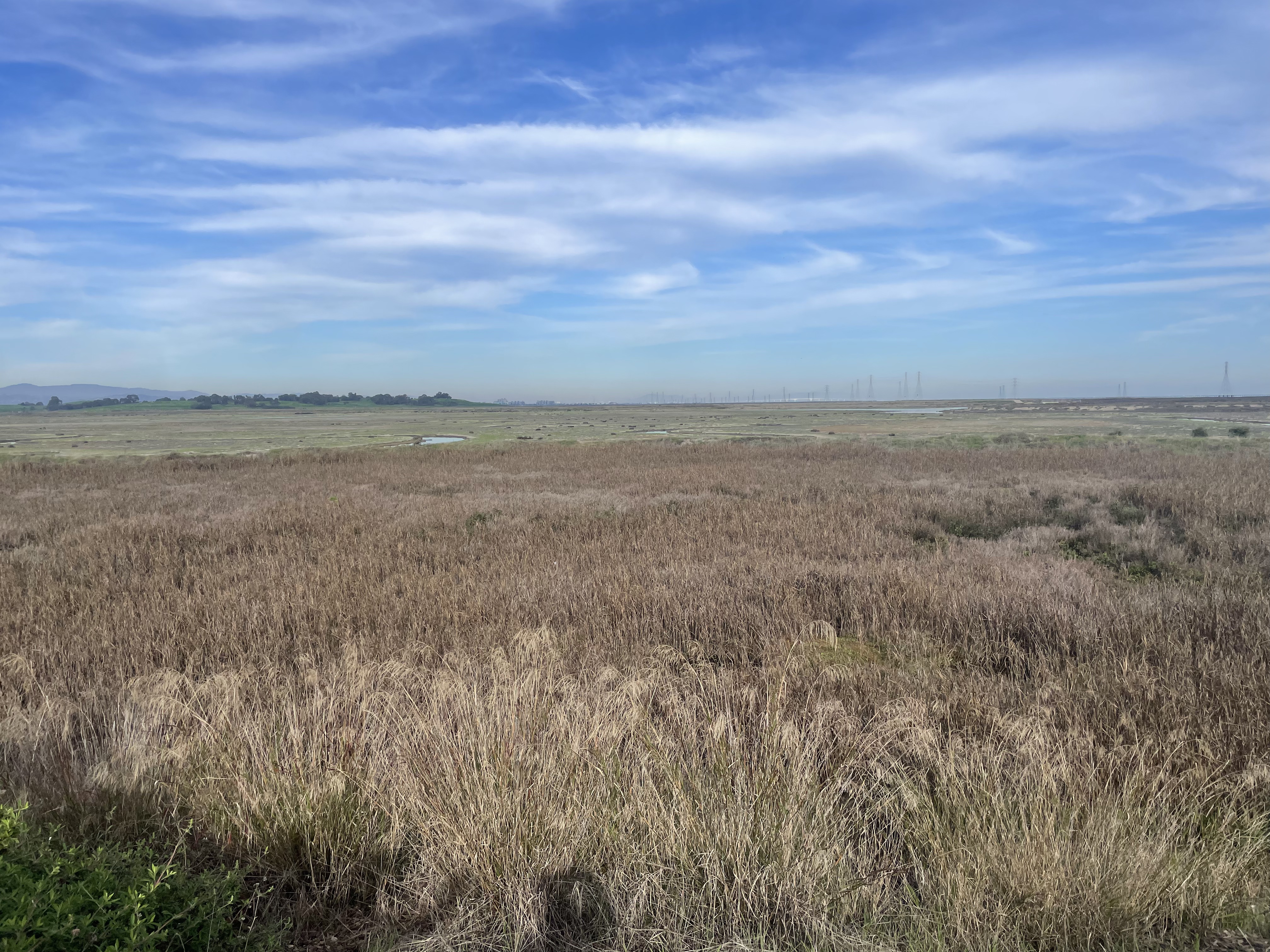
Photo by Summer Lee, where we heard the Black Rail. 2025.

But the computer world, no matter how much they built into our Bay, will always be mere simulacrum of what is sensate and experiential. It will always be the lesser substitute for life. My friend Leah’s psychoanalytic school shares two talks in the same week: “Submission as a response to trauma” and “Psychoanalytic perspectives on the unfolding global environmental catastrophe.” Children (we are all of us still children) accept abuse if it means we will survive, and we are unable to accept the slow violence of environmental degradation — the disavowal of our connection to each other and the natural world. She describes these talks as a series for an emotionally devastating curriculum.

So: Joy, joy and enthusiasm.

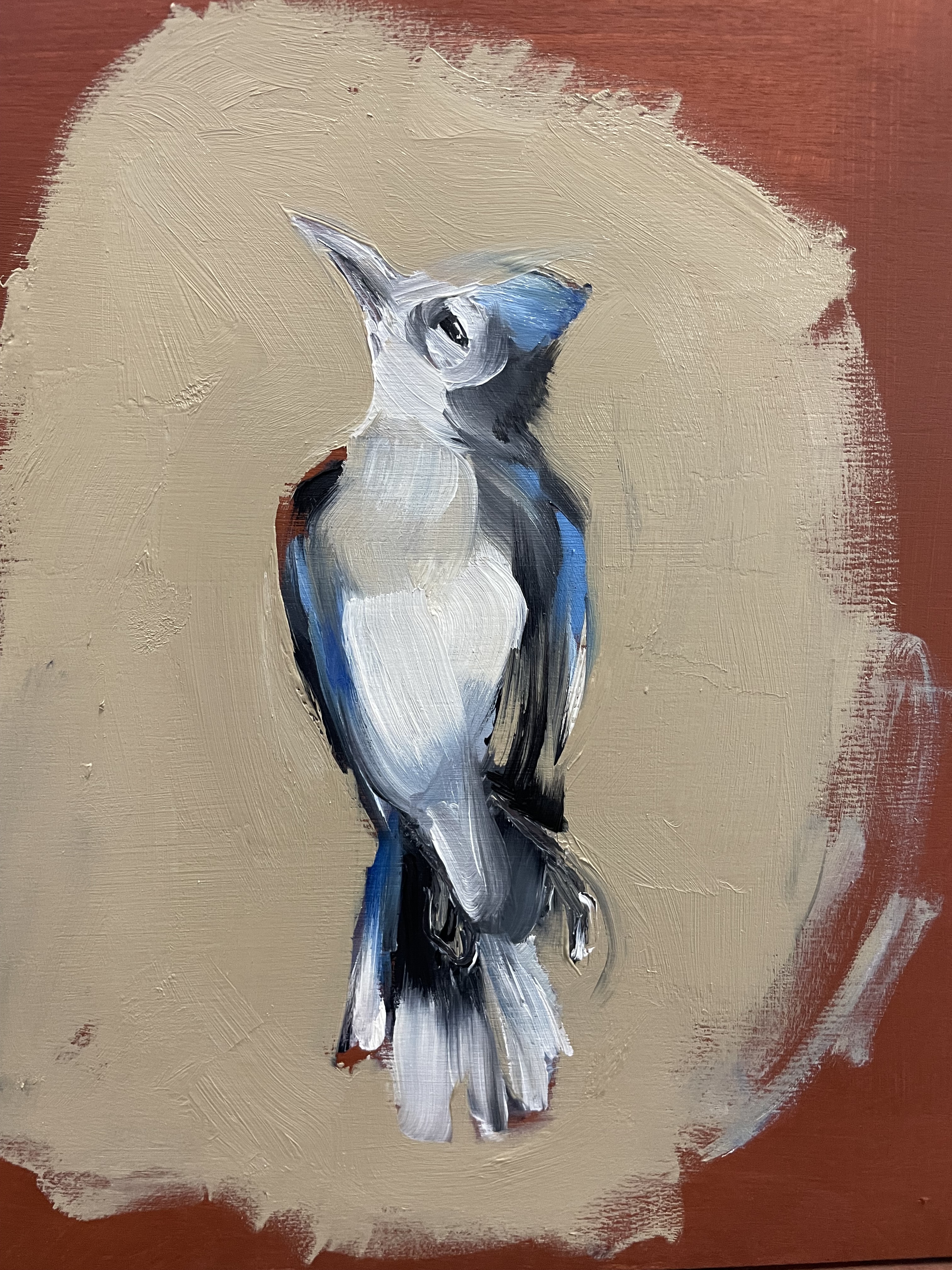
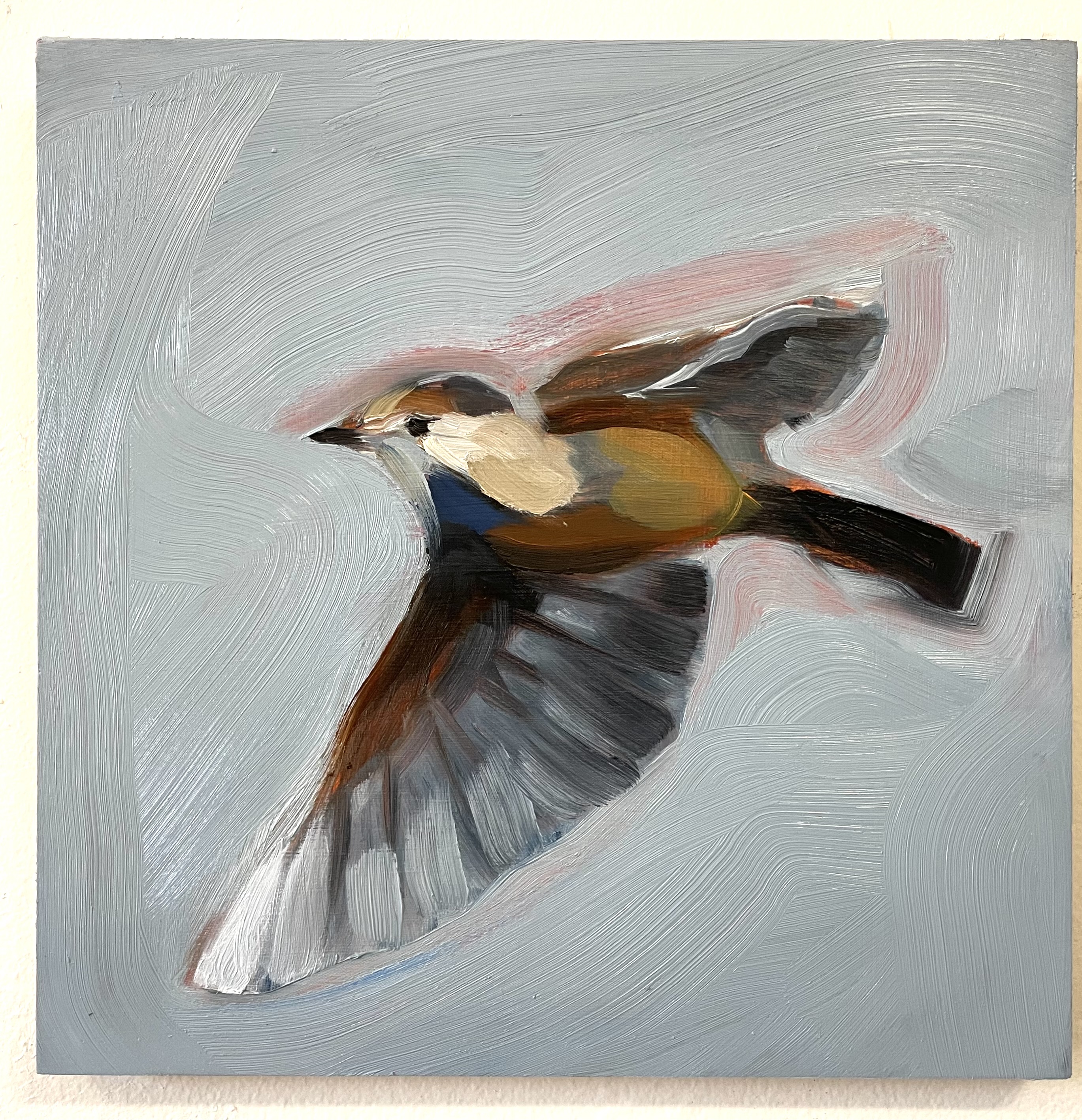
To find joy in the presence of other living things, Despret tells us. Our ethical obligation as living beings is to give existence to other living beings. That vestigial impulse is what sets me out here with these little words and paintings. Let me give exuberant breath to that friend who died, to those feathers she sent me, to that bird I only could hear but whose plaintive chirps filled my imagination with a wondrous swirl of hope and persistence — and with it, the fragile dignity of humanity. Right there in that crushed granite borderland between marsh and man, that periphery. Under the embrace of the California sun, next to the San Francisco Bay were once an ancient civilization thrived, today on the precipice of another unknown season, whether migratory or breeding.
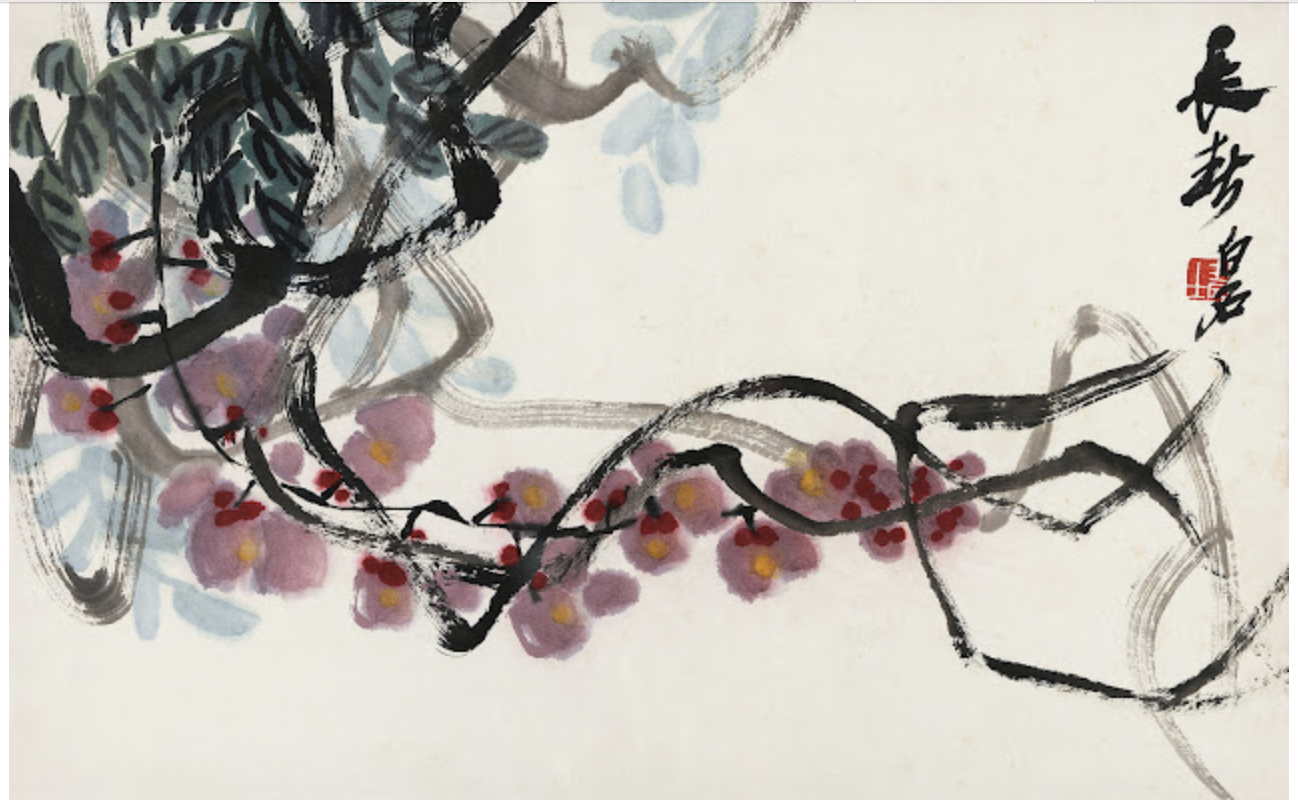
Ink Painting by Qi Bashi (1864-1957)

“What if a man cannot be made to say anything?
How do you learn his hidden nature?

I sit in front of him in silence,
and set up a ladder made of patience,
and if in his presence a language from beyond joy
and beyond grief begins to pour from my chest,
I know that his soul is as deep and bright
as the star Canopus rising over Yemen.

And so when I start speaking a powerful right arm
of words sweeping down, I know him from what I say,
and how I say it, because there’s a window open
between us, mixing the night air of our beings.”

— Rumi
“What the river says, that is what I say.” – William Stafford, Ask Me.

01 Tuesday Aug 2023

Posted by summermlee in Aesthetic philosophy, Art, Birds, Nature, philosophy, poetry

≈ 5 Comments

Tags

Ask Me, bird-watching, birds, birdwatching, George Steiner, giotto, grief, grieving, Love, painting, Summer Mei Ling Lee, Szymborska, Takeyoshi Nishiuchi, William Stafford, wonder

591.

A bird took me by the wing once. Pregnant and in pain, afraid for the baby and afraid for me, I was trapped in bed and wanted to sleep away the remaining prison term. One night, a snowy white Egret visited me in my dream. I locked eyes onto how luminous she was even in the sheer darkness. I followed her up and out of my room, up the stairs, through the shuttered window and into the dense fog above my house. As if such wonder could be contained, I took stock of the immensely opaque ocean air, and then my thought of well, now what? immediately ended the ascent. With the heaviest of thuds I arrived back in my body, into the discomfort of being a body again, and incredulously awake from the dream.

I didn’t know that memory was what I was going to write. But maybe it appeared because along my commute here to this place I remembered he told me once: to be human, we must renounce paradise and accept ourselves as fallen.

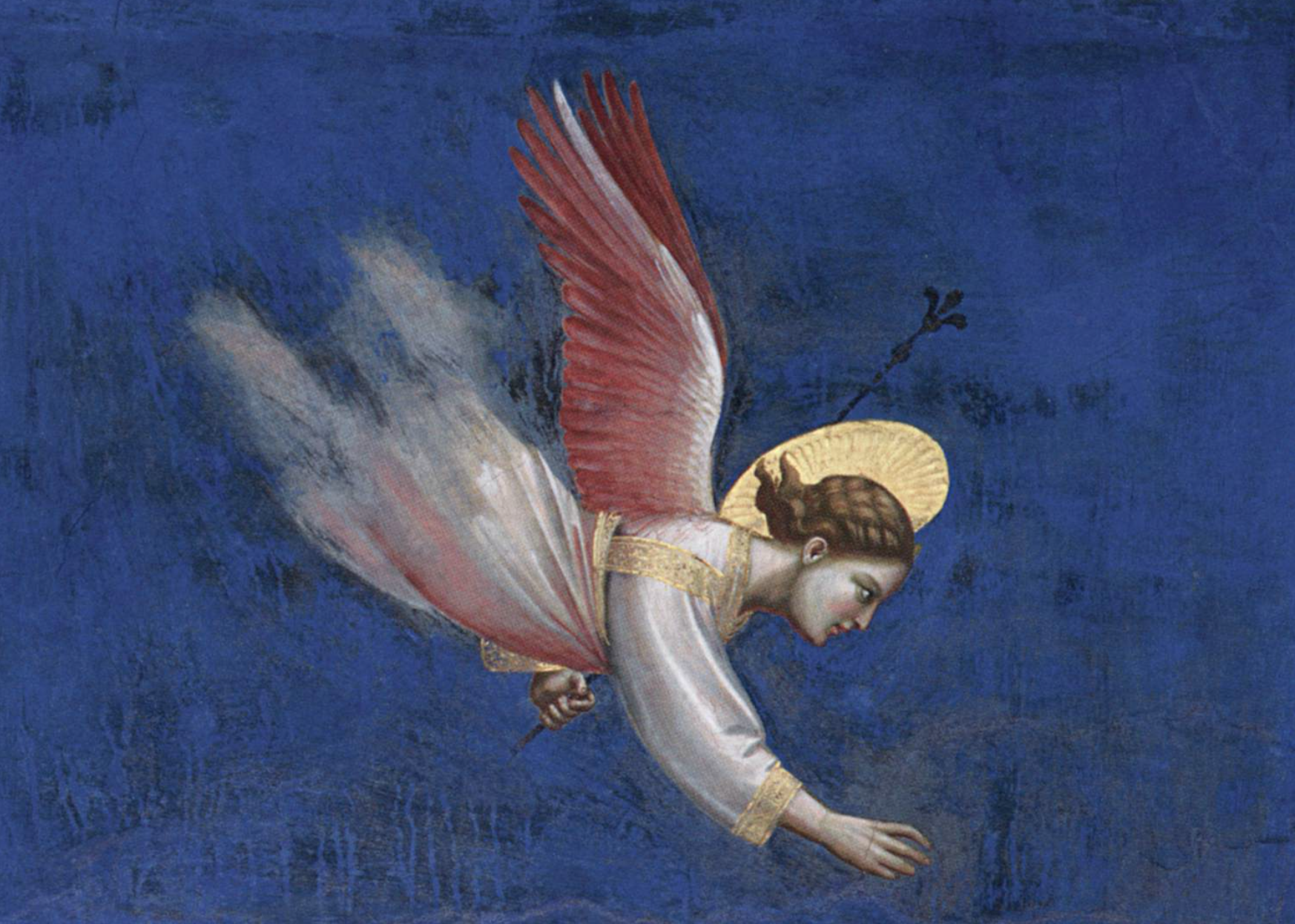
(Giotto, 1302. Scrovegni Chapel, Padova)

I can’t write about what I wish I could write about, but I could write about fallenness:

Her aggression hiding the need to be lovingly reassured. How I wanted to give him more love in the last hours than I had the rest of my life, and how there are no other words for it. How one evening we are laughing and she is a tipsy teenager again with lit-up Elton John glasses, and the next evening she slips below the water line and is gone. One week he asked me to teach his course for him because he knew I understood everything, and the next week I cannot fathom why he could take his last breath from himself. How such love and pleasure could follow in the year of someone else’s disappointment and regret. And just a few days ago, she tells me she witnessed a scene of a bird attacking a raptor who was in turn attacked and fell dead to her feet. We both knew what this meant — and just now, I receive some iridescent feathers she has sent me in the mail, from 2773 miles away.

But maybe most interesting of all, the little winged angel on the wall of the 14th century chapel, an angel whose bottom half is scumbled out with gray paint. As if to show we can try with paint or words to describe that dimension, and then as a result, something bigger than us, something more knowing than we are, arrives.

I don’t know what the 600th bird will be. 500 was the Bee Eaters from Africa who summer up north near the farm of the women who took me in, sick, a little lost, and with two sweet but wild boys. In the evening as we are eating in their garden, the Bee Eaters fly over us as if they are unscrolling stars on the chapel ceiling. Excited, they then yell to me in Italian and I don’t understand what they are saying, but it is to make sure I see them as they do — and something about how when I arrived, Summer arrived too. And then again, a year later, they tell me the Bee Eaters have arrived, and now they know, so will I.

I have no way to count the returning ones. It could be unending, they are events only half-way through.

And for those who followed me this far, and you don’t understand it all — I love you for it. I have hope that the nearer I am to it, the more mysterious it is. The more painful and yet the more beautiful. It just takes you by the wing.

This is why, for now, I am not afraid of the technologists who are coming after us with their machine-learning algorithms. Their logic cannot follow a bird that glows in the dark and flies into a house and through walls. Not just because the death of art is translation, he tells me, himself from behind the veil. But also because you and I still feel the “intolerable burden”, the beautiful burden, of the presence of something Other, and some of us have merely forgotten.

(Oil Painting of Leah’s bird by Summer Lee, 2023)

“Some time when the river is ice ask me

mistakes I have made. Ask me whether

what I have done is my life. Others

have come in their slow way into

my thought, and some have tried to help

or to hurt: ask me what difference

their strongest love or hate has made.

I will listen to what you say.

You and I can turn and look

at the silent river and wait. We know

the current is there, hidden; and there

are comings and goings from miles away

that hold the stillness exactly before us.

What the river says, that is what I say.”

— William Stafford, Ask Me.

(Oil Painting by Summer Lee, 2023)

“Art brings the finite and the infinite, the visible and the invisible, into coincidence.” Takeyoshi Nishiuchi

19 Sunday Jan 2020

Posted by summermlee in Aesthetic philosophy, Art, Birds, Nature, philosophy, poetry, Uncategorized

≈ 5 Comments

Tags

Annunciation, birds, Fra Angelico, language, Summer Lee, Susan McMane, Takeyoshi Nishiuchi, Young Women's Choral Projects

The greatest injury to Fox Sparrow might be that scientists are trying to build a mechanical bird to replicate all he can do. But what a consolation it is that they can’t yet fathom his genius — that when he moves just the toe of his wing, he can change the direction of all his feathers, just so. How he can make his feathers stick together with a force greater than Velcro and then separate them at will. Not to mention his song.

And their song. The mystery that all those technical elements can create a moment completely liberated from them.

Hands

(Here is Where We Meet, by Summer Lee, 2017. Cyanotypes, fabric, wood.)

There was a time when the mystery itself was worshipped. And that painters knew the impossibility of capturing it, but their religion was to try, for hundreds of years. But in these days, even though no one now can say exactly how a word becomes flesh, we are fed so much technical explanation about this material and that, the biography of that painter and historical event. Circular tales plunging us into neurosis. What else is neurosis but the inability to cope with uncertainty. And the delusion we can ward off any risk. They knew then, as it goes, the angel arrives even if Mary turns her head.

If ever you have held dead Fox Sparrow in your hands you also know that nothing else could suffocate life more than the self-congealing words we wrap around it. Even if it is, and it always is, to try and comfort.

Fra Angelico made a point to put the fallen Adam and Eve leaving the garden in the same scene as the Annunciation. He knew the word can separate, but also in the same scene obliterate all back into the messianic. Caroline’s poems do this many times a week. And maybe that’s why I tire you, to set out so selfishly about here with words from time to time. To remind myself, the truth and untruth of language.

To remind myself that no one can explain how the paint in my watercolor pan can bring Fox Sparrow to me. And how Fox Sparrow can leave just like that, just because I wrote it here.

Mary, in an economy of words we can’t fathom today, said,

Fiat mihi secundum verbum tuum.

Let me greet all such incursions on my cautionary house of being with such grace. To find repose in the pain of resignation. Not a lazy resignation, but at the end of intense searching, like that for Fox Sparrow. I have read volumes on his kindred, and created innumerable treatises on all the possible places he could be when he isn’t here. Some dark and treacherous, like facing decisions I must make for my child, the lightning-lit rain pelting Fox Sparrow as he embarks in his night flight home. Some of his places are as light-filled as the clouds of Veronese, overlooking restless humanity. And sometimes as majestic as the vanishing valleys into the boreal forest I will never visit. Most of all, it’s the perch on the thin wire weirdly placed in that painting. Where he peers down on a woman who has been greeted by an angel, telling her that her life is about to be changed by no fault of her own. And of course Fox Sparrow knowing what we don’t know: that we are all fallen. And that a word could turn into flesh, spirit into form, and save us.

fra angelico prado 3

Right now Fox Sparrow is under my feeder scratching the dirt in this humble coastal yard in front of my house. The more hungry he is, the closer he lets me. To see his black eyes see me, see this place, that somehow guided him here to me. Back to the emptiness.

The YWCP chorus, directed by Susan McMane.

The Dialogue with the Dead Cannot Stop Until They Hand Over the Future that has been Buried with Them. — Heiner Müller

18 Friday Aug 2017

Posted by summermlee in Aesthetic philosophy, Art, Birds, Nature, philosophy

≈ 4 Comments

Tags

China, Chinese Bone Repatriation, death, Derrida, George Steiner, Home, immigration, migration, philosophy, Summer Mei Ling Lee, Takeyoshi Nishiuchi, Toisan, travel

I am not ready to talk about their immigrant bones, or the difficult stories that each bone box tells. And besides, most are missing, disappeared on the wayward routes returning home, displaced even after death. Or they are in almost-forgotten fields marked by stones that don’t hold names anymore, nonetheless narratives. Sometimes just numbers, sometimes just the memory held by someone’s grandson who saw him bury them over there under there somewhere. And in there could have been my non-existence. As we peered into one unearthed bone urn, the top exposed to the sky cracked open by neglect, he said, there is the way into the underworld.

I need to listen.

I am aware that each word here is an act of listening, opening a new space for the next word. And of my failings of projections and memory and desire and convention, so that some words spill out overwhelmed by chatter and are already dead. Listening, like love, comprises a reverberation between self and other, where words and acts seem to fall out gracefully and illuminated and are received as a welcomed guest.

“It takes two freedoms to make one.”

Even if my grandmother has been gone for twenty years, she speaks to me in a certain way. When she was here she couldn’t explain anything about her childhood or her crossing to the United States, except that she had a favorite brother who died young, she didn’t know how.

By dint of so many unlikely arrangements to explain here, she brought me last week to a 700 year-old village in southern China. A group of villagers greeted me with their own generous hospitality to take what evidence I had and prove it was her home. Easily, she could’ve been from a village destroyed long ago, or one where no one could help. Instead, she knew somehow. What they wanted of her to want of me to know. So I could sit in front of her burned brick house with the gift of her brother in a bone box of a suitcase I brought from his grave in Chicago. So I could witness as nothing and everything took place. I had given nothing. In a long string of no’s, I just had to say yes.

fra angelico prado 3

(detail from Fra Angelico’s Annunciation, Prado)

They asked me if it felt like my homecoming, and it didn’t. I don’t belong there in any way, or really anywhere these days.  For now, I feel I belong to her retreating voice hurled through different time zones. Or when my sons resign their sleepy bodies near mine. It wasn’t my homecoming but it was his, and hers to give him. At the modest home’s ancestral altar, she had returned her sweet, young brother to where he had just left months before he died, at age 21. He knew of no other home. Even if that year was 1924, it was last week.

In that moment of offering inside my grandmother’s childhood home, and earlier on that slave mountain where we hiked for hours with that suitcase to their humble tombs, I asked about home. The calls of the flightless geese from the farms surrounding the village were deafening. Eventually, I understood that he belongs with my grandmother on her mountain overlooking this ocean. Some migrations are irreversible.

There is a lot of fear in listening, of unanswerability, of surrendering to silences too long to bear. In her words, it is the absence that the child can tolerate from the mother and no longer. It wants to choose a withdrawal into a security rather than the uncertainty of new countries, new losses, a new home. Maybe in those spaces created by fear is where unhousedness began, because security is a delusion we need to rest in.  The beginning lines of a tragedy. But a great awakening is at the bottom of a tragic flaw. Tragedy reminds us of our human dignity, opening us up to all possibilities, whereas fear has us only hear what we don’t want.

In southern China where my grandmother is from, more people have left than live there today. Thousands of years ago, her earliest Han ancestors brought their family bones when they migrated from the north to the south. Still now they practice a second burial tradition, where years after the first funeral, bones are cleaned and moved to an ancestral tomb. During the first waves of overseas immigration, arduous arrangements were made for those who died abroad to have their bones returned to their ancestral villages, tens of thousands of bone boxes crossing oceans and borders. But then history changed and almost all of the bones don’t come back anymore. Some I visited are stuck in transit and have been for a hundred years. The odds they will go back to their ancestral homes are near-impossible, but they are a living-dead memorial that continues to cry out for all of us, I want to go home.

IMG_9786

(Bone boxes in Tung Wah Coffin Home, Hong Kong, awaiting repatriation.)

So I can forgive those who won’t go, won’t listen, whether they immigrate or not. They don’t go, because maybe the risk is just too much unknown, too much disappointment, the fear that some pain is bigger than us. The greater the connection, the greater the vulnerability when it becomes absent. When I think of moments when I didn’t think I would survive, I remember the scary way my son was brought into the world, when I wanted to be nowhere near what I was experiencing. After losing a lot of blood, I asked my mom to not let me cross over. I discovered then that the over there is so close. Even though I bore it, it was too much to bear.

An angel appeared soon after and spent time with me.

I expected she would say, oh stop, you weren’t even close to going over.

Instead she said, you were close to there, and you could have gone over. But, she added, I know you would have returned. It wasn’t your time. And it shifted something and the nightmares ended, but I understood. We all have our mundane annunciations.

“The wisdom of love is that it isn’t always safe but it is always truthful.”

All of them, alive or in bone boxes, are telling me stories of un-home and home, and underwriting my own restless search for one. Home is certainly not in these small houses of cautionary being, toppled by each new intrusion of life. If so, my sons would not be here. I wouldn’t be here either, along with all the moments when immense gratitude and beauty overwhelmed me. Home seems to transmute from the relentless feeling of loneliness and displacement. Nathan said maybe we hover home, and reminded me that home, if it exists, enters only in the here and now and leaves. And it does seem to be a here of reception and not fear, even if the guest turns despotic or worse. “But without the gamble on welcome, no door can be opened when freedom knocks.”

Who knows what I will hear next.

In leaving China back to my temporary un-home, I followed her original route over an uncertain ocean. And I could imagine their bone boxes passing, going the other way. They pass by me, holding things I realized I had also lost, maybe continually losing as I keep living, and they are returning to the spaces I just left.

The same man who taught me most directly about tragedy, and therefore the beautiful fragility of presence, gave me a life-long address for this route: In welcoming a guest, you have found your home.

“Such a caring for death, an awakening that keeps vigil over death, a conscience that looks death in the face, is another name for freedom.” — Derrida

IMG_9503.jpg

Dai Wan Village cemetery, Toisan.

Enter your email address to subscribe to this blog and receive notifications of new posts by email.

Join 618 other subscribers

Recent Posts

  • “The terrifying groundlessness, the eradication of all violences. To be embraced by that which doesn’t know us and in that unknowing caresses us and truly loves us. We might become anything at all, something wildly other than what we are encountered by. A world that truly loves us by not presuming what we want or what shape we will take before we show up… We will be held when we are not known from the start.” — Dr. Marquis Bey
  • Images dream within us, a reverie is a world of expansion.
  • “For the natural world, the ethical responsibility is that being alive gives existence to others.” Vinciane Despret
  • “We meet in the freedoms of each other.” – Takeyoshi Nishiuchi
  • “Those with wings, those without, / the ghosts of the heart / — whose hunger is a dress for my song.” — Brigit Pegan Kelly

Archived Posts

Blog at WordPress.com.

  • Subscribe Subscribed
    • Unwanted Advice: Reflections from a Self-Appointed Life Counselor
    • Join 214 other subscribers
    • Already have a WordPress.com account? Log in now.
    • Unwanted Advice: Reflections from a Self-Appointed Life Counselor
    • Subscribe Subscribed
    • Sign up
    • Log in
    • Report this content
    • View site in Reader
    • Manage subscriptions
    • Collapse this bar

Loading Comments...