• About

Unwanted Advice: Reflections from a Self-Appointed Life Counselor

~ Caminante, no hay camino. Se hace camino al andar. Wayfarer, there is no way. You make a way as you go. (Antonio Machado)

Unwanted Advice: Reflections from a Self-Appointed Life Counselor

Tag Archives: Photography

“The terrifying groundlessness, the eradication of all violences. To be embraced by that which doesn’t know us and in that unknowing caresses us and truly loves us. We might become anything at all, something wildly other than what we are encountered by. A world that truly loves us by not presuming what we want or what shape we will take before we show up… We will be held when we are not known from the start.” — Dr. Marquis Bey

06 Monday Jul 2026

Posted by summermlee in Aesthetic philosophy, Art, Birds, Nature, philosophy, Uncategorized

≈ 1 Comment

Tags

art, Étienne Souriau, Being, birding, birds, birdsong, birdwatching, Crossings, death, Dr. Marquis Bey, homecoming, nature, painting, philosophy, Photography, Summer Lee, Summer Mei Ling Lee, tragedy, travel, Vinciane Despret, Virginia Woolf

Last year, there were vireos, grosbeaks, and warblers raining down on me with their song, from their canopy above a steep climb through the pine and aspen canyon, Ouray of the San Juan Mountains. This year a fire erased it all and was still burning as we flew out above the plumes, our pilot making a rubbernecking route as we departed. As we peered out down onto the devastated mountains, my sons held my hand as we ascended, a tradition they still abide by. And I saw the woman behind me from the corner of my eye, crossing herself.
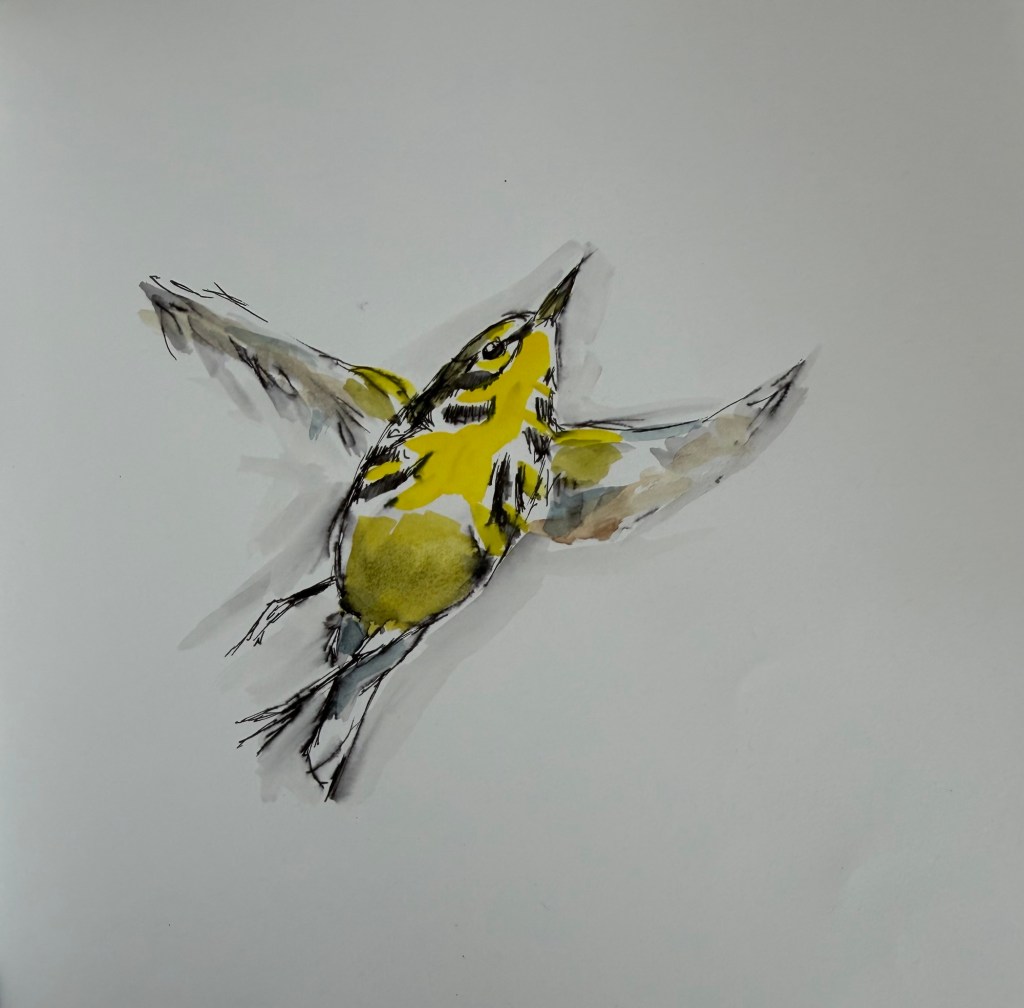
Prairie Warbler, 2025, by Summer Mei Ling Lee

Joseph drove me from that place I freed myself from, where he was a day laborer. He had to change his shirt before he got into the van, where I waited in my impatience to break away. I was reborn like when I collected my kids and my things and my self worth and flew away from her smoldering apartment.

Joseph apologized for keeping me waiting and asked where I was going. Though he meant which hotel, I said I wanted to see his Zambia. Minutes later we were deep in conversation in the local open market. The open aluminum and wood stalls were humming at mid day with babies sleeping in the piles of vegetables and housewares, and women walking in groups with their bags and baskets. I bought vegetables from his aunt, peanuts from a man and his son, and I can’t remember what else, but in a short time his van was full of food. I told Joseph to bring it all home to his wife, what would I do in a hotel with any of that anyway. I was down to my last $20 USD in kwacha, a week’s wages for the better off there, when Joseph said he had understood me now. The last spot he took me was under a tree where women sat on the ground with some vegetables. He told me these women had to take a bus for two hours to arrive to that patch of dirt at the end of the market, to try and sell what little they had. I said for him to pick someone and give her my last bit of money. In a few minutes, he returned to the van with a fistful of onions he threw onto the pile of food. He said the woman was very grateful, told him to tell me thank you, but she had to give me something in return.

I would understand soon that many Zambians were orphaned young, and that famine lingered. They didn’t come out and tell you this directly but a few sentences in and they were missing their mother who was a good church singer, who even while dying asked her son if he had eaten something.

During our drives around the area, Joseph became less a guide and more a confidant. Joseph had some disappointment with his wife, the unfairness at his workplace, the different ways Zambians did things. How his young parents got sick, one after the other, and died. One evening, a story came up that he said he hadn’t told anyone. He had been taken in by an aunt who was mean, making him choose between school and food. He told me more than a few times that he knew what hunger was. He said one night when he was a boy he was dreaming and a voice told him to get up and walk the road. It was 2 am but he did it anyway, along a red dirt road just like the one we were driving along. Pitch darkness except his headlights and our imaginations. He said that he walked about a hundred yards and found coins lying in the dirt. It was enough to let him eat the next day. The next morning no one believed him and he didn’t try to convince them. I said it was an angel, thinking silently to myself about his parents somewhere in a different mode of existence. He said from then on he started to believe in a god, that there was something bigger than all of us that we couldn’t make sense of. His god was loving.

Ten years ago when I had to move thousands of miles away from my native land, I found a nest that fell to the ground in the yard of the home I was about to leave, I separated the fibers and fluff of the nest and sewed them into fifty cards and sent them to everyone across the country and the world who had given me a sense of home. When I told her about the project, she told me, you had to become displaced to find your family.

Soon after my time with Joseph, I found myself on four continents within a few months, and home became that tiny piece of driftwood I once photographed, where a Common Tern perched forty miles out at sea with no hint of land anywhere on the horizon.

Adrienne said this is where the utter vastness of patterning arrives to us in 3D rendering. I said Virginia Woolf called it the hidden pattern behind the cotton wool of daily life. I droned on about miracles, and she said: yes, they occur in the crossing, when the pattern breaks through and reminds us of what we are normally cut off from. And then she sent me a poem where multiple realities are happening all at the same time, the most superficial one being a young girl declining a stranger’s invitation.

Are there unlived lives?

Joseph tells me in the same sentence that he is ready to leave the earth, and that he adopted and is raising two orphans of his own.

And yesterday, emerging from the smoke of the western Colorado fires, the Black Grosbeak and the Yellow Warbler alight upon branches within feet of each other and despite everything, sing each other into being.
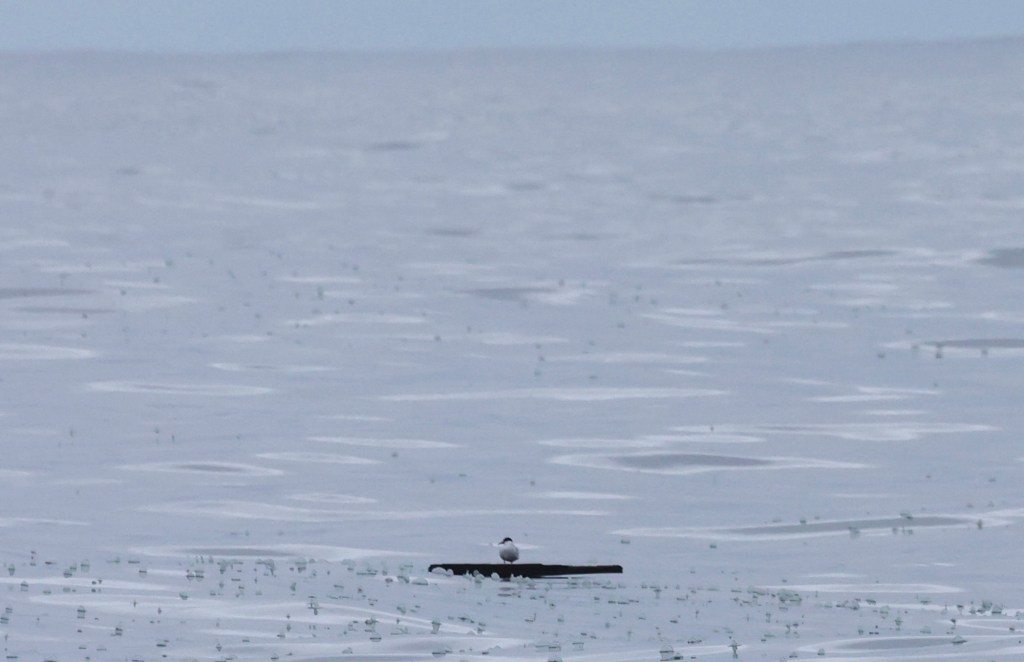
Common Tern, 40 miles west into the Pacific Ocean by Summer Mei Ling Lee, 2026

“For the natural world, the ethical responsibility is that being alive gives existence to others.” Vinciane Despret

24 Saturday May 2025

Posted by summermlee in Aesthetic philosophy, Art, Birds, Nature, philosophy, poetry

≈ 9 Comments

Tags

art, birding, birds, birdwatching, death, Joy, nature, philosophy, Photography, poetry, Summer Lee, Summer Mei Ling Lee, therapy, Vinciane Despret, wildlife, writing

Chestnut-backed Chickadee is very dutiful to the nest in our backyard, one that we have followed for years via the bizarre technology of micro-cameras in nest boxes and our large screen TV. Precariously late in the season this time around, she laid two eggs and sat on them for over three weeks, not realizing the eggs were no longer viable. I tried very hard not to associate this failure, our first ever, with the invisible warfare around me. But the experience of her tiny, formidable body in the middle of the night pulsing rhythmically on those two non-viable eggs crescendoed into a menacing dread.

Eventually the internet registered an obituary for my therapist, confirming that she succeeded finally in terminating our sessions for the reason she said, and not because she needed a big excuse to overcome my refusal. She made it 10 months after the day she left me that voice message explaining she needed to end our 10+ year project. When I found the obit, I immediately replayed that voicemail to join the real voice to the disembodied voice in my head that arises when things are emotionally grueling. This time around, I heard what I missed before: she was holding the space for me when she was reckoning with only 10 months of space ahead of her.

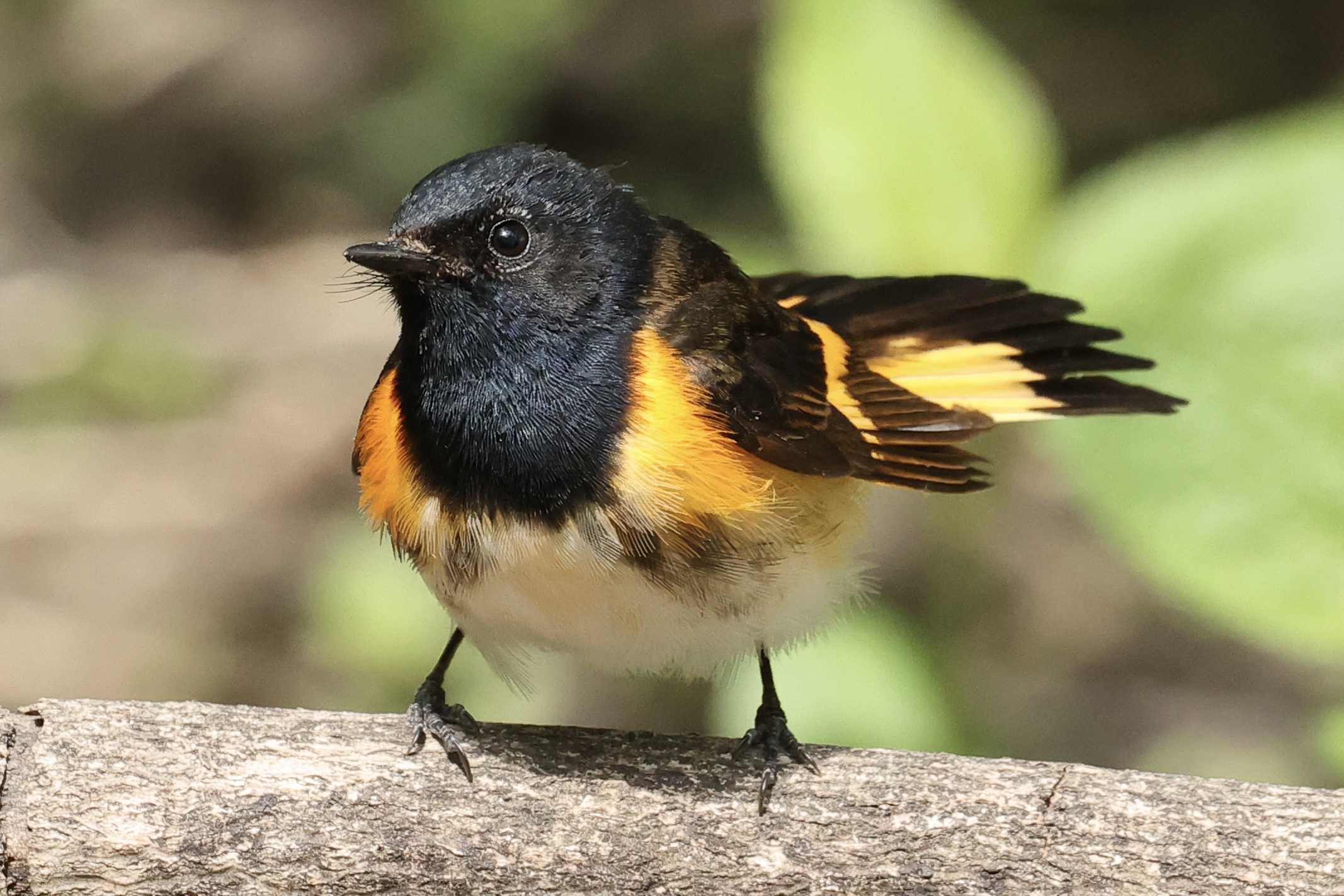
American Redstart, North branch of the Chicago River, May 2025, by Summer Mei Ling Lee

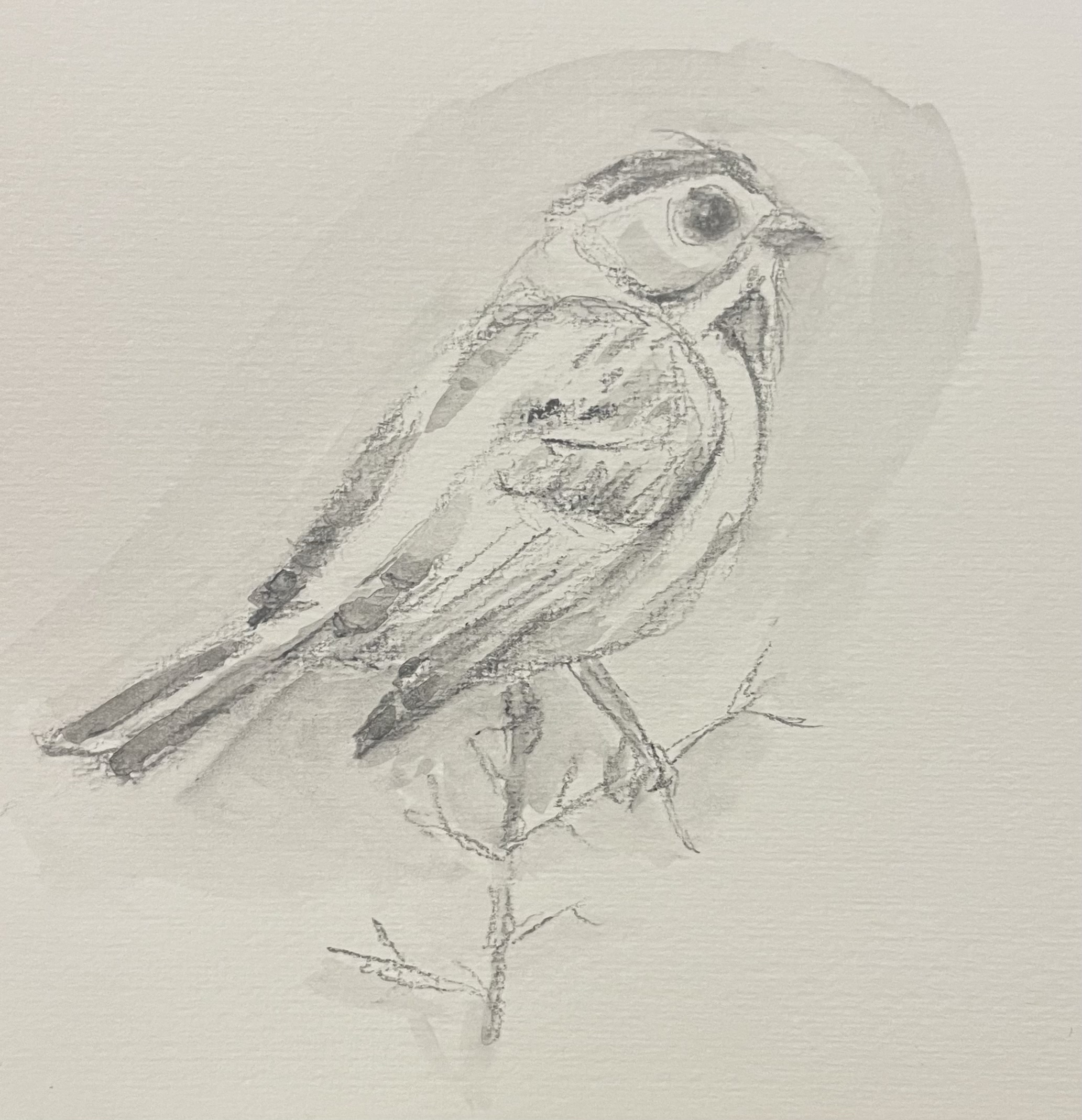
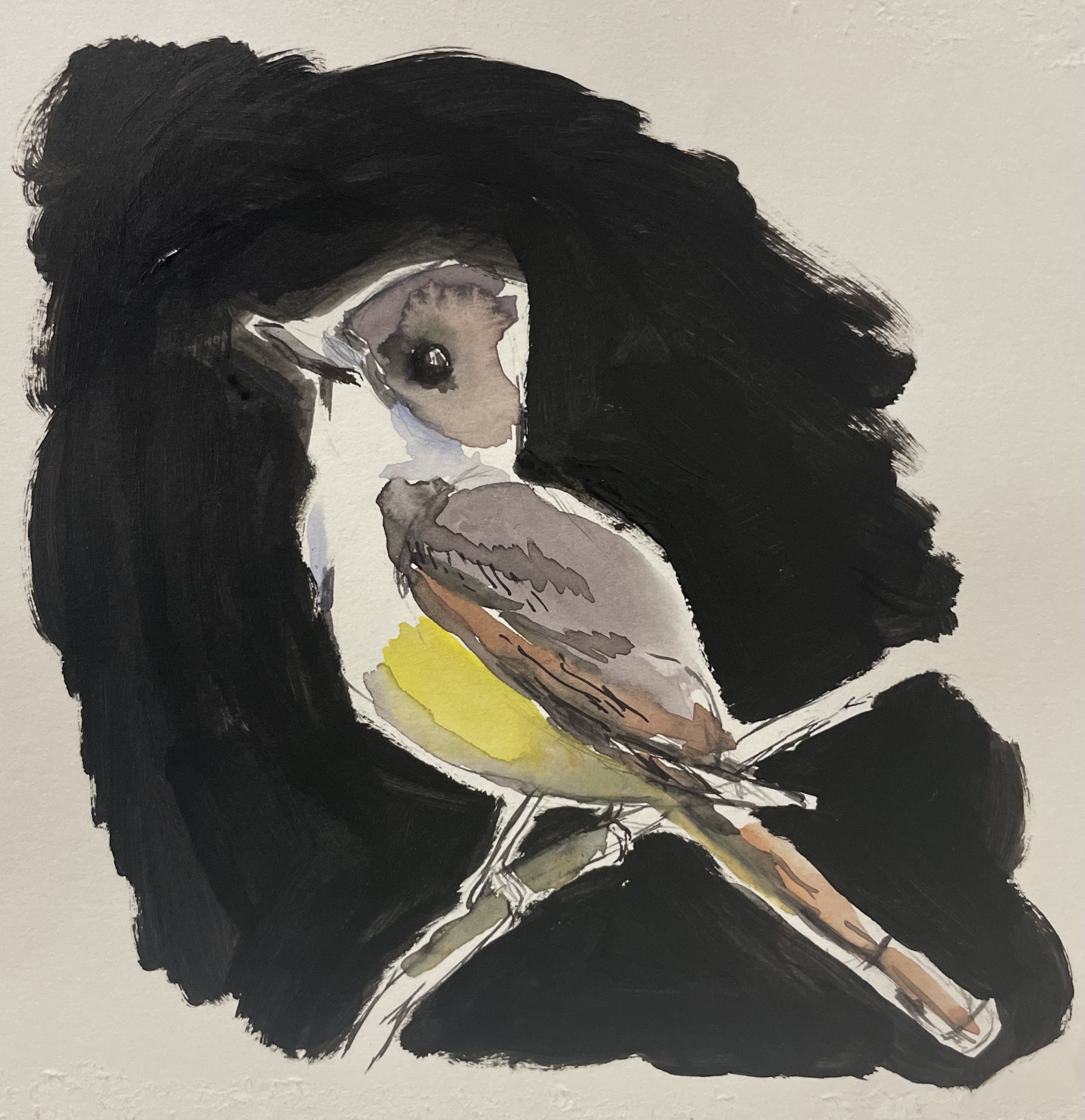
I was in London when she called, and had just sat breathless through one of those explosive Italian operas where people cheat and lie for dumb human reasons, and then the most innocent die while the egomaniacal people are guilty too little, too late. So I had a lot to cry about, losing her as a therapist and the world imminently losing a good soul. I drew her a bird that came out faint and shy-looking, with big eyes, and singing, probably a good simulacrum of her. Behind it, I wrote a William Stafford poem and told her she was the coach I always wanted to see down the third base line when I had to go up to bat, bases loaded, two outs, several runs behind, and someone just handed me a bat with a hole in the middle of it. She knew well the type of coaches I mostly had who motivated players through tyranny or perfectionism, like my inner one. I reminded her of the times early on when she had me call her first thing in the morning to let her know if I had faced the specters in the dark night of the soul. We both know she never billed me nonetheless mentioned how those calls were not in the schedule.

She answered back to my bird card on Christmas Eve saying in her midwestern way that my words meant a great deal to her, and added her best wishes as we moved from the darker part of the year into the growing light.

Back to a few days ago, what I could hear most of all in that voicemail, is that she seemed fulfilled to reflect on how much I had grown in those 10 years, and as with the best gifts, the beauty of our work was there not because of anything I particularly did, but as an aleatory result of her long career of studying, listening, and supporting hundreds of people long before I even came along.

I took these tears back to the bridge overlooking the north fork of the Chicago river, a river whose direction was reversed in the industrial age, because that seemed easier than stopping the pollution of it. My therapist and I had many reveries about rivers. My favorite ones being about smashing into the banks, sometimes recklessly, and needing to course-correct. At times, I think she was white knuckling the oars for me more than I was.

Her bird drawing, by Summer Mei Ling Lee, 2024

Now over this bridge and this river, warblers of twenty-plus species and an endless palette of colors filled the trees along the banks as far as one could see downstream, like bits of popcorn flitting over the water from the greenery and back. And as not often happens, my fellow birders in our exuberant yearly reunion fell silent. I thought of Craig, to take his palpable silence around all the trailbends of the area and summon him here.

I am sorry that I want so badly and try every time to put words to these moments: these fragile, tiny, colorful birds dropping down out of the darkness, somewhere along the middle of their thousand-mile migrations, just where I happen to be. How we greet them, try to still them, what they say to us. And then what we say to each other. Even to those who are no longer here.

When I returned home with a camera heavy with hundreds of blurred warbler photos, my boys’ hands tired of feeding Chicago chickadees, I overcame my dread and turned on our chickadee TV. Oh god, I mumbled as her body was still curled on that nest, breathing heavily. “What is it, mama?” She still doesn’t know.

As the day opened up, she finally moved off the nest to go forage for a snack. And there in her place were 5 more eggs.

“The subject is only the transient addressee of the verb which seizes it. Every subject is in a becoming not only of their own action but in the multiplicity of actions that overflow them.” Interview with Vinciane Despret, Grimté, January 23, 2023.

“Those with wings, those without, / the ghosts of the heart / — whose hunger is a dress for my song.” — Brigit Pegan Kelly

02 Thursday Jan 2025

Posted by summermlee in Aesthetic philosophy, Art, Birds, Nature, philosophy, poetry, Uncategorized

≈ 4 Comments

Tags

art, birding, birds, birdwatching, death, Loss, Memory, nature, Paul Celan, philosophy, Photography, poetry, Shakespeare, Summer Lee, Summer Mei Ling Lee, Vinciane Despret, wildlife

681.

To measure a life from the periphery.

The periphery is where birds live now, eking out existence in our built environment. Vinciane Despret also explains the periphery as where two conflicting demands can be held together in a vitalization resulting from those clashes and stimulation. It is where birds sing their territory. It is where nature and human modernity meet. It is the veil through which we mortals greet our disappearance. In its intensification of the things that aren’t yet perceived, the periphery is the place of artistic creation.

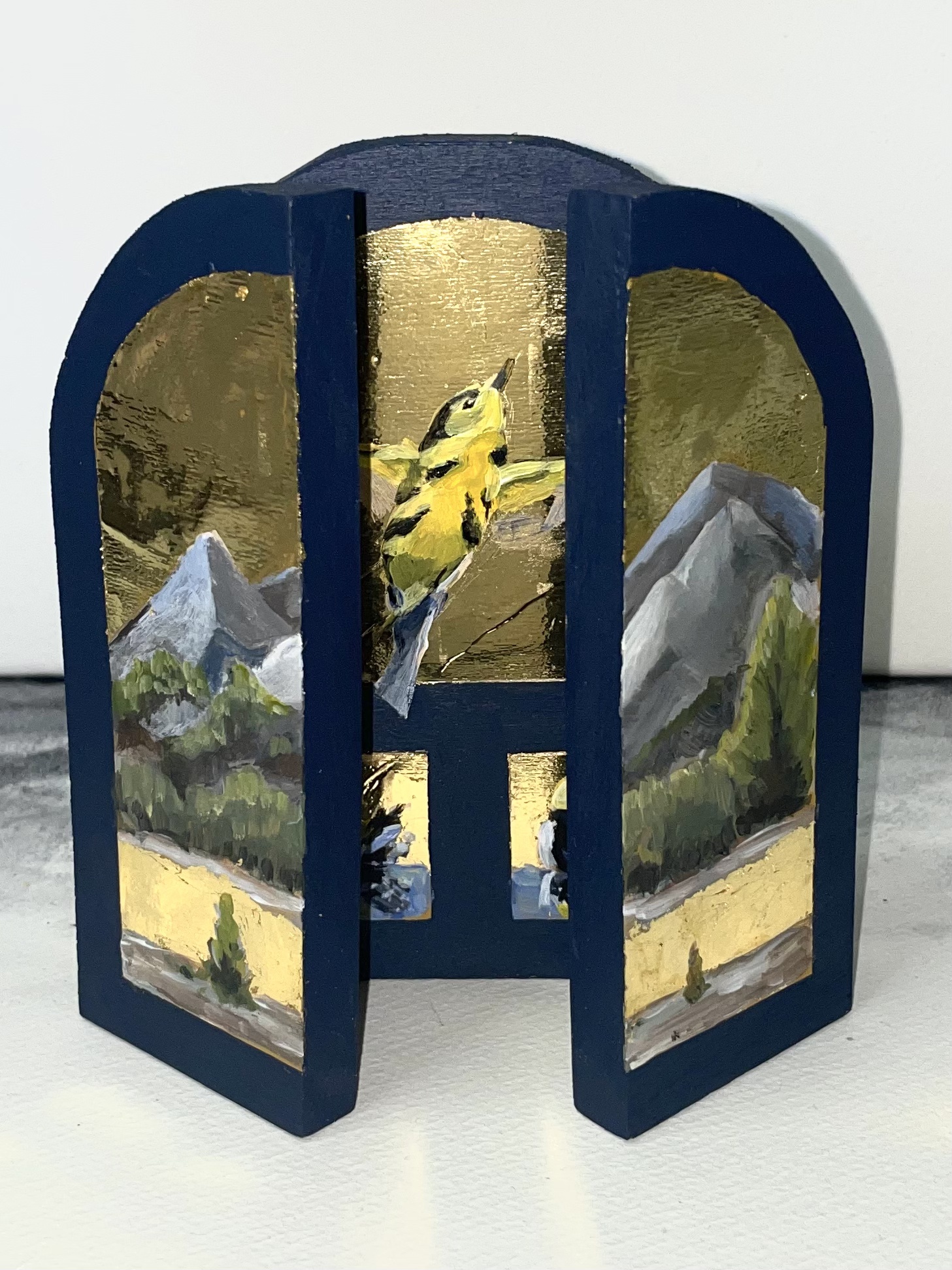
Annunciation VIII, by Summer Mei Ling Lee, 2024. Paint and gold leaf on wood.

Once I was at the periphery where on one side I would be ok, the other I would not. The place one arrives to after the loss of beloved things, which mostly reveals the limitations of my scaffolding and confabulations. I ended up in her office. She was a midwesterner, a plain and small, older woman who had come out of the managed healthcare system. I plainly admitted that my terror was that I couldn’t be helped.

The best healers do not make interpretations behind the backs of their patients. They resist the “simulacrum of intelligence on the back of the stupidity of others.” There on that clinical couch of her spartan and chilly office, just when I trembled in the anxiety of being a lost cause, she rolled her chair towards me and she reached her hand to firmly hold mine. She said sternly and confidently that she could help me. By grabbing me, she broke through that boundary of professional etiquette. But even more I registered that she didn’t know she was going to do that. She had the strength to answer to the moment. And that spontaneous responsiveness was real strength that no one can train for or read about or theorize.

After 10 years of seeing her, and after the last three years of nudges to fledge me, her cancer returned. She retired and flung me out into the wilderness. There is nothing more I could say or ask for — there is nothing left to explain. I drew a bird and sent it to her.

I might have been satisfied by the 35 or so anytime in my yard, but this past year I saw 277 different species of birds, right here in my own county, where I was born and raised. I saw 481 different species everywhere I wandered off to. In perspective, this year there were 4 other birders in my county who saw more birds than I did, and hundreds who saw more than I did throughout the world. Still, I abandoned myself to an attention that brought me into an intimacy with my native land outside my immediate yard.

This native land consists of precise sachets of memories as much as ecological specialization. One particular species of gull prefers one beach over the others, because the fresh water they need to survive pours into the ocean where the sands are flatter and can host more crustaceans they are specialized in eating. It is one beach out of dozens where we sifted through hundreds of gulls to try to find one rare gull, the first Siberian visitor to the continental US. It was the same beach where I was many times a near-hypothermic child who couldn’t resist the Pacific water tumbling over my feet, watching the sand bubble up where those crustaceans bury themselves before the next wave.

For 7 years in a row, Tufted Duck, off-course from Europe, wintered on a pond near an athletic club, where for our last day of high school our entire class spent the night, one last time together, signing yearbooks and playing ping pong. And then the next morning we dispersed into the rest of our lives. This year, Tufted Duck did not return.

While I was in the void 30 miles west on the Pacific Ocean, far from any landforms on the horizon, looking for migrating Arctic Terns and Sabine’s Gulls, thousands of dolphins suddenly broke the surface of the water as far as one could see. Just as quickly as they had rendered us ecstatic, they disappeared back into the void.

And along the ridge on which at 16 years old I first kissed a woman, there is a migratory path for Varied Thrushes, and when we were greeting them, a species of Crossbill touched down into a small pine in front of us — Cassia Crossbill, for the first time ever recorded, had immigrated into my county, crossing over the Sierras from its decimated forests of Idaho. The only way to know is by recording their calls and sending it in for confirmation from those who obscurely dedicate themselves to such distinctions.

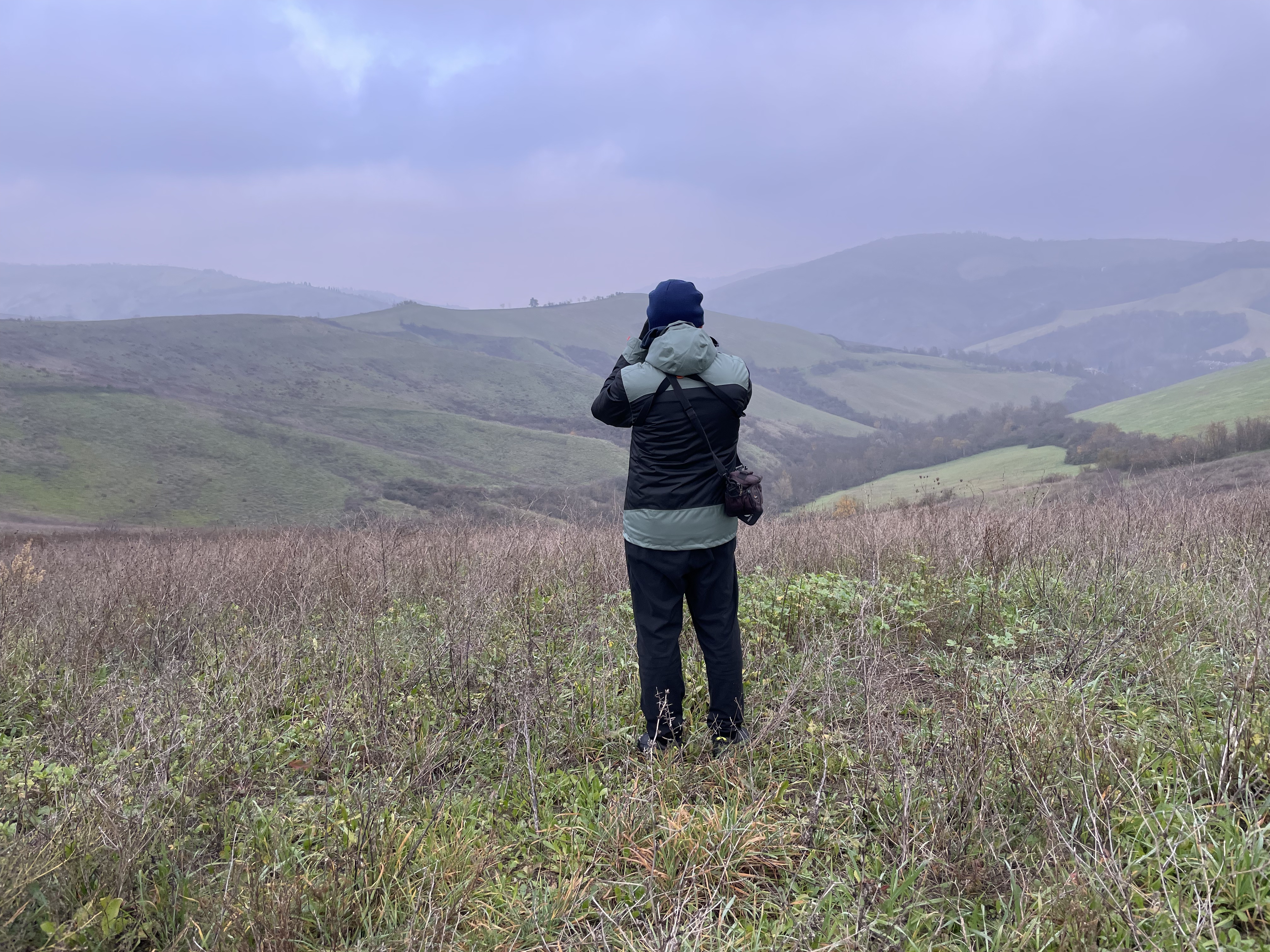
I won’t bore you much longer, but maybe it is more imaginable now why Pietro and I sharing only broken English could spend two straight days together, seeing 102 species in a delta half-way between Africa and Siberia, and never stop talking about them. A Little Owl in the early dawn light, perched on the eave of an abandoned building, then the warming updrafts conjured a Red Kite over the hills. Until sitting in the dark in a field behind his hometown, as shadows of Eurasian Woodcocks sailed over us from the stand of pines into their nightly roost in the plowed field. And even later than that, owls circled around us, barely perceptible like swirling apparitions of the imagination. Whether they were one species or another, and all the stories in between, was more than enough to fill a conversation on the rural roads back to my farmstead.

A man a continent away who knows what arrives on different directions of winds, who prefers the slopes of certain beaches, and what happens on foreign trees and in pockets of warm air of his region — as I am coming to know mine. We also witness too closely, bird by bird, the horrors of modernity — the loss of habitat to human profit, the flippant carelessness away from Being — threatening to ruin it all.

Pietro on the third day, and the hills of Bologna, 2024.

As things slip away, like Tufted Duck, as they do when one realizes life in years is more over than it is beginning, time on the periphery becomes more precious and any aliveness, wretched or wonderful, can be understood as bittersweet. Abundance. And god help me, there is also the sting of every time I fell short of love.

680. (Malia Defelice’s 400th county bird). Watercolor by Summer Mei Ling Lee, 2024.

“It gleamed.” Tenebrae, by Paul Celan

“The Infinite Cage” — Joron

07 Tuesday Feb 2023

Posted by summermlee in Aesthetic philosophy, Art, Birds, Nature, philosophy, poetry

≈ 5 Comments

Tags

art, bird watching, birds, birdwatching, death, Home, memoir, migration, nature, painting, philosophy, Photography, poetry, Summer Lee, Summer Mei Ling Lee, words, writing

(With a few words in a note to me, she tore open the blank space here, and asked me to write again. Her gesture brought tears, in both senses of the word, and so it starts with tears — because it involves breaking the icy river, the cowardly reluctance to thaw it, to think it isn’t always flowing underneath.)

(Santa Croce ceiling bird.)

Beauty, Nathan reminds me.

What of my small experiences wants words to land them here. What birds would touch down from untouchable sky in order for me to see them, count them, photograph them, devote myself to them.

Because now these birds seem wild and unbelonging like the work that sits months waiting for me in my studio.

Last week we made a strange reunion of local birders on the back porch of a stranger’s house, to peer over a fence into the neighbor’s yard to glimpse a young Summer Tanager eating desperately at the feeder. He was undoubtedly wayward and far from home territory because of the onslaught of coastal storms. We were welcomed into that space and to each other, with only a quick mention of the mass shooting that had happened the day before shattering our small town. Then, the bird arrived, and as Eva describes, we wandered into the center of the circle of wonder. Summer Tanager was the greeting.

How often I delude myself to be disconnected from it all. And as Eva exclaims more loudly, impatiently, because the most obvious is the most difficult — we are always in the circle of wonder, never outside it — and we can indeed find center. Never by our own narrow volition, but by wandering.

(Red Phalarope by Summer Lee, a pelagic bird brought inland by storms, 2023.)

But I want words for those birds, those moments — not the ones where I tenderly helped unclench his fingers from the hospital bed, or the impatient coldness I can turn towards my own children, or how exhilaration smothered grief when driving away from her hopeless apartment for the last time. Not for the woman who rocked her body in prayer before every beautiful dinner she served and told me, this is not the life I expected for myself. And even still, not the gift of my children’s joy that persists despite me, or how I can burrow into the surrendered miracle of my new, unexpected lover.

Somehow there should rather be words for the Virginia Rail that crept out from its perennial hiding place to the spot below the window of my car. And how we caught eyes, one being welcoming another.

The people in that odd backyard meeting, with undoubtedly their own sufferings and joys, would understand. The Virginia Rail is basically all we talk about for hours and hours, even though long ago and long gone — until the next improbable Beauty arrives. And of course, those far away but close to my heart who send me words fluttering down from the sky, out of nowhere perfectly on time — thank god they understand too.

(The Virginia Rail. January 2023.)

In these birds, these words, these friends, I know is the paradox of faith, and how it takes care of us by destroying us.

I will taper down this roughly thawed cascade of words to say that 77 unique species of birds have visited my yard in the 20 or so years I have lived at this home. And I wonder about what I missed in the times I drifted away. Once a group of us chased a vagrant Dusky Warbler across a field of dried fennel, a man’s long camera lens thunking against my head to capture the bird, preventing me from photographing it well. The bird flew off confused, and we stayed to celebrate, for me the 560th species. A bewildered boy next to me scanned over the expanse of chaparral and said, just think how many dusky warblers might be out there and we would never know.

(The Dusky Warbler)

So maybe in my silence, where words haven’t been, is a backwards way to acknowledge some secrets. Not about the “yoke of perishing” we come into being with. More like finally seeing the Prairie Warbler next to the local sewage plant. That time, it took minutes to see his yellow light darting in the scrub, when the year before I spent weeks, thousands of miles away, to no avail. How some things will always escape, even as I am coming closer and closer, and reveal secrets of me that are unknown to myself even. Dufourmantelle cautions, mystery is not an enigma to be solved but prayed to, and truth is only a veil.

“Endure, o mystery of being, so that I might pull threads from your veil.” – Wislawa Szymborska

“The luminous ruins.” – T. Nishiuchi

31 Saturday Aug 2013

Posted by summermlee in Art, Birds, Nature, philosophy

≈ 3 Comments

Tags

art, Joos Ven Cleve, language, Photography, Summer Lee, the birds of San Pedro Valley, tragedy, words

“These words feel as if two waves of water meet each other, his and now mine, and collapse — but they sometime even obliterate, they are definitely torrid and some of mine are too fucking little, too fucking late. True to the man and what he taught, though, they are luminous even as they are tragic. And so unbelievably, painfully, precious now. Because I just thought there would be more. When really there are none.”

The whole writing is here:

http://thebirdsofsanpedrovalley.wordpress.com/2013/08/31/the-luminous-ruins-t-nishiuchi/

My photograph of Lucretia's veil, from Joos Van Cleve's painting, 1525

(My photograph of Lucretia’s veil, from Joos Van Cleve’s painting, 1525.)

Be faithful Go

17 Saturday Aug 2013

Posted by summermlee in Art, philosophy, poetry, Uncategorized

≈ Leave a comment

Tags

Adam Hathaway, art, Emily Hughes, faith, George Steiner, journey of a photograph, Karen Hathaway, Photography, Summer Lee, Zbigniew Herbert

Art, even with its inward mystery, and maybe because of it, has a way of illuminating. Here is my contribution to this wonderful collaborative project.

Journey of a photograph, by Summer Lee, 2013.

Read about it here:

http://journeyofaphotograph.com/2013/08/17/be-faithful-go/

“Nothing lovable is eternal or sempiternal or deathless…. But the poem is bright.” – Leo Strauss

17 Saturday Mar 2012

Posted by summermlee in Aesthetic philosophy, Art, Uncategorized

≈ 1 Comment

Tags

art, Leo Strauss, Olivier, Photography, poetry, Rineke Dijkstra, William Blake

I found myself awakened to the point of tears today in front of a work of art. Despite the onslaught of art in which I have been exposed to in the last few years, you’d think this would happen more often. But the instances when art suddenly uncoils something within, melts a mundane frozenness, or leaps me into a moment of being – unfortunately, these moments happen less and less.

But today, I stood in front of a series of photographs by Rineke Dijkstra, and tried to hide the welling up that seemed so awkward and inappropriate in a sterile, brightly-lit museum environment.

We are of a time when photography is so facile as taking your phone out of your pocket and clicking it, and so mechanical as to overlay an algorithmic alteration to a photo with the push of a button, and so ubiquitous that even my mother (a monk, no less) captures and broadcasts photos of her grandson on her slick iphone.

Yet, Dikjstra’s meditative work solicits something missing in the accelerated onslaught of photography everywhere else. It is found in a realm of expert photography that cannot be mechanized and is all too elusive – the expression of an untranslatable but no less palpable human interiority creeping out from under a futile veneer. And such excision and study of this interiority necessitates a compassion for the subjects but also recalls one’s own vulnerability – places where we don’t admit that we could use compassion towards ourselves. This is Dijkstra’s poetry. As my friend said to me on the way out of the exhibit, you don’t think this is photography, her work transcends the photograph.

But that is not the main reason I was so moved today.

Within this series taken over 3 years, bearing witness to what time does to a young man entering adulthood, there are flashes of atemporality — 8 images sliced out of time and forever frozen in the present tense. Moreover, if you come to love him, like I did, you can sense something unchanging, a steady center at battle with the hard world. The minimalism of these works makes plain what he so arduously introverts at each point in time — plaintive lips curled to the edge of a cry, a stoic brow hovering over deeply questioning eyes, cheekbones hardening over the softness of youth.  I am delivered to a heart-rending moment when one opens to the particularity of his experience and rediscovers qualities that are irrevocably and universally human.

How could I not think of my own son, and not mourn all that has already passed and changed in him? How could I not grieve that one day I will not exist to see him and his evolution? That even as much as our lives are intertwined now, there will be a great deal of his life unfathomable to me, completely unreachable. How could I not be flooded by the pain of loving something so fickle as a life – and so overwhelmed that if I didn’t push it back a little, I would be a blithering mess, in a sterile, brightly lit gallery of the MOMA. It was a moment in the day-to-day delusion that all remains safely the same, when I am suddenly awoken to the inescapably temporal. And from there, flowing in the rhythms of temporality, I can come to relish one exquisitely measureless, timeless beat.

Today’s Advice: “He who to himself binds a joy/Doth the winged life destroy/But he who kisses the joy as it flies/Lives in Eternity’s sun rise.”  — William Blake

Today’s Issue: “Do not count on death — on your own or on universal death — to found anything whatsoever, even the reality of this death. For it is so uncertain that it always fades away ahead of time, and with it, whatever declares it.” — Maurice Blanchot

17 Friday Feb 2012

Posted by summermlee in Uncategorized

≈ 3 Comments

Tags

Blanchot, Francesca Woodman, Heidegger, memoir, Mortality, Photography

A friend treated me to the MOMA exhibit of Francesca Woodman’s photography today. Her photographs are emotionally grueling as much as they are poetic and otherworldly — a startling oeuvre for an artist who killed herself at 22 years-old. Amid her reckless vulnerability, guileless experimentation and the prescience of her deadened gaze, it’s hard not to notice clues of a yearned-for redemption. Therein her photographs lies an openness to the other that occurs in a blinding blast of exterior light, a haze of translucent corporeal form as it moves during long exposure, and the compositional beauty of shapes in a beauty-less squalor. When I encountered the images which captured her in a morbid dance with her dead grandmother’s belongings, I heard instantly the song echoing in my own heart: my own missing grandmother.

My grandmother and I saw each other completely and despite this, loved each other wholly. It also helped that she spoiled me unabatedly, but that’s the providence of a grandmother. She has been dead almost 15 years, but her absence is as fresh as it was the moment her eyes beseeched mine in her final suffering — the moment I abandoned her, glancing away in my callow inability to reckon the totality of loss.

She bore only one son, who bore only two daughters — and the Lee lineage, with now dead branches of ancestors from roots undoubtedly in antiquity, is a felled tree. Yet she loved her grandaughters not just all the same, but perhaps even more so because of her own experience as a female in an overvalorized patriarchal prison of a culture.

Two years ago I bore a son, who, because of circumstances way outside my grandmother’s understanding, will carry the Lee name.

A year ago, I was putting my then 7 month-old son to bed. When I entered the bedroom, a portrait of my grandmother caught my attention in a way that doesn’t occur with belongings one lives with for years, photos and mementos that over time become as invisible as they are fixture. But on this night, her photo struck me as having a new punctum, that this old image existed suddenly in the present tense — a realization that my grandmother had been of life, incredibly overwhelming the sum of the lifeless ink and paper that represented her as such.

As quickly as that photo caught eyes with mine, I put it aside, and put my son to bed. As he fell asleep, a shadow whisked down the hallway outside. I assumed it was my partner, and when it was clear that it wasn’t, a primitive fear prevented any deep consideration and propelled me out of the bedroom and upstairs like a child fugitive of the dark.

When a rationality returned, I returned to check on my sleeping boy, and when I drew near him, I took in a startling sight — a security blanket had been tucked under my son’s chin, his arm embracing it, with the blankets wrapping him in the way I had left them. Incredulous, I sought my partner for what would be an easy explanation: Did you cuddle his security blanket under his arms?

What are you talking about, I’ve been up here the whole time.

When I showed her the sight of our son, somehow having found his “lovie” left nowhere near his sleeping body, tucked in his arms like only a loving guardian would do, a shockwave of love and gratitude for my grandmother flooded in, just as an equally terrifying openness to the utter unknown seized me — the magnitude of an untranslatability — which would never let me speak of it again.

Today’s Advice:  “And yet – beyond what is, not away from it but before it, there is an other that occurs. In the midst of beings as a whole, there is an open place. There is a clearing, a lighting… This open center, therefore, is not surrounded by what is; rather, the lighting middle itself encircles all that is, like the nothing we hardly know.” — Heidegger.

Enter your email address to subscribe to this blog and receive notifications of new posts by email.

Join 618 other subscribers

Recent Posts

  • “The terrifying groundlessness, the eradication of all violences. To be embraced by that which doesn’t know us and in that unknowing caresses us and truly loves us. We might become anything at all, something wildly other than what we are encountered by. A world that truly loves us by not presuming what we want or what shape we will take before we show up… We will be held when we are not known from the start.” — Dr. Marquis Bey
  • Images dream within us, a reverie is a world of expansion.
  • “For the natural world, the ethical responsibility is that being alive gives existence to others.” Vinciane Despret
  • “We meet in the freedoms of each other.” – Takeyoshi Nishiuchi
  • “Those with wings, those without, / the ghosts of the heart / — whose hunger is a dress for my song.” — Brigit Pegan Kelly

Archived Posts

Blog at WordPress.com.

  • Subscribe Subscribed
    • Unwanted Advice: Reflections from a Self-Appointed Life Counselor
    • Join 214 other subscribers
    • Already have a WordPress.com account? Log in now.
    • Unwanted Advice: Reflections from a Self-Appointed Life Counselor
    • Subscribe Subscribed
    • Sign up
    • Log in
    • Report this content
    • View site in Reader
    • Manage subscriptions
    • Collapse this bar

Loading Comments...