• About

Unwanted Advice: Reflections from a Self-Appointed Life Counselor

~ Caminante, no hay camino. Se hace camino al andar. Wayfarer, there is no way. You make a way as you go. (Antonio Machado)

Unwanted Advice: Reflections from a Self-Appointed Life Counselor

Tag Archives: Mortality

“What is ultimately required of us with respect to our love of beings?” Henry Bugbee

30 Monday Apr 2012

Posted by summermlee in Aesthetic philosophy, Art, Nature

≈ 4 Comments

Tags

birdwatching, George Steiner, Henry Bugbee, lazuli bunting, meaning, Mortality, nature, Pacific Slope Flycatcher, writing

This weekend, I sympathized with my dear friend who writes an amazingly tender and delicious food blog, www.themooninmykitchen.blogspot.com, that like art, meditation, and any endeavor necessitating commitment, writing these entries can be a mundane practice. There are days when the flow is not there to deliver rivers of insightful revelation, clever words flipping off the tongue, or sparks of delightful references and analogies.  But one starts about anyway, hoping the force of pushing through it doesn’t also run right over the grace of creativity, leaving a corpse of tired, ever-embarrassing, revealing remnants of a self that cannot transcend self.

The same weekend, for a friend’s 70th birthday, a group of us went birdwatching in some of the most beautiful land in the Bay Area. There on the same, short jaunt, one can easily traverse through lemon-green meadows, water-logged swales, arid oak chaparral, and fern-laden woodlands with sentinel sequoias.

Our stout and serious group leader, a veritable General of birdwatchers, started the walk with what amounts to a Holy proclamation of a birder’s Grail: In the same territory she had just spotted Lazuli Buntings on their migratory way through the area. I knew by the reaction of oohs and ahs that none of us seasoned birders had that bird on our life list.

So it was with this exotic expectation burning lazuli blue in my mind that a frustration began to foment as the General took us around every inch of perimeter of a concrete parking lot, bordered by cyclone fence.  She would call out, “Junco at one-o-clock!” as if we should align our bayonets. “Straight ahead is a Robin.” I pretended to take a picture so as to not appear bird-snobby about these usual, tedious suspects. But at one point I couldn’t cork a chuckle as she declared militantly the presence of a dawdling mourning dove ducking into the weeds.

The walk finally ventured away from cars and concrete and chain-link barriers, though we never left a paved trail and the evidence of man’s obtuse intrusions on nature. It was clear that our General was carrying out a warfare not concerned with an immersion in wilderness, but the sniper-like calculation of species of birds sighted — however mundane the species, however bleak the context. My friend even whispered to me (so as to not get chastised again by the General for distracting her from bird calls) that she sees more birds in her frontyard.

With only a few minutes left on the hike, I resigned to an unremarkable, albeit lovely day robbed of solitude (as we were in a bustling group), void of an escape into nature (cite the parking lot above), deplete of silence (hear the General’s commands?) and amiss of a rare and exotic bird sighting (the buntings are undoubtedly in Canada by now).

I was returning to the car when a Pacific Slope Flycatcher overcame its usual shyness to flit from a tree, snatch a meal of unsuspecting moth, and bravely perch a few feet in front of me. We both took pause in the time that Celan calls a breath-turn. A beady black eye gazed unabashedly into mine – and we greeted each other knowingly.

This tiny Flycatcher has made perilous trips from Mexico to its breeding grounds somewhere in Canada, while I am sheltered in my disdain of the predictable. Perhaps the Flycather has crossed paths with the Lazuli Buntings I might never meet, who knows.

And so it seems fitting that along this trip I learned the pair of eagles who began a nest along my hometown reservoir has abandoned their purpose. They disappeared on Earth Day, which leaves a note of irony hanging in the air, along with the humility I imagine their watchers leave behind as they fold up their scopes and head home. I hear George Steiner describe this unfolding of events:

“As if the music played… could turn on its composer and ask: Why did you make me?”

Surely, something beyond us is needed when we question the meaning of coming to be and passing away. At the end of such vigils, whether of writing or birding, one can only surrender a respectful adieu. À dieu.

Today’s Advice: And so put, we must acknowledge an answer to it with which life is inescapably haunted, namely, some kind of parting.” Henry Bugbee
“Whereof one cannot speak, thereof one must be silent. Wittgenstein, “Tractatus.”

21 Saturday Apr 2012

Posted by summermlee in Aesthetic philosophy, Art, Nature

≈ 7 Comments

Tags

art, Hawaii, Kilauea, Mortality, philosophy, poetry, silence, Stanley Cavell, Wittgenstein

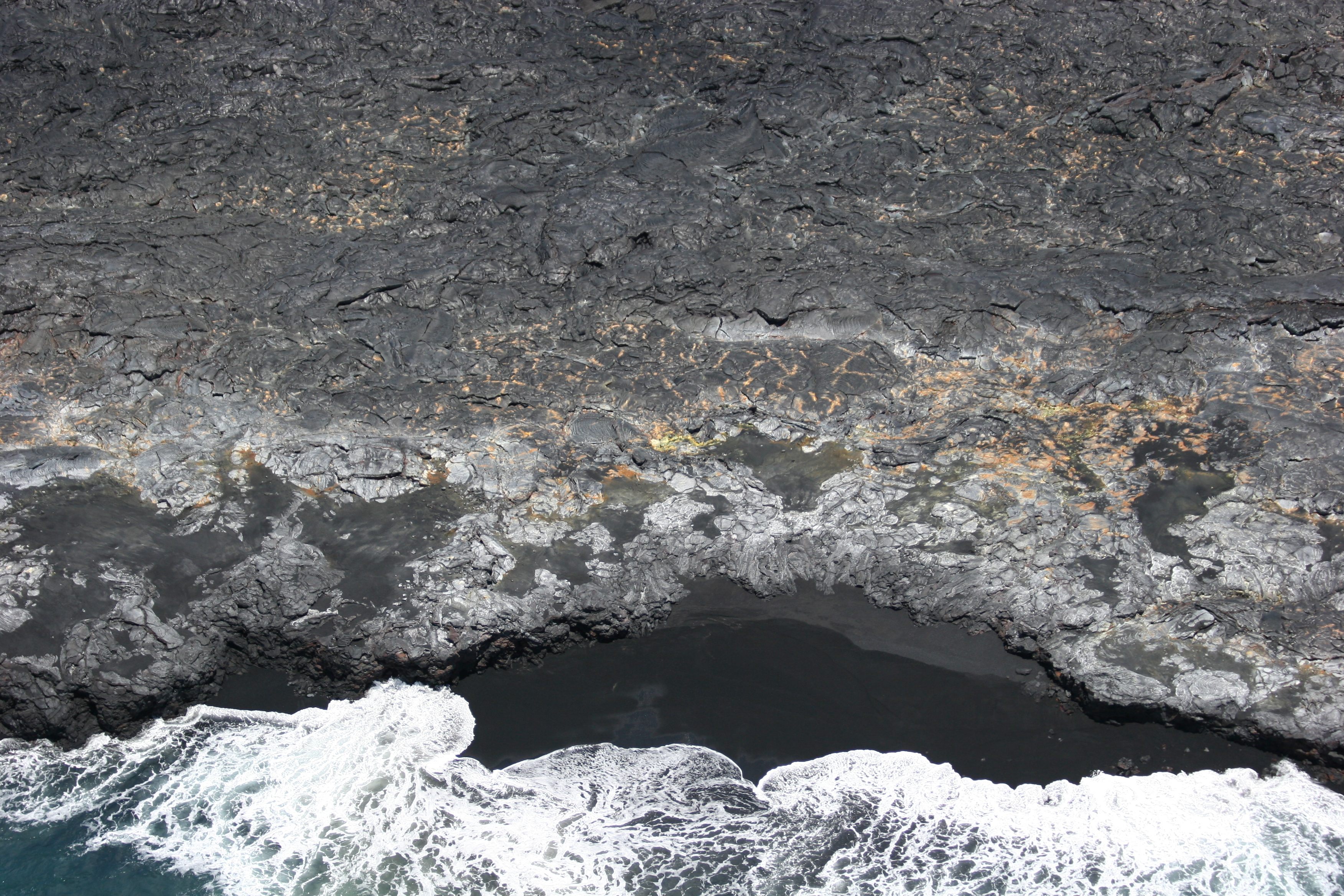
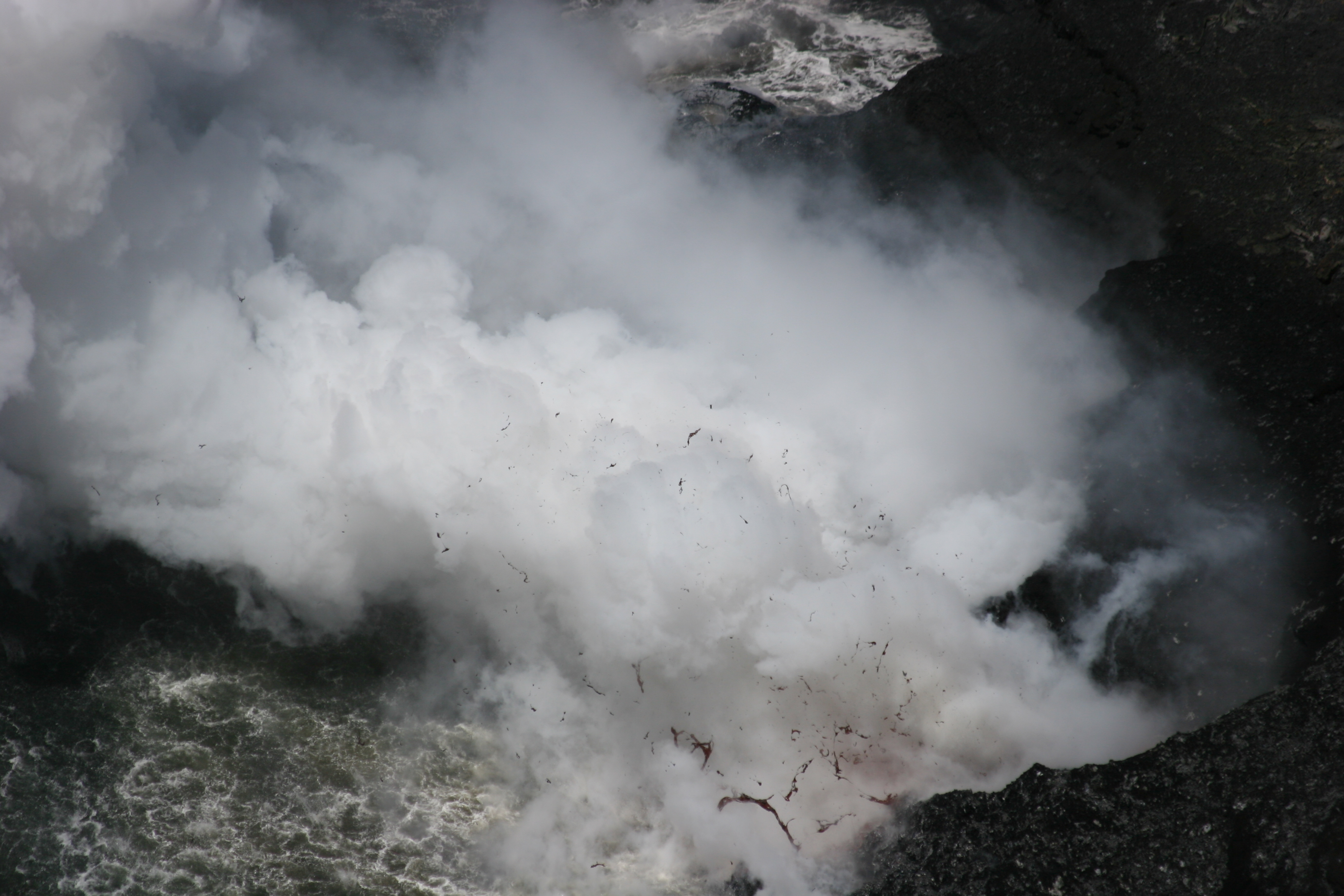
Almost at the ocean edge, I look back up the hill, over the martian landscape to see the miles of frozen stone rivulets, overlapping and intertwining upon themselves, blanketing anything that ever had been there. It is dark, hardened lava which was at one point molten and seeping from wounds in the earth, crawling down the topography according to gravity, until it slipped into the ocean with a burst of steam cloud.

I cried unspeakably when I first saw this, at Kilauea. At first I thought I was responding to the experience of primeval vastness – a meeting with an uncompromising, prehistoric force. Or maybe because it was humbling to be in the presence of the beginning of land, the birth of earth.

For some reason, this is the image that comes to mind as I ponder why I have inexplicably taken a break from writing here.

At some point my philosophy mentor mentioned to me that it is best not to overwhelm the writings or artworks of others with my own subjectivity. It is a balancing act to read the work of others and engage in dialogue, to make comparative study without projecting too much of my own material and subsequently dampening them. To listen without talking over them.

In the last few weeks I have been reading hyperactively, but in a way also bordering on attention-deficit disorder. From Kierkegaard’s crowd of untruth to Anna Akhmatova’s poetry of personal truth amidst a  crowd of censors. And there is George Steiner’s grammars of creation, eruditely nostalgic for the messianic, and Wittgenstein’s language games of lost faith. I have let the writings of these thinkers run over me, perhaps not unlike the rivers of the slow moving, but nihilistic lava, making its way to a border of another prehistoric vastness – my ocean of ignorance. While the writings have been resonant, elegantly constructed and provocative, they are opaque. And maybe it is best to let them do their work before I attempt to crash in with my callow response, my impediments, my convictions.

In short, to let answerability take the form of silence.  However, for those of us who know the therapy office, the dead end of a conflict, or know the time in front of one’s own intransigent painting or sculpture, there is a silence that is laden with an almost perceivable din, however healing it may be. And then there is a silence of a higher order, of untranslatability.

Schopenhhauer said, “Were the universe to perish, music would endure.” And in the moment of pondering the lava field, where seedlings somehow sprout in rock, and liquid rock in its extension of earth annihilates life — creation meets destruction. Artists and writers might want more to be mediators of where sound meets silence, and form meets formless. Paul Celan’s breath-turn. In the end, if I were in that lava field, facing the force that we all perish by, I may be trivial and sentimental, but I would want to hear Olomanu’s plaintive slack key guitar and the lyrics of a homecoming: “Last night I dreamt I was returning. And my heart called out to you: To please accept me as you’ll find me. Me ke aloha ku’u home o Kahulu’u.”

Today’s Advice: “It is through words that words are to be overcome. (Silence may only be the tying of the tongue, not relinquishing words, but gagging on them. True silence is the untying of the tongue, letting its words go.).” – Stanley Cavell

Today’s Issue: “Freedom toward death.” Heidegger

06 Tuesday Mar 2012

Posted by summermlee in Advice, Aesthetic philosophy, Art, Nature, Uncategorized

≈ 2 Comments

Tags

fields, Heidegger, John Berger, Mary Oliver, Mortality, nature, Paul Celan, poetry

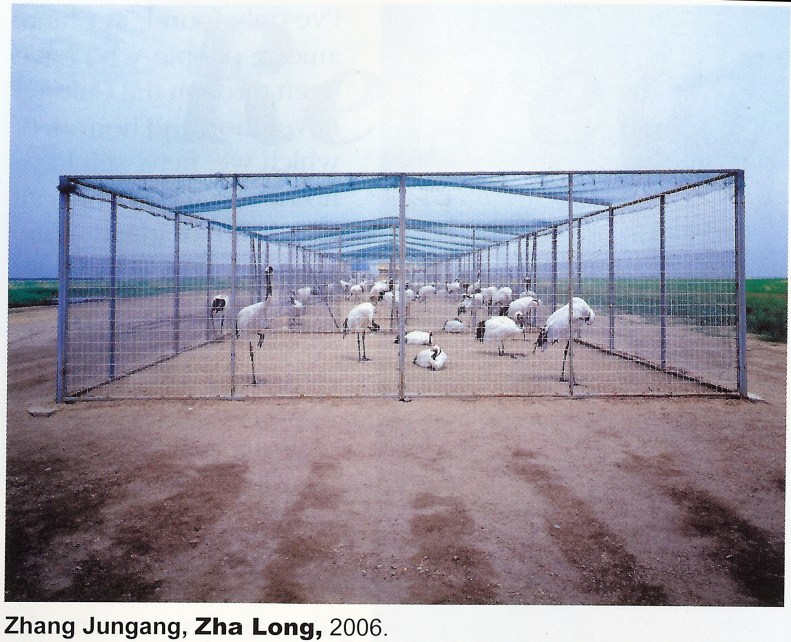
Cranes in Cage in Field

Maybe a break in the silence can restore a more profound silence within me. This is one of those times when I just need to set out on a writing and not worry about where I’m going, or why. Reckoning the losses that seem to be happening around me, making sense of permanent absence, of the violent changes in my midst — the act of setting out to wander seems appropriate. Accepting an unknown destination is congruent with the humble futility where there was once security in my beliefs, logical understanding, the irritating predictability within myself. This couldn’t be more different than the trite journeys, the banal distractions of these times.

Wandering necessitates a field, preferably one abandoned to nature. I’m not even sure it’s a particular field. It could be the fields through which Heidegger has us roaming, on a woodcutter’s path. One tree opens up a new clearing with another tree to fell.  For Heidegger, a clearing on the woodcutter’s path is also a lighting. It is where inspiration occurs to me, where an idea or thing can be unconcealed, even if it is for a fleeting moment. It is where, “the lighting middle itself encircles all that is, like the nothing we hardly know.”

Or maybe it’s the field where Paul Celan, influenced by Heidegger, finds his path. On his path, where language meets meaning, I am lost, but I am also found: “Yet, among how many other paths, they are also paths on which language gets a voice, they are encounters, paths of a voice to a perceiving Thou, creaturely paths, sketches of existence perhaps, a sending oneself ahead toward oneself, in search of oneself… a kind of homecoming.”

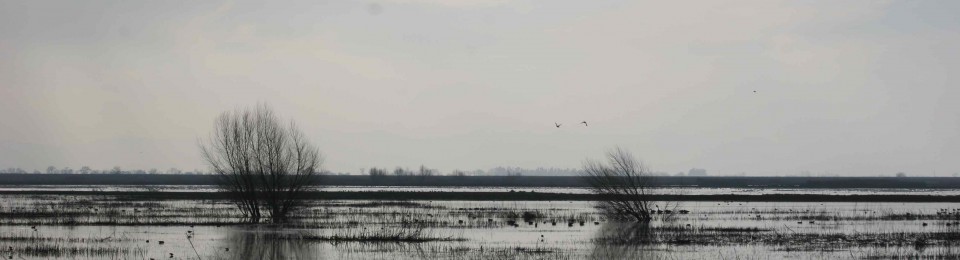
Perhaps it is the field that John Berger ventures into, where he is at first disinterested, but then something shifts. One’s awareness of self becomes displaced: “The field that you are standing before appears to have the same proportions as your own life.”

Berger’s fields flash before my eyes: The fields above Yosemite where I heard the delicate cracking of ice as the river intimated its willingness to the next season. The fallow cornfield of 60,000 geese pixelating into not-geese, into a deafening drone of warning calls upon my advance. The open tundra overlooking my native coast where my knees failed the moment she kissed me.  The grassy expanse where I found two abandoned eggs, left by the fretful killdeer fleeing my footsteps the day before.

Finally, Mary Oliver tells me where this field is, without knowing exactly where it is at all:

There is a place where the town ends

And the fields begin.

It’s not marked but the feet know it,

Also the heart, that is longing for refreshment

And equally, for repose.

[…]

Where is it? I ask, and then

My feet know it.

One jump, and I’m home.

—

I have picked up my exhausted, cranky self, and have taken off into a field. Where there is a field and its itinerant endless paths, there is an opening for a homecoming.

Today’s Advice: “Rather, one should step into the circle of language and experience which are vitally and intensely tied together, and listen belongingly (gehoren) to the sound of silence which constantly emanates from the depths of the indescribable, and continue to let this be the source of one’s own language.” Heidegger and Asian Thought, Graham Parkes

Today’s Issue: “Do not count on death — on your own or on universal death — to found anything whatsoever, even the reality of this death. For it is so uncertain that it always fades away ahead of time, and with it, whatever declares it.” — Maurice Blanchot

17 Friday Feb 2012

Posted by summermlee in Uncategorized

≈ 3 Comments

Tags

Blanchot, Francesca Woodman, Heidegger, memoir, Mortality, Photography

A friend treated me to the MOMA exhibit of Francesca Woodman’s photography today. Her photographs are emotionally grueling as much as they are poetic and otherworldly — a startling oeuvre for an artist who killed herself at 22 years-old. Amid her reckless vulnerability, guileless experimentation and the prescience of her deadened gaze, it’s hard not to notice clues of a yearned-for redemption. Therein her photographs lies an openness to the other that occurs in a blinding blast of exterior light, a haze of translucent corporeal form as it moves during long exposure, and the compositional beauty of shapes in a beauty-less squalor. When I encountered the images which captured her in a morbid dance with her dead grandmother’s belongings, I heard instantly the song echoing in my own heart: my own missing grandmother.

My grandmother and I saw each other completely and despite this, loved each other wholly. It also helped that she spoiled me unabatedly, but that’s the providence of a grandmother. She has been dead almost 15 years, but her absence is as fresh as it was the moment her eyes beseeched mine in her final suffering — the moment I abandoned her, glancing away in my callow inability to reckon the totality of loss.

She bore only one son, who bore only two daughters — and the Lee lineage, with now dead branches of ancestors from roots undoubtedly in antiquity, is a felled tree. Yet she loved her grandaughters not just all the same, but perhaps even more so because of her own experience as a female in an overvalorized patriarchal prison of a culture.

Two years ago I bore a son, who, because of circumstances way outside my grandmother’s understanding, will carry the Lee name.

A year ago, I was putting my then 7 month-old son to bed. When I entered the bedroom, a portrait of my grandmother caught my attention in a way that doesn’t occur with belongings one lives with for years, photos and mementos that over time become as invisible as they are fixture. But on this night, her photo struck me as having a new punctum, that this old image existed suddenly in the present tense — a realization that my grandmother had been of life, incredibly overwhelming the sum of the lifeless ink and paper that represented her as such.

As quickly as that photo caught eyes with mine, I put it aside, and put my son to bed. As he fell asleep, a shadow whisked down the hallway outside. I assumed it was my partner, and when it was clear that it wasn’t, a primitive fear prevented any deep consideration and propelled me out of the bedroom and upstairs like a child fugitive of the dark.

When a rationality returned, I returned to check on my sleeping boy, and when I drew near him, I took in a startling sight — a security blanket had been tucked under my son’s chin, his arm embracing it, with the blankets wrapping him in the way I had left them. Incredulous, I sought my partner for what would be an easy explanation: Did you cuddle his security blanket under his arms?

What are you talking about, I’ve been up here the whole time.

When I showed her the sight of our son, somehow having found his “lovie” left nowhere near his sleeping body, tucked in his arms like only a loving guardian would do, a shockwave of love and gratitude for my grandmother flooded in, just as an equally terrifying openness to the utter unknown seized me — the magnitude of an untranslatability — which would never let me speak of it again.

Today’s Advice:  “And yet – beyond what is, not away from it but before it, there is an other that occurs. In the midst of beings as a whole, there is an open place. There is a clearing, a lighting… This open center, therefore, is not surrounded by what is; rather, the lighting middle itself encircles all that is, like the nothing we hardly know.” — Heidegger.

Today’s Issue: “Then, Love, I beg, when thou tak’st thy bow, Thy angry shafts, and dost heart-chasing go, Passe Rascall Deer, strike me the largest doe.” Lovelace

13 Monday Feb 2012

Posted by summermlee in Uncategorized

≈ 1 Comment

Tags

Derek Walcott, Lovelace, Lyn Hejinian, Mortality, nostalgia, poetry

I’m not sure he knows he is on his death-bed, 88 years old, DNA betraying his spine, his brain, his heart. But then again, I am not aware that I’m on my own death bed, as we all are, from one moment to the next. Moreover, as Eleanor Ross Taylor writes, “just waking up can kill you.”

He is not always cogent these days, but like the same man who supported me from the ballpark bleachers 25 years ago, I heard before the last turn, he read my posts, and the same skinny, gawky girl receives yet another gift from him, recalling every grandfatherly thing he did for me. Even if he was not indeed my veritable grandfather, he was my only grandfather.

Though I don’t know I can do the same, I hope he finds some sort of peace as he faces the abyss. At the very least, as he recounts memories with his adoring, twilight visitors, let him feast upon his life. Heartily.

Love After Love

The time will come
when, with elation
you will greet yourself arriving
at your own door, in your own mirror
and each will smile at the other’s welcome,

and say, sit here. Eat.
You will love again the stranger who was your self.
Give wine. Give bread. Give back your heart
to itself, to the stranger who has loved you

all your life, whom you ignored
for another, who knows you by heart.
Take down the love letters from the bookshelf,

the photographs, the desperate notes,
peel your own image from the mirror.
Sit. Feast on your life.

(Derek Walcott)

Today’s Advice: “Nostalgia is another name for one’s sense of loss at the thought that one has sadly gone along happily overlooking something, who knows what.” Lyn Hejinian, “Happily”

“Let it dazzle and confound you.” Ionesco, Exit the King

08 Wednesday Feb 2012

Posted by summermlee in Uncategorized

≈ Leave a comment

Tags

art, Ionesco, Mortality, philosophy, poetry, semiotics, tragedy, Wislawa Szymborska

I confessed to my philosophy mentor last week that I am not interested in painting or sculpture right now — just words. He responded by saying that he himself left making for writing many years ago, but maybe he would return to drawing, who knows. Words, he said are so close to us, you just say the word elephant and in a moment the image is there. And words can also in a moment reveal themselves as just words. They are only a thin veil between us and the abyss of meaning and meaninglessness below.

A scene lurked in my mind. A few years back, I was traipsing through San Miguel De Allende, uncoincidentally on a painting retreat. On a break from the studio, I wandered to a cobbled churchyard, where from a humble, wooden bench in the shade, I saw an epic tree, unusual for the area. In its wrangled branches were surrealist swaths of pure white, which to my delight were tussling and preening and honking — egrets. As I moved under the tree, I said good morning to the weathered, bent, workman washing the stones in the nearby driveway. This welcomed him to stop his toil and commune in the sight of hundreds of birds and their nestlings crowded onto this one tree, this cathedral of bird life, hymnal bird hums, and unreal feathery white light.

On the ground at my feet was a grey lump, a dead baby egret whose coarse feathers were just emerging from fluffy down, with a twisted neck terminating at a beak open in an eternal gasp. The man saw my tragic discovery, and since Spanish is unavailable to me, I uttered impotently, “bébé mort.” With eyes that have understood much more about life than mine, he faced me and offered plainly, “Que vida.” Not quite sure what it meant, I answered him, but now know I will never fully comprehend it: que vida.

And though I tried to paint the pathetic little creature back at the studio, perhaps because of my technical shortcomings, it never matched the man, the tone in his foreign words, the moment, the elusiveness of “que vida.”

A somewhat well-known, poet, Wislawa Szymborska, dedicated to “que vida,” left life itself this week, and I am on the trail of her lifelong attempt to put it all to word. In her 1996 Nobel Prize Speech, she paradoxically leaves me with a striking image:

“The world — whatever we might think when we’re terrified by its vastness and our own impotence or when we’re embittered by its indifference to individual suffering, of people, animals, and perhaps even plants (for why are we so sure that plants feel no pain); whatever we might think of its expanses pierced by the rays of stars surrounded by planets we’ve just begun to discover, planets dead, still dead, we just don’t know; whatever we might think of this measureless theater to which we’ve got reserved tickets, but tickets whose life span is laughably short, bounded as it is by two arbitrary dates; whatever else we might think of this world — it is astonishing.”

Somehow she tells me it doesn’t matter what tool or tongue I use to insert an image or two of my own into this “measureless theatre.” I don’t know the ending: Just enjoy the show.

Today’s Advice: “The next day
Promises to be sunny,
Although those still living
Should bring umbrellas.”
– Wislawa Szymborska, “The Day After –Without Us”

Enter your email address to subscribe to this blog and receive notifications of new posts by email.

Join 619 other subscribers

Recent Posts

  • “Experimenters in the passages between worlds.” Vinciane Despret, Au Bonheur des Morts
  • “The terrifying groundlessness, the eradication of all violences. To be embraced by that which doesn’t know us and in that unknowing caresses us and truly loves us. We might become anything at all, something wildly other than what we are encountered by. A world that truly loves us by not presuming what we want or what shape we will take before we show up… We will be held when we are not known from the start.” — Dr. Marquis Bey
  • Images dream within us, a reverie is a world of expansion.
  • “For the natural world, the ethical responsibility is that being alive gives existence to others.” Vinciane Despret
  • “We meet in the freedoms of each other.” – Takeyoshi Nishiuchi

Archived Posts

Blog at WordPress.com.

  • Subscribe Subscribed
    Unwanted Advice: Reflections from a Self-Appointed Life Counselor
    Join 215 other subscribers

    Have a WordPress.com account? Log in now.

  • Unwanted Advice: Reflections from a Self-Appointed Life Counselor
    View site in Reader
    Manage subscriptionsSign upLog in
    Report this content
    Collapse this bar
Loading Comments...