• About

Unwanted Advice: Reflections from a Self-Appointed Life Counselor

~ Caminante, no hay camino. Se hace camino al andar. Wayfarer, there is no way. You make a way as you go. (Antonio Machado)

Unwanted Advice: Reflections from a Self-Appointed Life Counselor

Tag Archives: Paul Celan

“Those with wings, those without, / the ghosts of the heart / — whose hunger is a dress for my song.” — Brigit Pegan Kelly

02 Thursday Jan 2025

Posted by summermlee in Aesthetic philosophy, Art, Birds, Nature, philosophy, poetry, Uncategorized

≈ 4 Comments

Tags

art, birding, birds, birdwatching, death, Loss, Memory, nature, Paul Celan, philosophy, Photography, poetry, Shakespeare, Summer Lee, Summer Mei Ling Lee, Vinciane Despret, wildlife

681.

To measure a life from the periphery.

The periphery is where birds live now, eking out existence in our built environment. Vinciane Despret also explains the periphery as where two conflicting demands can be held together in a vitalization resulting from those clashes and stimulation. It is where birds sing their territory. It is where nature and human modernity meet. It is the veil through which we mortals greet our disappearance. In its intensification of the things that aren’t yet perceived, the periphery is the place of artistic creation.
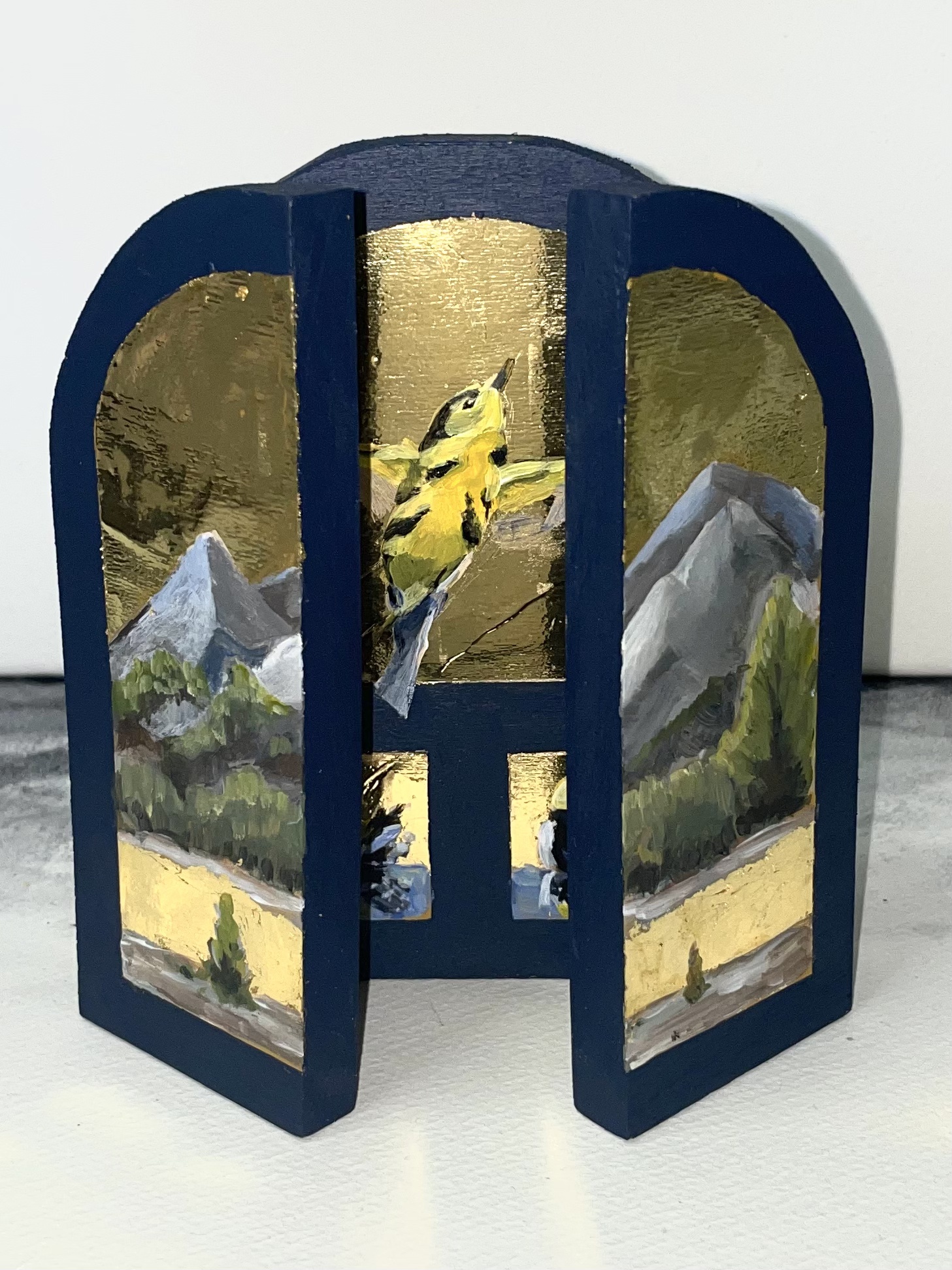
Annunciation VIII, by Summer Mei Ling Lee, 2024. Paint and gold leaf on wood.

Once I was at the periphery where on one side I would be ok, the other I would not. The place one arrives to after the loss of beloved things, which mostly reveals the limitations of my scaffolding and confabulations. I ended up in her office. She was a midwesterner, a plain and small, older woman who had come out of the managed healthcare system. I plainly admitted that my terror was that I couldn’t be helped.

The best healers do not make interpretations behind the backs of their patients. They resist the “simulacrum of intelligence on the back of the stupidity of others.” There on that clinical couch of her spartan and chilly office, just when I trembled in the anxiety of being a lost cause, she rolled her chair towards me and she reached her hand to firmly hold mine. She said sternly and confidently that she could help me. By grabbing me, she broke through that boundary of professional etiquette. But even more I registered that she didn’t know she was going to do that. She had the strength to answer to the moment. And that spontaneous responsiveness was real strength that no one can train for or read about or theorize.

After 10 years of seeing her, and after the last three years of nudges to fledge me, her cancer returned. She retired and flung me out into the wilderness. There is nothing more I could say or ask for — there is nothing left to explain. I drew a bird and sent it to her.

I might have been satisfied by the 35 or so anytime in my yard, but this past year I saw 277 different species of birds, right here in my own county, where I was born and raised. I saw 481 different species everywhere I wandered off to. In perspective, this year there were 4 other birders in my county who saw more birds than I did, and hundreds who saw more than I did throughout the world. Still, I abandoned myself to an attention that brought me into an intimacy with my native land outside my immediate yard.

This native land consists of precise sachets of memories as much as ecological specialization. One particular species of gull prefers one beach over the others, because the fresh water they need to survive pours into the ocean where the sands are flatter and can host more crustaceans they are specialized in eating. It is one beach out of dozens where we sifted through hundreds of gulls to try to find one rare gull, the first Siberian visitor to the continental US. It was the same beach where I was many times a near-hypothermic child who couldn’t resist the Pacific water tumbling over my feet, watching the sand bubble up where those crustaceans bury themselves before the next wave.

For 7 years in a row, Tufted Duck, off-course from Europe, wintered on a pond near an athletic club, where for our last day of high school our entire class spent the night, one last time together, signing yearbooks and playing ping pong. And then the next morning we dispersed into the rest of our lives. This year, Tufted Duck did not return.

While I was in the void 30 miles west on the Pacific Ocean, far from any landforms on the horizon, looking for migrating Arctic Terns and Sabine’s Gulls, thousands of dolphins suddenly broke the surface of the water as far as one could see. Just as quickly as they had rendered us ecstatic, they disappeared back into the void.

And along the ridge on which at 16 years old I first kissed a woman, there is a migratory path for Varied Thrushes, and when we were greeting them, a species of Crossbill touched down into a small pine in front of us — Cassia Crossbill, for the first time ever recorded, had immigrated into my county, crossing over the Sierras from its decimated forests of Idaho. The only way to know is by recording their calls and sending it in for confirmation from those who obscurely dedicate themselves to such distinctions.

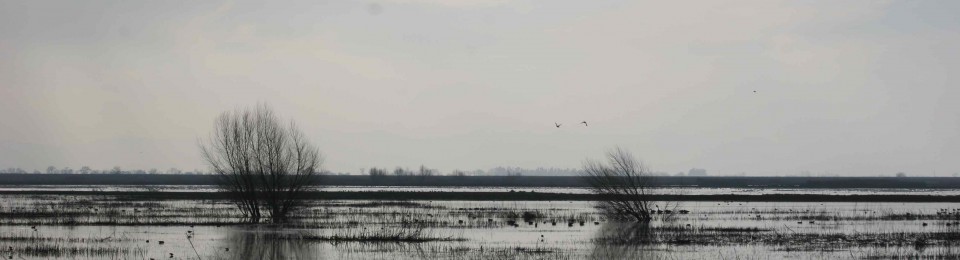
I won’t bore you much longer, but maybe it is more imaginable now why Pietro and I sharing only broken English could spend two straight days together, seeing 102 species in a delta half-way between Africa and Siberia, and never stop talking about them. A Little Owl in the early dawn light, perched on the eave of an abandoned building, then the warming updrafts conjured a Red Kite over the hills. Until sitting in the dark in a field behind his hometown, as shadows of Eurasian Woodcocks sailed over us from the stand of pines into their nightly roost in the plowed field. And even later than that, owls circled around us, barely perceptible like swirling apparitions of the imagination. Whether they were one species or another, and all the stories in between, was more than enough to fill a conversation on the rural roads back to my farmstead.

A man a continent away who knows what arrives on different directions of winds, who prefers the slopes of certain beaches, and what happens on foreign trees and in pockets of warm air of his region — as I am coming to know mine. We also witness too closely, bird by bird, the horrors of modernity — the loss of habitat to human profit, the flippant carelessness away from Being — threatening to ruin it all.
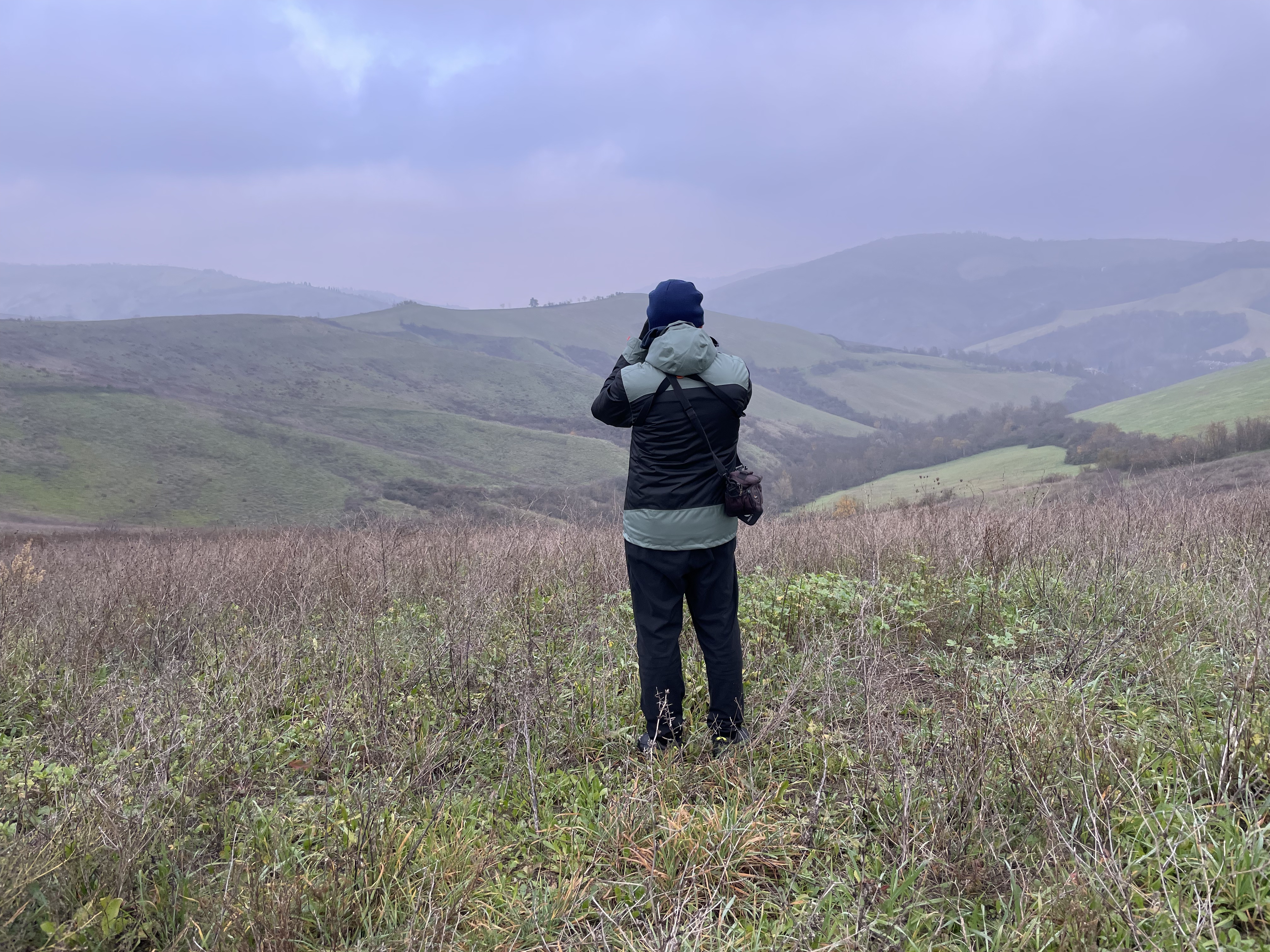
Pietro on the third day, and the hills of Bologna, 2024.

As things slip away, like Tufted Duck, as they do when one realizes life in years is more over than it is beginning, time on the periphery becomes more precious and any aliveness, wretched or wonderful, can be understood as bittersweet. Abundance. And god help me, there is also the sting of every time I fell short of love.
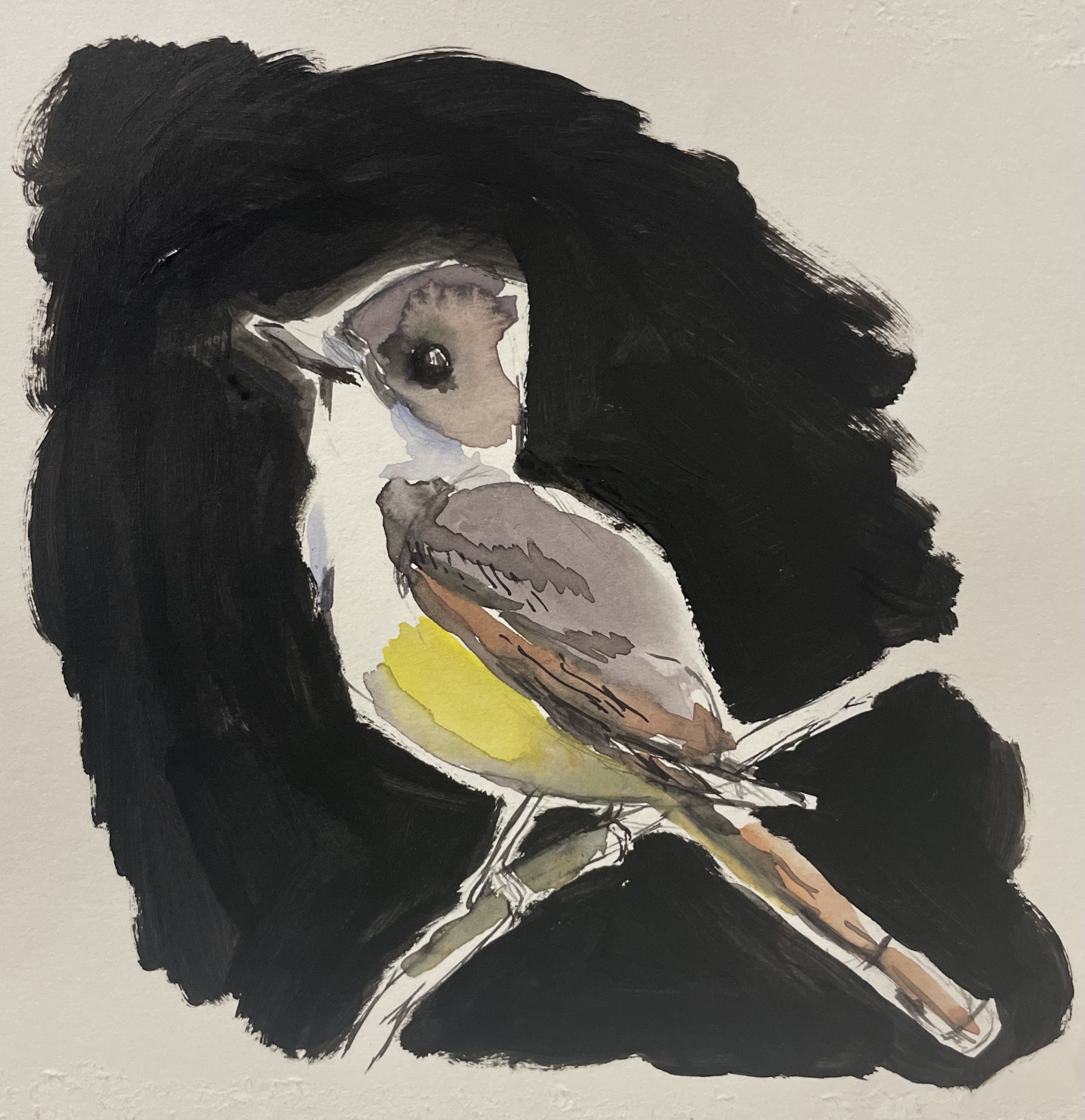
680. (Malia Defelice’s 400th county bird). Watercolor by Summer Mei Ling Lee, 2024.

“It gleamed.” Tenebrae, by Paul Celan
“ O Opal / your ear / in my heart / both hear / the glorious void, / preferring the birds.” Jim Harrison

04 Saturday May 2024

Posted by summermlee in Aesthetic philosophy, Art, Birds, Nature, poetry, Uncategorized

≈ 2 Comments

Tags

art, Étienne Souriau, bird watching, birding, birds, birdwatching, George Steiner, Jim Harrison, Martin Shaw, migration, painting, Paul Celan, poetry, Summer Lee, Summer Mei Ling Lee

Life-preserving but not life-giving, he says. Maybe the best critique of art I’ve ever heard. “Nothing is harmed but nothing is thriving either.” The people around here trained their eyes away from the gods, ancestral dead, magic — and sometimes even beauty. Everything is a utility or transaction for something else, and that’s not how the most important things come to exist. And, “The true entrance into us will not occur by an act of will.”

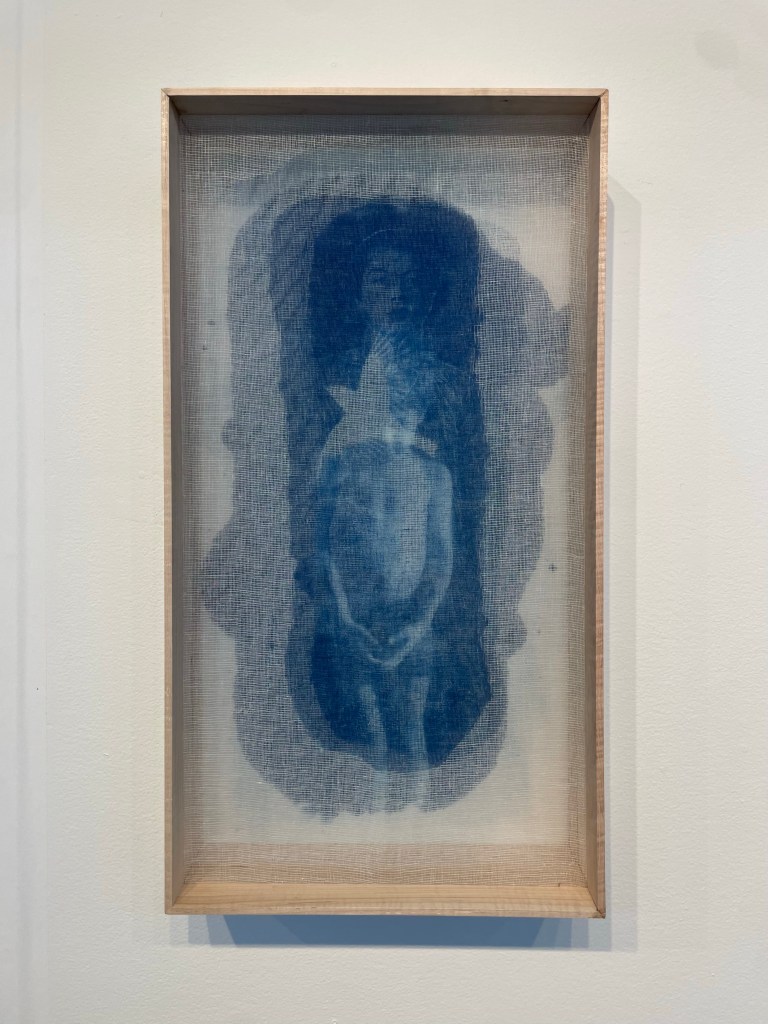
Into the Nearness of Distance, 2024. By Summer Mei Ling Lee. 28 x 15 inches. Cyanotype on three layers of Gauze, wood.

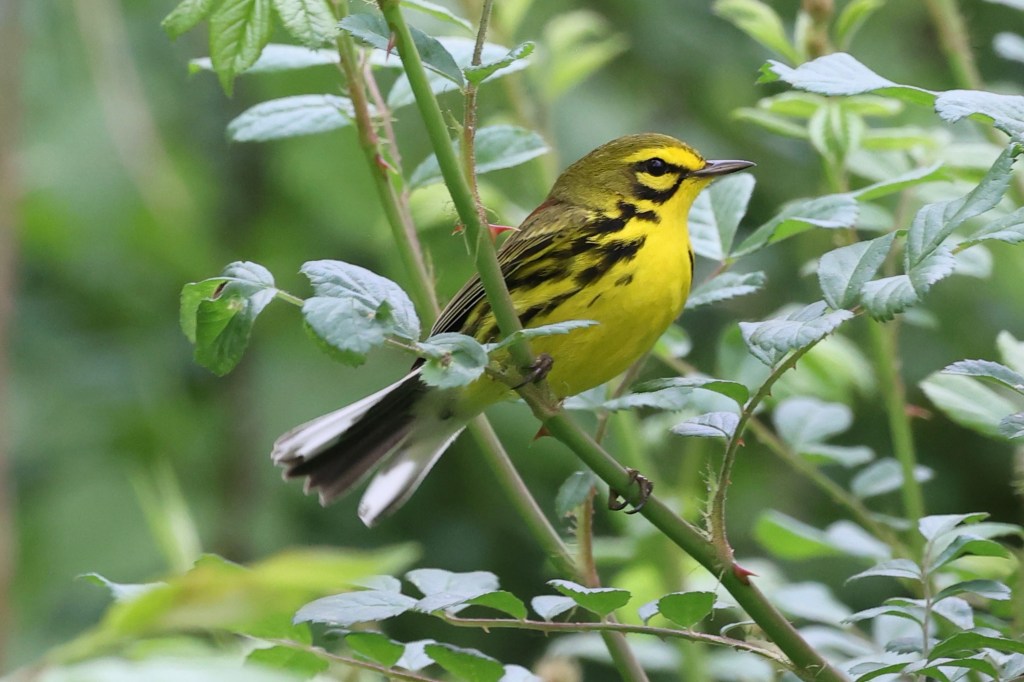
Myself, I want to dance with all that is wild and alive, but am just sometimes scared to. I realize now back on this sky-murdering plane home, full of doubts and in mistake-review mode, I was still greeted that day by gleaming Prairie Warbler, in all his breeding plumage glory. He popped up in front of me when there could have been nothing at all in that sickly, urban forest. Odds are more likely that he would have been a thousand miles further along into Canada, but he was right here. Exactly where I have met so many who I have loved and who have loved me. As he explains, those things we need most in this world are more tangible in the messy, uncertain wild.

Prairie Warbler, the other day.

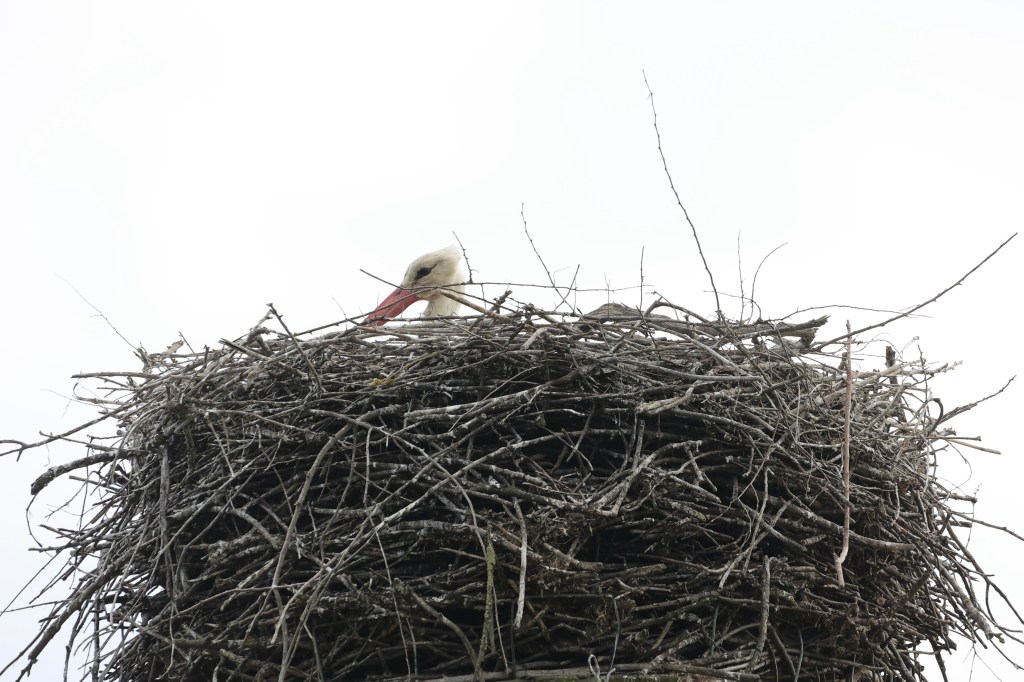
Just two weeks ago, blue-eyed Pietro drove me to a nature preserve that is now tragically a farm, where persists a pole at the side of the field with a platform on top. And up there in a roughly-woven basket structure she stares down at us, telling me something I don’t know how to write, something about fear but also just continuing on despite the hunters. She could live for forty years and knows how to squeeze water from moss into her thirsty chicks’ beaks. For what.

And then he takes me way out where the road barely can be made out anymore, to the last remaining colony of Lesser Kestrels in the eaves of a long-ago collapsed home. He jumps out of his tiny car when he spots them and shrieks like a boy. He delights in telling me when they fly back into view, for a period of time even longer than I still care. He can see them everyday and I will never see them again in my lifetime. And soon no one will. I know why he shrieks, but it’s impossible to write it, even though I feel it in my bones and try every time. I am deeply aware and sorry for that failure.

But after each word, it is impossible not to mention those that understand and keep me company — it’s why she has sent me a bird along her walk. And why he sends that line of poetry. Otherwise it can feel like the people here are dying mostly because they don’t even notice, nonetheless jump out of their car and shriek in delight. I think that’s why Celan threw himself into the Seine river, it becomes overwhelming that the rest of the world swings through the crowd like an ignorantly sharp elbow into a tender bruise.

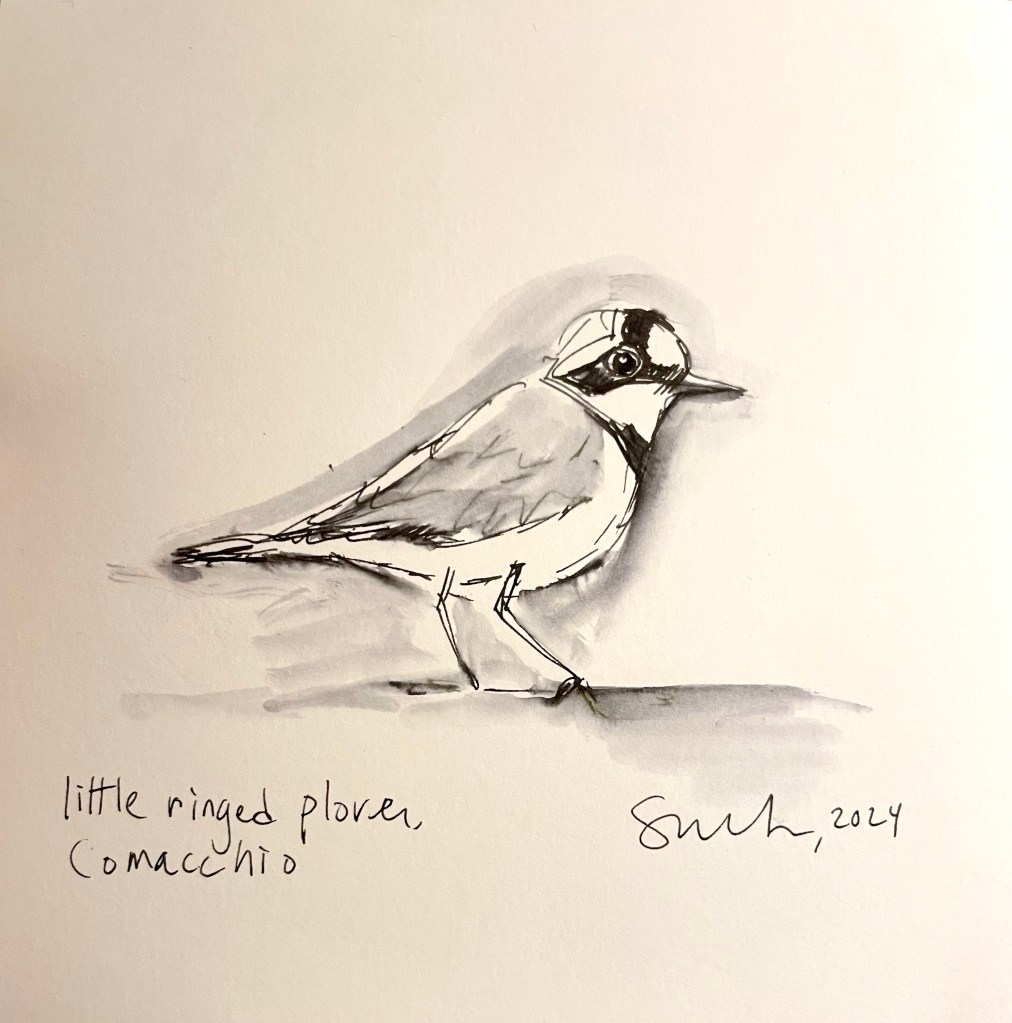
Little Ringed Plover for Fiorenza, by Summer Mei Ling Lee, 2024

She cried openly this time when I left the farm, weeks before the Bee Eaters arrive. This year, I gave her a Little Ringed Plover instead. I am trying to fashion band-aids out of the birds, those little gods and ancestors and bits of magic in the trees. Band-aids for those whose tendernesses in the crowd, including my own, I absurdly want to preserve.

“If we must be careful of any anthropomorphism when studying animals, it is not bad to sometimes do a little zoomorphism when studying man, whose lucidity and power of reasoning are often exaggerated.” (Étienne Souriau, The artistic sense of animals, 1963. My translation).

“One can never pretend to comprehend completely –: that would disrespect in the face of the Unknown that inhabits — or comes to inhabit — the poet; that would be to forget that poetry is something that breathes; that poetry breathes you in.” Paul Celan to René Char

21 Sunday Apr 2013

Posted by summermlee in Aesthetic philosophy, Art, Birds, Nature, philosophy, poetry, Uncategorized

≈ 7 Comments

Tags

art, death, Leigh Hyams, painting, Paul Celan, poetry, San Miguel de Allende, Stephane Mallarme, teachers

Since I was the youngest by 3 or 4 decades, my traveling companions were relieved it was me who, drained from travel and the stifling heat (and a sip of the local margarita), interrupted pleasantries to declare that I might pass out. Our host for the week escorted me to the warm cement sidewalk of a dirt street outside the humble restaurant and waited until the cool breeze of the desert night revived me. She asked me polite questions, mostly trying to ease my embarrassment, but also to indirectly resolve how it is that at not even 30 years old, I had become close friends and travel companions with a cadre of women in their 60’s.

The babel of barking dogs woke me the next morning, which was after the night of dreaming she came to hold me. Somehow, the dark sensuality of this woman a half-century older did not alarm me.

In the morning painting session, I start with images and colors I have known before, but they don’t cooperate. As I paint canvases full of utterly conventional crap, I find myself at the edge of tears. There in the shade of her turquoise and pink adobe courtyard, tendrils of bougainvillea cling to the walls closing in on me, mocking my vulnerability and failure — like the stuffing has fallen out of my bra and the world sees me trying to put it back.

She sees the paintings and since I cannot dare the gracelessness needed to throw them over the fence,  I wish for once they could tell a lie. She moves like a dancer around them and critiques them with the fists of a boxer. I am politely mute, in turn, hating my own politeness. I want to hate her but she is just the conduit.

Painting. By Leigh Hyams(Painting by Leigh Hyams)

Plus, San Miguel de Allende overwhelms my sensitivity. I know why the dogs bark. All of them trying to simplify and drown out the brightly jarring colors, the incessant music from blocks away, the dead heat, the spirit voices, the craving for something other. The unreachable ocean.

The next night I dream that my neighbor’s contractor tears out my yard. All my cherished plants are missing, upturned soil exposes eviscerated roots. I experience an abyss where there once had been logic and rationality. Before hitting bottom, I wake to the pre-dawn storm of bird songs.

My dream is clear to her. She tells me in deep tones and direct terms that this unknown is the place where I want to be. Because of this and the buzz in her words, I start crying as she speaks, releasing all the tears that started bubbling in the courtyard. Tears that were neatly packaged screams against my mediocrity, my mundane banality, my safety. Tears that were cages holding a fearful but overgrown child wanting out into the wilderness. My painter friends look on tenderly, thinking it is because I’m sad. But I am beyond sad or happy, I am approaching otherness.

They think she is only speaking to me.

She says, this crying business, as if to be disdainful and compassionate at the same time, is something that only artists can understand.

I would return years later for an extended time considering the small city, my being in the midst of fertility treatment, and the lack of communication to my home from this gritty, foreign country. I was prisoner again to my own painting in her light-drenched studio, but she was a gentle and stern warden. We had many conversations here and there, aside a parade of indigenous costume-wearing tribes, over breakfasts in teeming gardens, after a dip in the local mineral springs, and hopping along the cobblestones incongruently filling the roads.

Sensing her increased frailty and watching her meticulous devotion to a series of sparsely charcoaled paintings of local ruins — to me obvious elegies to past magnanimous accomplishment — I asked if she was questioning her mortality. She, sitting in the improbably verdant backdrop of a sumptuous, water-filled courtyard garden gleaming in desert light and singing heat, answered with a smile, and maybe a slight disingenuousness: not anymore than I always have.

Painting by Leigh Hyams
(Painting by Leigh Hyams)

Some mornings new art books would appear at my breakfast table, always with unspoken pertinence. I loaned her my copy of Mary Oliver’s recent Evidence — a book of searching poems comprised of terse words around what cannot be buried, even spoken, after a loss, or death.

So I can imagine exactly how it was when she died a few weeks ago. Her bed is overlooking her wildly tended garden. She is arms-distance to her favorite art pieces ranging from profoundly poetic to those with playful certainty, and those, maybe her favorite, continually in serious questioning. I can see the washed out colors of early Mexican spring, feel the light-headed air of the high altitude aggressively dancing with the dust lifted and levitating in her richly alive, medieval Latin city. And I hear a liturgy from the birds of her neighborhood, of course, taking over the tinny brass horns droning from distant radios. The birds alone can accept that someone who loved life so much should have to leave it.  As a consolation, when dawn breaks leaving an emptiness for the rest of us, they send jewels of ephemeral birdsong down to earth to adorn her.

“Toute chose sacrée et qui veut demeurer sacrée s’enveloppe de mystère.” Stephane Mallarmé

Painting, by Leigh Hyams

(Painting by Leigh Hyams)

“Threadsuns / Above the grayblack wastes. / A tree- / high thought / grasps the light-tone: there are / still songs to sing beyond / mankind.” – Paul Celan

08 Friday Mar 2013

Posted by summermlee in Aesthetic philosophy, Art, philosophy, poetry

≈ 6 Comments

Tags

A Portrait of the Artist, Ancestors, art, death, James Joyce, Paul Celan, poetry, The Last Poems, There are still songs to sing beyond humankind, war

Despite some eccentricities in his presentation on the phone and his ardent refusal to use any technology, the elderly gentleman asks nothing and offers to help so today I go meet him in a restaurant in a suburb north of the City.

I anticipate that my art is ill-suited for his services, which mostly consist of lining up restaurants and businesses to display art with ungainly price tags. And when I see the Italian restaurant’s orange stucco walls with a range of some-accomplishment to beginner pieces, I remind myself to just see what the man has to offer.

He is sitting in the corner, with a feminine, white, bob haircut coiffed neatly, a large Nordic nose over a receding chin. He is incredibly tall even hinging on his aged frame. He looks straight at me with a pale, wrinkled face holding ice blue eyes. He hands me a form listing the opportunities he gives to artists. I politely decline all of them and tell him that my work in my experience has not been palatable for the average “civilian” (his term not mine). In turn, he explains that society needs art and that an artist does no service hiding out making art privately. Art’s service is to move and connect to other people. I retort saying art is about solitude and that the optimum experience is to stand guard over someone else’s solitude. I am not interested in converting people to a state of interest. Besides my art would be taken as freaky (my word) in the milieu in which he works. He asks why. I explain that lately my work consists of 6-foot, yellow watercolor portraits that are hard to look at. I explain how these works are about my ancestors, being haunted by them but the impossibility of knowing them. And of course it is also about their death, but I admit I have more questions than answers about that part, and art is the place for unanswerable questions. It is not of the stuff that people want to fill their homes with.

Then he argues simply, “But you have the knowledge of who your ancestors are inside you.” And I say, no, the mystery is more important. He agrees and asks if I have time for a story.

He tells me that he was born on a dining table in Copenhagen to a gypsy-blooded mother. He said he was five years old when he was first interrogated by the Gestapo. That year his family under pressure set out to leave Copenhagen to stay with his grandparents who lived in the countryside outside the city. All Danes at that time ride bicycles, he disdains. And they would have to pass on bicycle an SS checkpoint with machine guns pointed over the road.

I said I don’t like where this is going. He paused for me but continued.

He said his father told him he would go first, then his sister, his mother, then finally his father, all in one line. His father told them all to keep bicycling past the checkpoint at least 50 meters before stopping. His voice starts to shake and I realize my hope of a happy ending is dead. My eyes immediately well up. He apologizes. He says this is very difficult to talk about. I say it is very difficult to hear. He slowly continues. He utters that he rode across, then he chokes again and clears his throat. He heard gunfire behind him and he kept going. He is sniffling now and I am weeping openly. He says he rode to his grandparents’ house, familiar with it from previous visits, and arrived to what he calls his friendly oak tree. One, he adds, that has a chimney. I nod in complete recognition, ungracefully smudging tears off my face. He says he stayed for a longtime there at the oak tree until at some point he received a message. He was told that he is now on his own, an orphan of the universe, and that he was also now a genetic placeholder for his ancestors.

—

Encumbered lately by the difficult poems of Paul Celan, I sense in his poetry the excruciating search for the impossible understanding to his parents murder, their lives cut off not far from the place and time of my own storyteller. Celan’s life’s work (and resultant suicide) was the existential failure to make sense of life mediated by language, using that same language in a means to what he describes as becoming silent. Silent like all those he survived. He was tormented, like Hegel, by the fact that words have a way of removing themselves from their meanings. That one day someone could utter genocide and it would be far from what he experienced. His collection of poems is therefore entitled, The Last Poems.

—

Back in this beautiful Italian restaurant adorned with the hopes of artists wanting to touch others and be touched, our artwork — an offering for his family — hung in a silence that was awkward to all but us. He finally breaks it and says to me gently, humbly: I lived it — I know what war means. And at that moment, I glimpsed the entirety of the word myself.

Still Frame from Ancestors on Rice Video, Summer Lee
(A still from a recent video, A family portrait projected on falling rice. 2013. See the whole video here. http://youtu.be/IoGln7tNyGo

“Terror is the feeling which arrests the mind in the presence of whatsoever is grave and constant in human sufferings and unites it with the secret cause.” – James Joyce, A Portrait of the Artist.

“It can be observed that darkness does in fact show itself active in light, determining it to colour and thereby imparting visibility to it, since, as was said above, just as little is seen in pure light as in pure darkness.” — Hegel

22 Tuesday Jan 2013

Posted by summermlee in Aesthetic philosophy, Art, philosophy, poetry

≈ 2 Comments

Tags

Binh Danh, Bruce Wilshire, dark, fragility, Hegel, light, Paul Celan, poetry, suicide, Virginia Woolf

Art by Binh Danh

(Artwork using light and chlorophyll, by Binh Danh, 2004)

The moment before total light, and total darkness has about it a fragiity. The best art and the best writing possess it. As my philosophy mentor once said, fragility is a necessary condition for something in the future to arise. But humans are wired to stockpile, safeguard, and barricade against fragility, especially in a Western culture that promotes an elimination of all that is inconclusive or ambiguous. It appears to be a minor miracle when the next moment manages to squeeze through our futile clamps on the future. On the unknown.

(I can learn much by watching my son change irreparably into his future self — a constant, gentle sadness for his past appearances, abilities, size, mannerisms that no longer exist.)

So we look to art and writing — the theatre where we can enjoy bloody spectacles without having our own lives be sliced and stained. We can even eat snacks while in a vicarious embodiment of an actor or protagonist valiantly facing whatever violently unanticipated plot-turn served up by cunning artist or writer.

But sometimes, the masterful artist or writer pulls the curtain up and reveals the theatre itself. Bruce Wilshire writes in his book on theatre: “It is art which is most obviously art that puts us in closest and most revealing contact with the heart of our reality: our ability to give presence to the absent or to the nonexistent.” Wilshire is speaking of the same mechanism by which paintings illuminate the presence of an object when it reveals it to be painterly. And when words reveal themselves to be word-like. Wilshire feels this is a path towards truly knowing ourselves.

I can think of no other than Paul Celan, whose poetry beautifully crafts language at the same time reveals its fragility. His words teeter between the most profound of meanings and meaninglessness. One inch this way, and his poems would be static and predictable declarations. One inch the other way and it would be jibberish. His skilled balancing act results in a present-moment awareness of words, and maybe if we let it, results also in an awareness that we are at our best when we are the most fragile. We are the freest, most alive, when we dance the high beam knowing the great depths below on each side of us.

The beam was set impossibly high for Paul Celan. During his life, his poetry was not famous, nor lucrative. Although a polyglot, he wrote in the language that denied him the right to exist, the same language belonging to those who killed his mother and father and imprisoned him in a concentration camp. One day, he underlined the words from Holderlin’s biography, “Sometimes this genius goes dark and sinks down into the bitter well of his heart” and then drowned himself (one recalls Virginia Woolf), in the river Seine. He left the rest of the Holderlin sentence unmarked: “but mostly his apocalyptic star glitters wondrously.” Wondrously indeed does Celan’s work glitter.

To reveal language as language-like while it illuminates beyond it — to do so in German — was existential for Paul Celan. In the meanwhile, I merely (and happily, I have not the constitution for more) read the memoirs, poems — the thoughts — of the dead like Celan. Wilshire says we “engage artistically in myths in order to come to grips with the myths we live unthematically every day. To be is to exist in the presence of the absent.” Nowhere is this more acutely felt than when these posthumous thoughts are alive in my mind as I read them, as if I re-animate the corpse who thought them and wrote them down. And yet they are just words. Like the words here that you may have allowed an entrance for. But we put the book down, click off a screen, and move on. One has to. Today, afterall, is Tuesday. Well, just for a few more minutes, anyway.

“Examine for a moment an ordinary mind on an ordinary day. The mind receives a myriad impressions — trivial, fantastic, evanescent, or engraved with the sharpness of steel. From all sides they come, an incessant shower of innumerable atoms; and as they fall, as they shape themselves into the life of Monday or Tuesday.” –Virginia Woolf

“You were my death / you all I could hold / when all fell away from me.” Paul Celan

27 Saturday Oct 2012

Posted by summermlee in Aesthetic philosophy, Art, philosophy, poetry

≈ 5 Comments

Tags

"The Gaze of Orpheus", "The Instant of My Death", art, death, Derrida, George Steiner, language, Maurice Blanchot, Paul Celan, poetry, Summer Mei Ling Lee, World War II

It is hard to know what this thread is, as it weaves through my recent travels. The only way to understand it more is to start about here.

Because, Blanchot says, in order to write, one must be already writing. “One can only write if one arrives at the instant towards which one can only move through space opened up by the movement of writing.” He writes this in reference to Orpheus, and that Orpheus needed music to descend to the underworld to rescue his love, a precise metaphorical homage to artistic creation. As it happens in tragedy, the moment he gazes at his beloved, he loses her, but experiences perhaps a moment of freedom: “[He] frees the work of his concern, frees the sacred contained in the work, gives the sacred to itself, to the freedom of its essence, to its essence which is freedom (for this reason, inspiration is the greatest gift).”

That is why a particularly masterful work of art recalls the fact that it could not have been — if we are vulnerable enough to let our art be art, let our hearts be touched, and to sense the present moment. Steiner is particularly fascinated with art’s ability to give presence to that which is absent and profoundly otherwise: “The arts, and music above all, give to man the freedom from his otherwise mortal city.” It is where humans can “surpass their condition.”

Blanchot, as with Paul Celan, knew Orpheus’ gaze in his own life, and both had stood within the “breath-turn” between absence and presence. Towards the end of his life, Blanchot wrote this letter to Derrida, who deeply understood occupied France:

“July 20. Fifty years ago, I knew the happiness of nearly being shot to death.”

As Blanchot was removed from his home by soldiers and placed in front of a firing squad, he experienced a “feeling of extraordinary lightness.”

Blanchot writes of the man who experienced this moment, “He was perhaps suddenly invincible. Dead — immortal. Perhaps ecstasy. Rather the feeling of compassion for suffering humanity, the happiness of not being immortal or eternal. Henceforth, he was bound to death by a surreptitious friendship.”

Blanchot, a stand-in for Orpheus, penned this “Instant of My Death” from the stance of a young man’s testimony, a fiction that is the leap of literature, one step removed from his own life. Perhaps he did so because it had been posited since classical Greece that the image of the thing is more beautiful than the thing it represents. But likely more so because he used his art to go to the depths of this underworld experience, the shadow-side of being human.  So at the moment of writing his death — as if Orpheus might describe it in 3rd person narration — at the moment he gazes back at Eurydice, he is free.

Tonight, I sit in my midnight bed, reading-lamp dim, and I hear the the approach of husky breathing that is my son, who turns his inhalations to exhalations without self-consciousness yet, who has ambled out of his bed and his room, guided by slivered lines drawn through sleep-puffed eyes, one hand viced to his blanket. He is just awake enough to know the path to my bed, and he is asleep before I have finished picking his warm, softly surrendered body up into the bed next to me. His breathing returns to the quieter rhythms of sleep and I wonder what impulse wakes him and directs him to my company. Years ago, during a particular grueling time (though there would be worse yet), I woke myself yelling for my mom. Calling for her as if she was down the hallway, like a child needing rescue from a bad dream. The impulse for words that call out for salvation is deep, even as I know that my faith in words, in salvation also, is constantly asunder.

“(At every turn, language traps us within the labyrinth which we are calling on language to elucidate).” George Steiner, Grammars of Creation.

(My recent installation, “Saigyo’s Moon.” Projection of flying birds on eggshells.)

Today’s Issue: “Freedom toward death.” Heidegger

06 Tuesday Mar 2012

Posted by summermlee in Advice, Aesthetic philosophy, Art, Nature, Uncategorized

≈ 2 Comments

Tags

fields, Heidegger, John Berger, Mary Oliver, Mortality, nature, Paul Celan, poetry

Cranes in Cage in Field

Maybe a break in the silence can restore a more profound silence within me. This is one of those times when I just need to set out on a writing and not worry about where I’m going, or why. Reckoning the losses that seem to be happening around me, making sense of permanent absence, of the violent changes in my midst — the act of setting out to wander seems appropriate. Accepting an unknown destination is congruent with the humble futility where there was once security in my beliefs, logical understanding, the irritating predictability within myself. This couldn’t be more different than the trite journeys, the banal distractions of these times.

Wandering necessitates a field, preferably one abandoned to nature. I’m not even sure it’s a particular field. It could be the fields through which Heidegger has us roaming, on a woodcutter’s path. One tree opens up a new clearing with another tree to fell.  For Heidegger, a clearing on the woodcutter’s path is also a lighting. It is where inspiration occurs to me, where an idea or thing can be unconcealed, even if it is for a fleeting moment. It is where, “the lighting middle itself encircles all that is, like the nothing we hardly know.”

Or maybe it’s the field where Paul Celan, influenced by Heidegger, finds his path. On his path, where language meets meaning, I am lost, but I am also found: “Yet, among how many other paths, they are also paths on which language gets a voice, they are encounters, paths of a voice to a perceiving Thou, creaturely paths, sketches of existence perhaps, a sending oneself ahead toward oneself, in search of oneself… a kind of homecoming.”

Perhaps it is the field that John Berger ventures into, where he is at first disinterested, but then something shifts. One’s awareness of self becomes displaced: “The field that you are standing before appears to have the same proportions as your own life.”

Berger’s fields flash before my eyes: The fields above Yosemite where I heard the delicate cracking of ice as the river intimated its willingness to the next season. The fallow cornfield of 60,000 geese pixelating into not-geese, into a deafening drone of warning calls upon my advance. The open tundra overlooking my native coast where my knees failed the moment she kissed me.  The grassy expanse where I found two abandoned eggs, left by the fretful killdeer fleeing my footsteps the day before.

Finally, Mary Oliver tells me where this field is, without knowing exactly where it is at all:

There is a place where the town ends

And the fields begin.

It’s not marked but the feet know it,

Also the heart, that is longing for refreshment

And equally, for repose.

[…]

Where is it? I ask, and then

My feet know it.

One jump, and I’m home.

—

I have picked up my exhausted, cranky self, and have taken off into a field. Where there is a field and its itinerant endless paths, there is an opening for a homecoming.

Today’s Advice: “Rather, one should step into the circle of language and experience which are vitally and intensely tied together, and listen belongingly (gehoren) to the sound of silence which constantly emanates from the depths of the indescribable, and continue to let this be the source of one’s own language.” Heidegger and Asian Thought, Graham Parkes

Enter your email address to subscribe to this blog and receive notifications of new posts by email.

Join 618 other subscribers

Recent Posts

  • “The terrifying groundlessness, the eradication of all violences. To be embraced by that which doesn’t know us and in that unknowing caresses us and truly loves us. We might become anything at all, something wildly other than what we are encountered by. A world that truly loves us by not presuming what we want or what shape we will take before we show up… We will be held when we are not known from the start.” — Dr. Marquis Bey
  • Images dream within us, a reverie is a world of expansion.
  • “For the natural world, the ethical responsibility is that being alive gives existence to others.” Vinciane Despret
  • “We meet in the freedoms of each other.” – Takeyoshi Nishiuchi
  • “Those with wings, those without, / the ghosts of the heart / — whose hunger is a dress for my song.” — Brigit Pegan Kelly

Archived Posts

Blog at WordPress.com.

  • Subscribe Subscribed
    • Unwanted Advice: Reflections from a Self-Appointed Life Counselor
    • Join 214 other subscribers
    • Already have a WordPress.com account? Log in now.
    • Unwanted Advice: Reflections from a Self-Appointed Life Counselor
    • Subscribe Subscribed
    • Sign up
    • Log in
    • Report this content
    • View site in Reader
    • Manage subscriptions
    • Collapse this bar

Loading Comments...