Tags
art, Edith Piaf, French, high school, Jacques Prevert, memoir, philosophy, teachers, Virginia Woolf
Not much taller than the desks, she stood unblinking in front of the students, hopping and gesticulating wildly to convey her lesson to her jaded audience. In this of her many dramatic monologues with occasional spittle, she introduced a new topic, rudiment to understanding French, and maybe even life: existentialism.
We thoroughly read Camus, en français, and over time she espoused to her sheltered and callow high school students that every choice one makes has a consequence, and the absurd man is one who acts out of habit, shirking responsibility and awareness for the events and choices that come to comprise one’s life. We listened to Edith Piaf, learning her lyrics by heart. Having heard no other voice so utterly pained, wretched even, but strong and moving, I was taken. She grabbed me at the end of class after the rest of the students had drained out of the room, and for whatever reason, recounted that during her first teaching job at an elementary school, an air force officer entered her classroom and in front of her 25 students, handed her an envelope. In it was a piece of paper describing in the most coldly succinct language that her husband’s plane had crashed on a training flight nearby and he was deceased. There also in the envelope was his metal wristwatch, the only personal item with him and recovered from the crash, cracked with hands frozen at the exact moment of his death. With a teacher’s salary and two young children, she said Edith Piaf’s tragic life and inextricably-linked music became anthem to the fact she had no other choice to move on.
Her philosophy must have been a double-edged sword for the ESL students also under her care at the high school — the dregs, the few brown and black kids bussed into an otherwise privileged school of white kids dropped off by luxury cars. But there was no less, if not more, passion for these kids as there was for her sniveling French students. When her Edith Piaf admirer became Senior Class President, she arranged a secret meeting, knowing my duties as student organizer of the school prom. She said she had a young couple in her ESL class who wanted to go to the prom but could not pay the price of ticket, exorbitant even for today’s standards. She wanted to broker an arrangement for them, and they must never know. Loyal to her, I offered to comp them in, no one would notice in the shabby accounting. Slightly offended, she interjected to say the boyfriend had agreed to work the coat check before and after the dance to earn his way. I added their names to the paid list and other than her catching my eye at the entryway of the dance hall while she stood next to her couple, there was no word of it after.
She also introduced us to a book of poetry by Jacques Prevert, someone also familiar with war and loss. She had to have known I never returned my copy back to the school repository, and from time to time I still find a guilty joy in reading a poem or two from it — a treasured contraband. It was, of course, easy to tell her I was coming out as gay. She might have even said she had some gay friends or a gay son, I don’t remember. But after that, she took to meeting me at the town’s bookstore cafe, and we sat together as an unlikely duo of a middle-aged, manically energetic, short woman, and a gangly, wide-eyed, attentive girl — my hair getting shorter by the week as my shoes grew more militant. I don’t remember much of what we talked about, but I can smell the bitter coffee-filled air, and see the tome of pages from Antigone she xeroxed in French (another petty crime) and brought me to read over the summer. It was also there that she asked me to be President of the school French Club. I had no duties except to bring a piece of brie to the school club fair, where she also hosted an escargot-eating contest, and in turn it was something to add to my padded Stanford-bound resume. When our senior yearbook came out weeks before the end of school, she curiously asked to hold mine for a day or so. When she returned it to me, there adhered strongly to the inside the front page was an engraved, stately metal plaque. It read my name, the title of French Club President, and underneath, “Honni soit, qui mal y pense.” An ancient motto of chivalry, it means something to the effect of, evil to those who think evil, or shame to those who think shame of it.
The last week of school, she made me promise that I would let her be the last teacher I would say goodbye to. So, after gathering my things and finishing some tearful thank you’s to a few of my other teachers, I found her waiting for me in her classroom. As we walked down the hallway to one of the school’s exits out to the parking lot, she explained to me that there at the doorway was a threshold and it was marked by a strip of metal. She said that it was a milestone, a marker, this line. She would go on the other side and she was going to watch me cross. So I did: I unceremoniously stepped over the line, tears welling in my eyes, and there on the outside of the school she jumped to hug me. As she grasped me in her embrace she whispered in my ear, though it seemed louder and permanent: You have crossed the line and you must go, and I want you to remember, she clenched more tightly, you can’t go back.

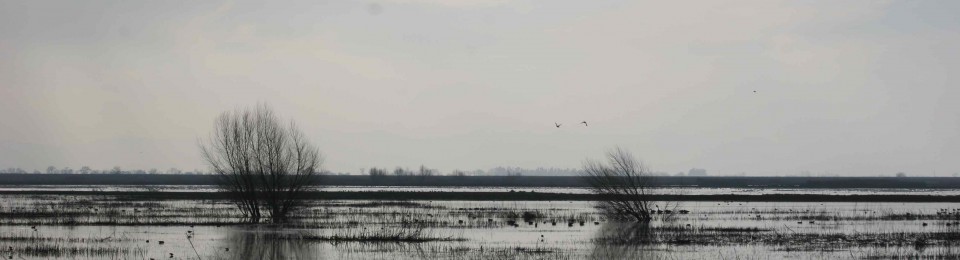
(An image from an art performance I did with Jesse Schmidt, 2008)
“I wish that once & for all I could put down in this wretched handwriting how this country impresses me — how great I feel the stony-hard flatness & monotony of the plain. Every time I write in this book I find myself drifting into the attractive but impossible task of describing the Fens — till I grow heartily sick of so much feeble word painting; & long for one expressive quotation that should signify in its solitary compass all the glories of earth air & Heaven. Nevertheless I own it is a joy to me to be set down with such a vast never ending picture to reproduce — reproduction is out of the question — but to gaze at, nibble at & scratch at.
After all we are a world of imitations; all the Arts that is to say imitate as far as they can the one great truth that all can see. Such is the eternal instinct in the human beast, to try & reproduce something of that majesty in paint marble or ink. Somehow ink tonight seems to me the least effectual method of all — & music the nearest to truth.” –Virginia Woolf


