• About

Unwanted Advice: Reflections from a Self-Appointed Life Counselor

~ Caminante, no hay camino. Se hace camino al andar. Wayfarer, there is no way. You make a way as you go. (Antonio Machado)

Unwanted Advice: Reflections from a Self-Appointed Life Counselor

Category Archives: poetry

“Art brings the finite and the infinite, the visible and the invisible, into coincidence.” Takeyoshi Nishiuchi

19 Sunday Jan 2020

Posted by summermlee in Aesthetic philosophy, Art, Birds, Nature, philosophy, poetry, Uncategorized

≈ 5 Comments

Tags

Annunciation, birds, Fra Angelico, language, Summer Lee, Susan McMane, Takeyoshi Nishiuchi, Young Women's Choral Projects

The greatest injury to Fox Sparrow might be that scientists are trying to build a mechanical bird to replicate all he can do. But what a consolation it is that they can’t yet fathom his genius — that when he moves just the toe of his wing, he can change the direction of all his feathers, just so. How he can make his feathers stick together with a force greater than Velcro and then separate them at will. Not to mention his song.

And their song. The mystery that all those technical elements can create a moment completely liberated from them.
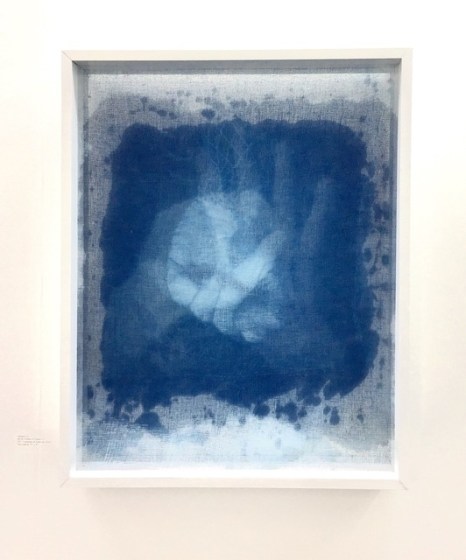
Hands

(Here is Where We Meet, by Summer Lee, 2017. Cyanotypes, fabric, wood.)

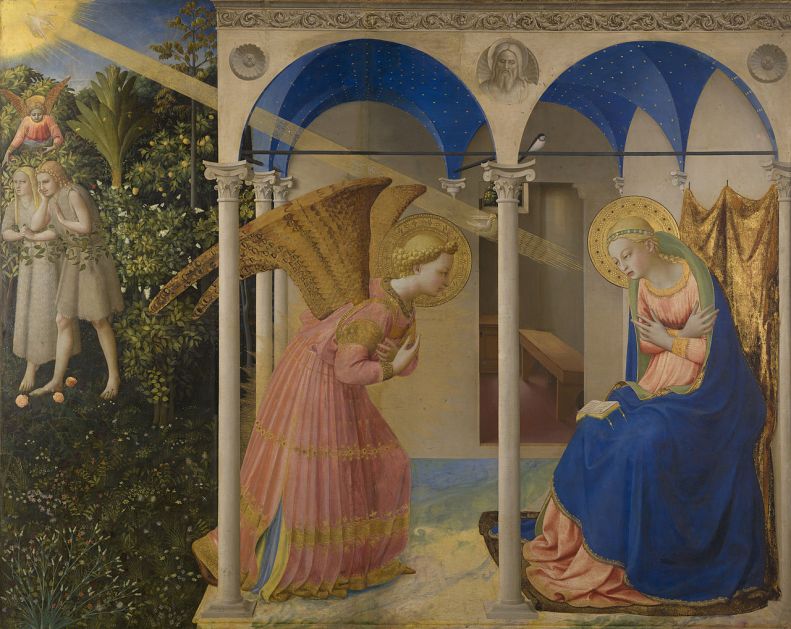
There was a time when the mystery itself was worshipped. And that painters knew the impossibility of capturing it, but their religion was to try, for hundreds of years. But in these days, even though no one now can say exactly how a word becomes flesh, we are fed so much technical explanation about this material and that, the biography of that painter and historical event. Circular tales plunging us into neurosis. What else is neurosis but the inability to cope with uncertainty. And the delusion we can ward off any risk. They knew then, as it goes, the angel arrives even if Mary turns her head.

If ever you have held dead Fox Sparrow in your hands you also know that nothing else could suffocate life more than the self-congealing words we wrap around it. Even if it is, and it always is, to try and comfort.

Fra Angelico made a point to put the fallen Adam and Eve leaving the garden in the same scene as the Annunciation. He knew the word can separate, but also in the same scene obliterate all back into the messianic. Caroline’s poems do this many times a week. And maybe that’s why I tire you, to set out so selfishly about here with words from time to time. To remind myself, the truth and untruth of language.

To remind myself that no one can explain how the paint in my watercolor pan can bring Fox Sparrow to me. And how Fox Sparrow can leave just like that, just because I wrote it here.

Mary, in an economy of words we can’t fathom today, said,

Fiat mihi secundum verbum tuum.

Let me greet all such incursions on my cautionary house of being with such grace. To find repose in the pain of resignation. Not a lazy resignation, but at the end of intense searching, like that for Fox Sparrow. I have read volumes on his kindred, and created innumerable treatises on all the possible places he could be when he isn’t here. Some dark and treacherous, like facing decisions I must make for my child, the lightning-lit rain pelting Fox Sparrow as he embarks in his night flight home. Some of his places are as light-filled as the clouds of Veronese, overlooking restless humanity. And sometimes as majestic as the vanishing valleys into the boreal forest I will never visit. Most of all, it’s the perch on the thin wire weirdly placed in that painting. Where he peers down on a woman who has been greeted by an angel, telling her that her life is about to be changed by no fault of her own. And of course Fox Sparrow knowing what we don’t know: that we are all fallen. And that a word could turn into flesh, spirit into form, and save us.
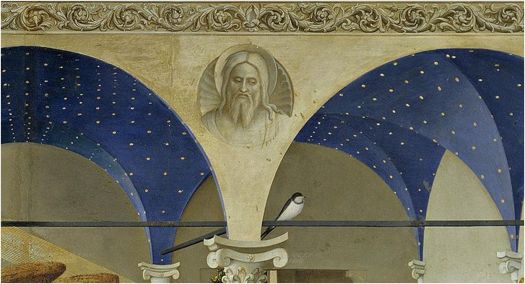
fra angelico prado 3

Right now Fox Sparrow is under my feeder scratching the dirt in this humble coastal yard in front of my house. The more hungry he is, the closer he lets me. To see his black eyes see me, see this place, that somehow guided him here to me. Back to the emptiness.

The YWCP chorus, directed by Susan McMane.
“Summer’s ardor was confided to silent birds and due indolence to a priceless mourning boat through gulfs of dead loves and fallen perfumes.” Rimbaud

21 Saturday Apr 2018

Posted by summermlee in Aesthetic philosophy, Art, Birds, Nature, philosophy, poetry, Uncategorized

≈ 3 Comments

Tags

art, birds, birdwatching, Chekhov, death, Joan Jonas, Love, merlo, Ouse River, Rimbaud, river, Summer Lee, Summer Mei Ling Lee, travel, Virginia Woolf

Fox Sparrow is still here. But I know it’s soon. Almost now.

I have seen bodies float down that river. And I have let them pass, even though they took parts of me, right from the heart.

We stand at the banks, birdwatchers most of us.  An improbable fellowship of a strange generosity. They will run to tell me they just spotted something beautiful and rare, just over there. They delight in sharing stories of the ones they saw many years ago. And I delight in every one with them as if I had been there. How words awaken that. Sometimes a personal story will spill out like a loose feather, like why he remains unemployed. How after her mom died a slow death,  she and her sister call each other about what miraculous birds they have seen that day. One boyish teenage-girl alone for years under a tree told me which of two almost identical species of obscure birds was way up there, just by hearing its call.

Once I walked silently into a group of men bowing their heads crying, their cameras off as if in mourning also. It seemed one of them had been expecting me, because he plainly said that he had accidentally scared a deer into that river over there and it drowned.

Many years ago, he had asked me about Virginia Woolf’s drowning before he took his own life and so I was determined to walk to that river, to see if somehow my response was at all valid.

After a long hike through pastures outside the village, I walked her to the muddy embankment of the brown river running. She has been in and out of my life, even the last few lives too, and when she felt it she didn’t trust it. But there we were. A long curve of river surrounded by lifeless and flattened swales of fields saddled by fog. After a moment of taking in the dull scene, a white thing in the distance pierced through the grey. A majestic swan aflight squeaked its wing feathers in a steady beat, and glided the course of the river past us, down out of sight. Flight and not stones, even if fear changes her mind. The birders among us will understand.

Because this bird knew where I needed to be. In this word. Sometimes I lose my patience with it all, as if I could turn the direction of an entire sentence. But life just runs over my impertinent hands and through my doubtful fingers. And will eventually take her too. And another bird might drift by, or flit onto a branch right here along the way. On its own time.

Like Fox Sparrow who is still here. He knows it is now. He also knows it is not.

(Joan Jonas, performance entitled “Merlo,” 1970’s Tuscany.)

“The birds were fluttering in and out of the open door; the photographs were tumbling over the tables; and, lying before a large open window, Mrs. Cameron saw the stars shining, breathed the one word “Beautiful,” and so died.” — Virginia Woolf.

______

“With total rapture and delight he talks about the birds which he can see from his prison window, and which he never noticed before, when he was a minister. Now of course, after he’s been released, he doesn’t notice the birds anymore, just as beforehand. In the same way you won’t notice Moscow when you actually live there.” — Vershinin in Chekhov’s The Three Sisters.

Welcome home to un-home.

20 Saturday May 2017

Posted by summermlee in Aesthetic philosophy, Art, Birds, Nature, philosophy, poetry

≈ 3 Comments

Tags

art, birds, Chicago, Chinese Bone Repatriation, death, Fra Angelico, Home, immigration, Marie Howe, migration, philosophy, poetry, Summer Lee, Summer Mei Ling Lee, The Annunciation

Non Omnis Moriar

The first bird I met here was half-dead. A Cape May Warbler, my first ever. It had collided with a Chicago building like thousands that do every year. It stood frozen still on the rooftop as I toured the 11-story, urban school for my son, as if warning me of the impending experience there. The Cape May is one of five million migrants and dwindling, but in this season, they still show up as clouds on weather radars every evening as they take into the darkness and as they rest to feed by sunlight.

They must survive the buildings, but also the endless Midwest miles of recently invading soy and corn fields, where there is ironically no food for them. They trace along the lakefront, which is where I found my cathedral among the starving and vulnerable. This church is simple, and the faithful are sensitive souls as they gently but enthusiastically ask me, did I see the black-throated blue warbler over there?

It’s true that in the end love is why. And also, as she crystallized in fragile words, nothing brings so much pain as love.

A third of the first shipment of bone boxes from the United States back to China were empty. Most immigrants back then wanted to be buried in their ancestral homes. They were also not welcomed here. Despite vast impoverishment, the family associations made arrangements to clean the bones and ship them on a 30-day ocean journey via Hong Kong, from where they would be delivered into China. The empty ones were soul-summoning boxes, when their were only names, when bodies could not be located. Something had to migrate home.

Some never made it back. Some are stuck in transit, in boxes in a storage house in Hong Kong, where they opened an empty one for me. When I saw it, I cried uncontrollably. And when I came to, I remembered Faure’s requiem.

Some are still waiting in my hometown, like my great grandmother. And here I had thought the Chinese village name on her tombstone was for biographical purposes only. When in fact, like so many others, it is an unkept promise of a more final return home.  No matter how many children they birthed and raised on this soil, the burial here is temporary. Address labels with no postage, the stone mark of their villages is a question mark of an eternally unanswered request, beseeching unwitting visitors, please take me home. The village name, possibly of a village that doesn’t exist anymore, is a way the dead stay alive. Yes, never dead if your progeny visits and honors you. After all, if someone remembers you, you still exist. But here it is not ancestral worship either, just an endless restlessness for homecoming.

6500294f6f1bc41c81d2bdba49049b3e
(The Annunciation, Fra Angelico, 1425-6)

The neighbor in Chicago to the right voted for Trump and the grumpy one on the left asked to take down my bird feeder because it was bringing woodpeckers to her yard. I never saw a woodpecker at my feeder in California, who knows why not, but there are four kinds here. You wouldn’t understand what it is to stop feeding the birds of my home. There is no one now to track their yearly changes as well as their disappearances. To no longer hear their version of truths about migrations and the space they know between heaven and earth. So I set out to ask the strange birds of my new home.

It is cold and rainy as I hold my camera up to these birds. We join together in the hopeful uplift of these visitors, knowing also they won’t be here much longer. And I realized maybe this is the reason I was brought here, and why I must now live between two homes.

It was also cold and rainy when I found him at the nearby cemetery in an unmarked grave. The Hong Kong assignment led me to review my grandmother’s INS interrogation from 1925. In it, her father describes burning the documents of her oldest brother at his gravesite. To erase any reminder that he had died in Chicago, the year before in 1924, at the age of 21 of a sudden illness that is of poverty. The confused clerk looked at me strangely, the white lady who presented his romanized Chinese name, but soon enough they found him on a hand-written map. Minutes later, the groundsmen took me to a field and paced off the coordinates — and there in the middle of fucking Chicago, I had found his bones.

She said, it’s as if I had to become displaced to find my family.

(In my imagination my grandmother’s family experienced one Chicago winter because thank you god they quickly moved to San Francisco.)

And if you have ever uttered a word thinking your dead would hear, you understand the birds. And you also know that all real happiness sets you on the edge of loss. As Judith and I ended our two hour phone call, a Cerulean Warbler flitted across my driveway. It was here and gone so quickly, it exists in the realm of doubt. But somehow my grandmother knows I am listening.

____________________________________

ANNUNCIATION

Even if I don’t see it again – Nor ever feel it
I know it is — and that if once it hailed me
it ever does–

and so it is myself I want to turn in that direction
not as toward a place, but it was a tilting within
myself, as one turns a mirror to flash the light to where it isn’t — I was blinded like that — and swam
in what shone at me

only able to endure it by being no one and so specifically myself I thought I’d die
from being loved like that.

— Marie Howe

“…wherever gods are in flight.” — Heidegger

09 Saturday Nov 2013

Posted by summermlee in Aesthetic philosophy, Art, Birds, philosophy, poetry

≈ 5 Comments

Tags

art, birds, Dylan Thomas, gods, Hieronymus Bosch, illness, Laurence Hemming, Marguerite Yourcenar, Martin Heidegger, poetry, suicide

“No god can be held fast by a mortal: but the poet may, in stillness, bring to a stand the passing-by of the god, by speaking what the god has given him to speak. The poet in stillness, stills the nearing god.” — Laurence P. Hemming on Heidegger.

The gods are in flight.

Heidegger wrote that, and he also wrote that they can be near. But they aren’t here. I don’t know if he meant it in the sense I have as doubt is my glass darkly. But somehow his words prompt my own. But who can write into the unknown without just a few glints of necessary faith.

Heidegger’s fugitive gods were certainly about his pessimism about our modern forgetfulness of being. He also wrote that gods need the hearts of feeling men. And I remember how my heart lifted at the return of the Fox Sparrow to my yard a few days ago, as he has the last several autumns. Last winter, a new pair joined him, bringing an unprecedented three fox sparrows scratching below the feeder. How they knew to join him, and his flock of Golden-Crowneds, I will never know. Where the other two are this year, I am not sure either.

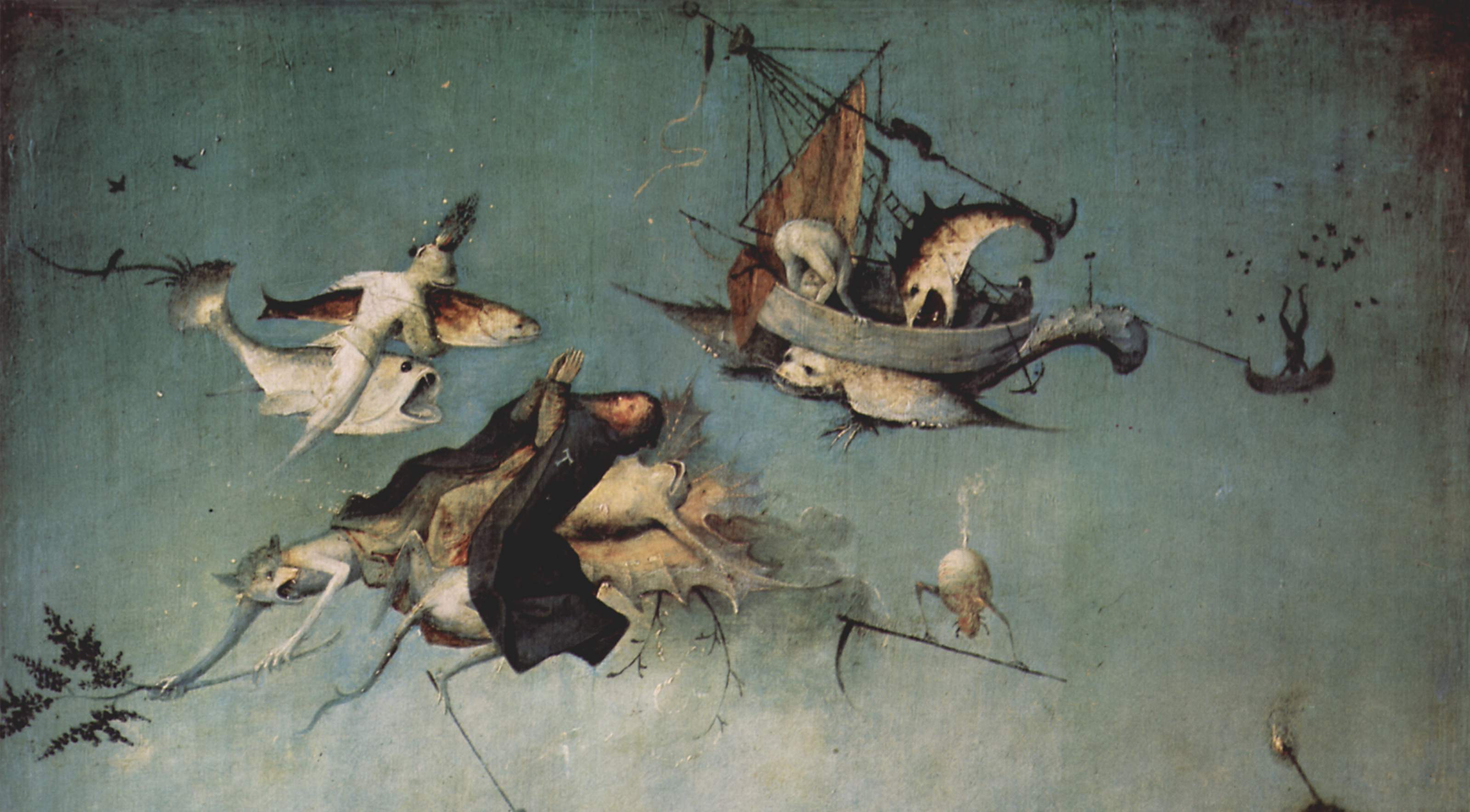
Detail from Hieronymus Bosch Painting

(Detail of Hieronymus Bosch Painting, “The Temptation of St. Anthony,” 1501)

My body is still betraying me, caging me in illness, the remorseful price of an early hope-filled pregnancy. The gruel involved in what were once rote tasks is also a block to the muse. Who in pain can muster an openness to offer hospitality to the unknown. Pain asks when, when will it be over, and in that way is anxiously future-oriented. Pain rarely wants to be at home with itself in the present moment — the moment of stillness needed to still a nearing god.

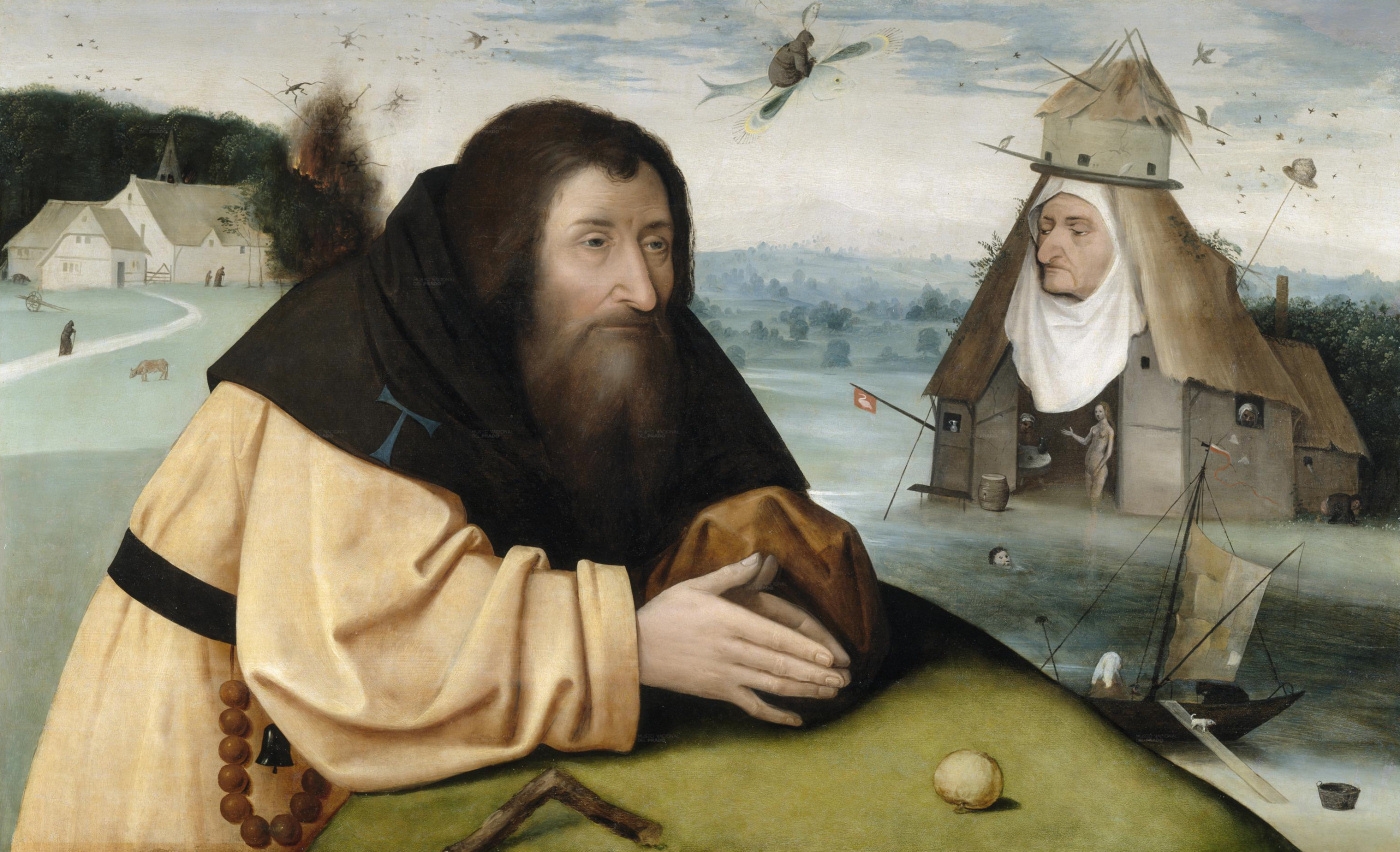
Bosch_Hieronymus-The_Temptations_of_Saint_Anthony

(Detail of Hieronymus Bosch Painting, “The Temptation of St. Anthony,” 1501)

Like my birds, the gods need my heart in pain, and in glory. And I need them and call them back. One of my last of dwindling tools are words. But the permanency of words, the dispelling of mystery, can keep them at flight also.

And half of my grammar is unavailable to me. Not just because I am sick, but because it was a grammar we shared — and he took it with him into the underworld. An underworld I glimpsed with him and am terrified of. And like his ashes bellowing out of the crematorium a few days later, inhaled into my head with unspeakable dread, those words have broken up and are dispersed into a fading language I am not sure I have faith in anymore.

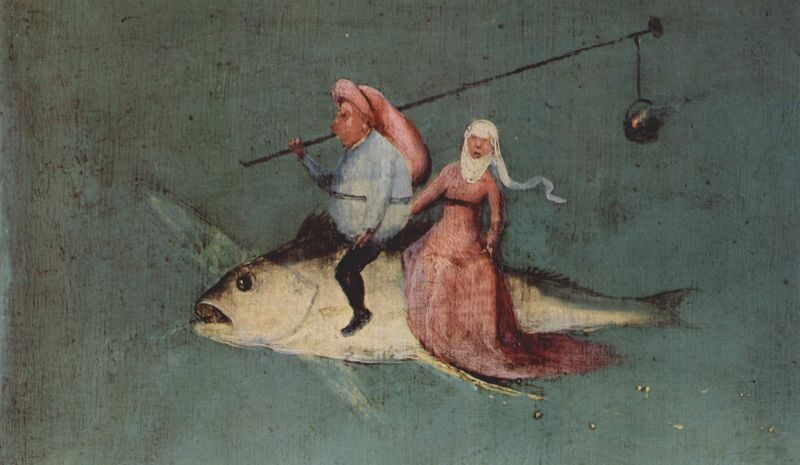
Hieronymus Bosch detail from Temptation of St. Anthony

(Detail of Hieronymus Bosch Painting, “The Temptation of St. Anthony,” 1501)

A friend eulogizing the author Marguerite Yourcenar said, “God has loved me very well through certain people.” Breaking out from the dread is the light of gratitude for those certain people. To see each other completely and still love. Not easy because we take flight ourselves, we look away. But there are those people who have come to me and are the beacon for gods I may never have known, except that they are near, in flight, rising in flocks startled by these predatory words.

And it is in the dark, the extending nights, when Fox Sparrow migrates from his remote, unknown breeding place, following an ancestral path. He does not go gentle into that good night.

“Oh good Lord, who may escape from these snares?” — The Temptation of St. Anthony

Be faithful Go

17 Saturday Aug 2013

Posted by summermlee in Art, philosophy, poetry, Uncategorized

≈ Leave a comment

Tags

Adam Hathaway, art, Emily Hughes, faith, George Steiner, journey of a photograph, Karen Hathaway, Photography, Summer Lee, Zbigniew Herbert

Art, even with its inward mystery, and maybe because of it, has a way of illuminating. Here is my contribution to this wonderful collaborative project.

Journey of a photograph, by Summer Lee, 2013.

Read about it here:

http://journeyofaphotograph.com/2013/08/17/be-faithful-go/

Aside

To discover one’s own absence is to discover one’s immortality…

20 Saturday Jul 2013

Posted by summermlee in Aesthetic philosophy, Art, Birds, Nature, philosophy, poetry, Uncategorized

≈ Leave a comment

Tags

Agnes Martin, art, birds, George Steiner, mystery, nature, poetry, San Pedro Valley

Another entry for my new project: Here is Where We Meet. http://thebirdsofsanpedrovalley.wordpress.com/2013/07/20/to-discover-ones-own-absence-is-to-discover-ones-immortality/ Photo, by Summer Lee

“When a fox is fifty, it can take the form of a woman. When it is one hundred, it can take the form of a beautiful girl. When it is a thousand, it can speak to Heaven and will never die.” — Larissa Lai

08 Wednesday May 2013

Posted by summermlee in Art, Birds, Nature, philosophy, poetry

≈ 8 Comments

Tags

Adrienne Rich, art, artist's block, birds, Heidegger, Larissa Lai, May Sarton, poetry, The Fact of a Doorframe, When Fox is A Thousand

They left me last week, as was bound to happen.

But back in time, societies marked the first day of spring by the arrival of swallows, the same birds you might see outside your window right now. They cut through the air with imperceptible wing beats, more like the bugs they chase than bird-like. They sweep faster than my camera can focus, weaving invisible flight paths like loose braids in the ways my own memories criss-cross and become farther from truth, but in a way closer to me. And similar to memory, it’s as if one random clear day, they appear out of no where, just as likely as emergent from the ground underneath our feet than arriving from distant lands.

 IMG_1761 II

The same people believed that a fox could also be an immortal woman who prowls the night.

“When a fox is fifty, it can take the form of a woman. When it is one hundred, it can take the form of a beautiful girl. When it is a thousand, it can speak to Heaven and will never die.”

Our dear neighbor, Chuck (there is no better neighbor for warm mailbox conversation and handyman referrals and trinket-gifts to our scavenger son) has just spotted a fox traipsing along our backyards. Back there, the ceanothus is putting out snowballs of periwinkle blue, its branches forming undulating waves under which birds and snakes alike find refuge. And now this fox. I wonder what she wants to tell me.

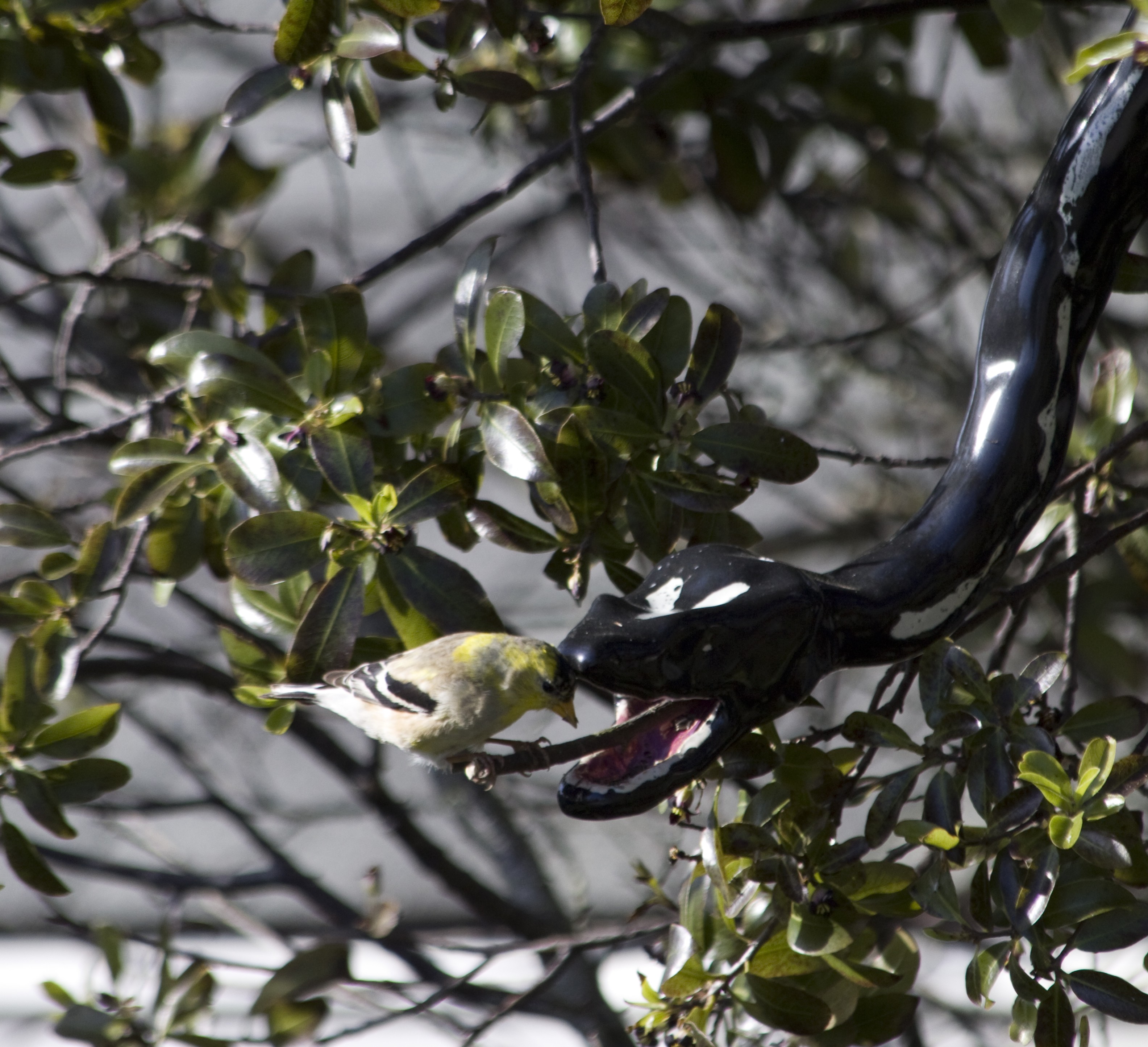
Ceramic birdfeeder and goldfinch from my frontyard, 2008

(Ceramic snake birdfeeder, by Summer Lee, 2008)

May Sarton has been speaking to me through her journals. She tells me to make an art of solitude, of which I have a lethal deprivation these days. Solitude is not for everyone, she seems to say through her doldrums and delights. You can get stuck with yourself there and self-berate endlessly. But beyond that, there is an expanse that wants to be explored with ink, words, light. Silence.

Heidegger says getting to that place begins with willing not to will. By intending not to intend — which for us humans, hungry for connection and to be special, anxious for security and accomplishment, is pretty fucking hard. And only after that little unlikely step, can an awakening to an inner releasement occur. A lettingness. Gelassenheit, he called it, borrowing from ancient, mystical German text. In turn, through Gelassenheit, we are let in. The most mundane glint of light through a swath of paint on a centuries-old, unknown painting brings me to my knees. Or the tiny yellow feathers of a pine siskin is a sign of god. Or, on the other hand, nothing happens. Like Adrienne Rich’s fact of a doorframe: we may go through, but it makes no promises.

And for good reason, since that mystery is the foundation of being. But I forget. Or as Heidegger says, I fall asleep thinking I am most awake. And during my restless slumber these clear spring nights, the fox wanders through the moon-glazed fields of my backyard, hoping I glimpse her and remember before she changes form again.

So, despite my circulation-squashing chokehold on all trivial things right now — whether to have another child, how to produce an acceptable art piece, how to be a good parent and partner, how to protect wildlife and destroy the gun lobby, how even to slow down bastard time as it mocks my appearance, my memory, my ability to get anything done — I accept that those tiny pine siskins have left my feeder and have gone north for several years, if they return at all. They are faithful to a rhythm older than time immemorial. Not to me. And I’m so grateful.

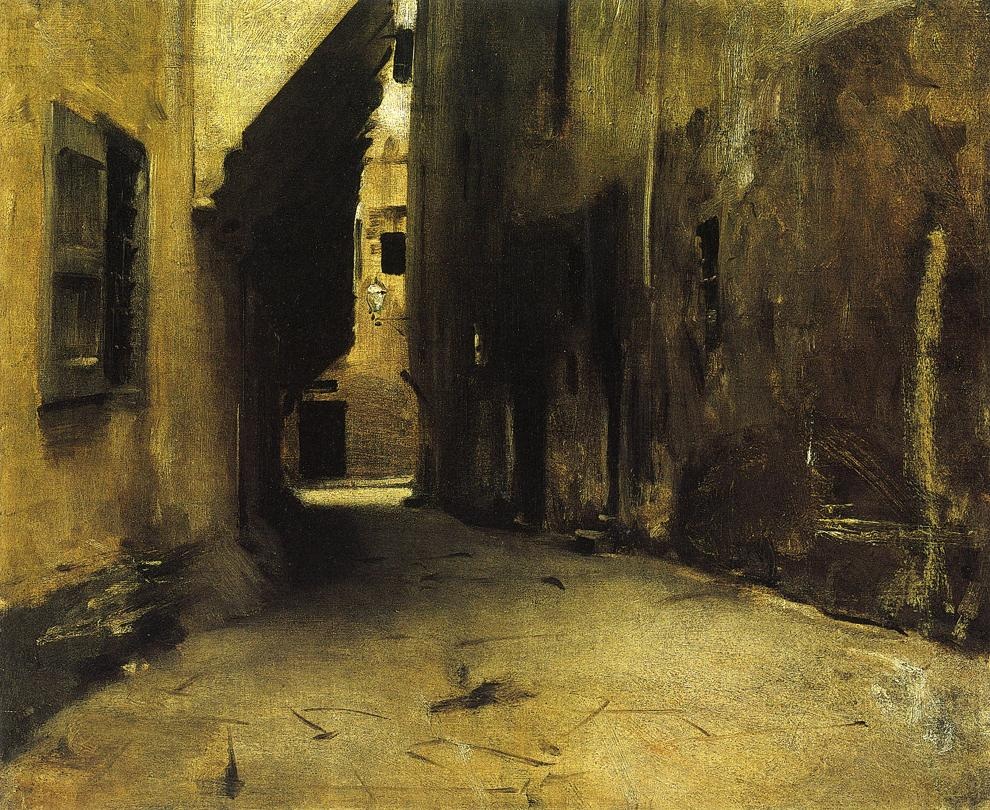
By John Singer Sargent

(Painting by John Singer Sargent)

“The shadow is a tight passage, a narrow door, whose painful constriction no one is spared who goes down to the deep well… For what comes after the door is surprisingly enough, a boundless expanse full of unprecedented uncertainty, with apparently no inside and no outside, no above and no below, no here and no there, no mine and no thine, no good and no bad… Where I am indivisible this and that; where I experience the other in myself and the other-than-myself experiences me.” — Mary Sarton, quoting Carl Jung.

“One can never pretend to comprehend completely –: that would disrespect in the face of the Unknown that inhabits — or comes to inhabit — the poet; that would be to forget that poetry is something that breathes; that poetry breathes you in.” Paul Celan to René Char

21 Sunday Apr 2013

Posted by summermlee in Aesthetic philosophy, Art, Birds, Nature, philosophy, poetry, Uncategorized

≈ 7 Comments

Tags

art, death, Leigh Hyams, painting, Paul Celan, poetry, San Miguel de Allende, Stephane Mallarme, teachers

Since I was the youngest by 3 or 4 decades, my traveling companions were relieved it was me who, drained from travel and the stifling heat (and a sip of the local margarita), interrupted pleasantries to declare that I might pass out. Our host for the week escorted me to the warm cement sidewalk of a dirt street outside the humble restaurant and waited until the cool breeze of the desert night revived me. She asked me polite questions, mostly trying to ease my embarrassment, but also to indirectly resolve how it is that at not even 30 years old, I had become close friends and travel companions with a cadre of women in their 60’s.

The babel of barking dogs woke me the next morning, which was after the night of dreaming she came to hold me. Somehow, the dark sensuality of this woman a half-century older did not alarm me.

In the morning painting session, I start with images and colors I have known before, but they don’t cooperate. As I paint canvases full of utterly conventional crap, I find myself at the edge of tears. There in the shade of her turquoise and pink adobe courtyard, tendrils of bougainvillea cling to the walls closing in on me, mocking my vulnerability and failure — like the stuffing has fallen out of my bra and the world sees me trying to put it back.

She sees the paintings and since I cannot dare the gracelessness needed to throw them over the fence,  I wish for once they could tell a lie. She moves like a dancer around them and critiques them with the fists of a boxer. I am politely mute, in turn, hating my own politeness. I want to hate her but she is just the conduit.

Painting. By Leigh Hyams(Painting by Leigh Hyams)

Plus, San Miguel de Allende overwhelms my sensitivity. I know why the dogs bark. All of them trying to simplify and drown out the brightly jarring colors, the incessant music from blocks away, the dead heat, the spirit voices, the craving for something other. The unreachable ocean.

The next night I dream that my neighbor’s contractor tears out my yard. All my cherished plants are missing, upturned soil exposes eviscerated roots. I experience an abyss where there once had been logic and rationality. Before hitting bottom, I wake to the pre-dawn storm of bird songs.

My dream is clear to her. She tells me in deep tones and direct terms that this unknown is the place where I want to be. Because of this and the buzz in her words, I start crying as she speaks, releasing all the tears that started bubbling in the courtyard. Tears that were neatly packaged screams against my mediocrity, my mundane banality, my safety. Tears that were cages holding a fearful but overgrown child wanting out into the wilderness. My painter friends look on tenderly, thinking it is because I’m sad. But I am beyond sad or happy, I am approaching otherness.

They think she is only speaking to me.

She says, this crying business, as if to be disdainful and compassionate at the same time, is something that only artists can understand.

I would return years later for an extended time considering the small city, my being in the midst of fertility treatment, and the lack of communication to my home from this gritty, foreign country. I was prisoner again to my own painting in her light-drenched studio, but she was a gentle and stern warden. We had many conversations here and there, aside a parade of indigenous costume-wearing tribes, over breakfasts in teeming gardens, after a dip in the local mineral springs, and hopping along the cobblestones incongruently filling the roads.

Sensing her increased frailty and watching her meticulous devotion to a series of sparsely charcoaled paintings of local ruins — to me obvious elegies to past magnanimous accomplishment — I asked if she was questioning her mortality. She, sitting in the improbably verdant backdrop of a sumptuous, water-filled courtyard garden gleaming in desert light and singing heat, answered with a smile, and maybe a slight disingenuousness: not anymore than I always have.

Painting by Leigh Hyams
(Painting by Leigh Hyams)

Some mornings new art books would appear at my breakfast table, always with unspoken pertinence. I loaned her my copy of Mary Oliver’s recent Evidence — a book of searching poems comprised of terse words around what cannot be buried, even spoken, after a loss, or death.

So I can imagine exactly how it was when she died a few weeks ago. Her bed is overlooking her wildly tended garden. She is arms-distance to her favorite art pieces ranging from profoundly poetic to those with playful certainty, and those, maybe her favorite, continually in serious questioning. I can see the washed out colors of early Mexican spring, feel the light-headed air of the high altitude aggressively dancing with the dust lifted and levitating in her richly alive, medieval Latin city. And I hear a liturgy from the birds of her neighborhood, of course, taking over the tinny brass horns droning from distant radios. The birds alone can accept that someone who loved life so much should have to leave it.  As a consolation, when dawn breaks leaving an emptiness for the rest of us, they send jewels of ephemeral birdsong down to earth to adorn her.

“Toute chose sacrée et qui veut demeurer sacrée s’enveloppe de mystère.” Stephane Mallarmé

Painting, by Leigh Hyams

(Painting by Leigh Hyams)

“Threadsuns / Above the grayblack wastes. / A tree- / high thought / grasps the light-tone: there are / still songs to sing beyond / mankind.” – Paul Celan

08 Friday Mar 2013

Posted by summermlee in Aesthetic philosophy, Art, philosophy, poetry

≈ 6 Comments

Tags

A Portrait of the Artist, Ancestors, art, death, James Joyce, Paul Celan, poetry, The Last Poems, There are still songs to sing beyond humankind, war

Despite some eccentricities in his presentation on the phone and his ardent refusal to use any technology, the elderly gentleman asks nothing and offers to help so today I go meet him in a restaurant in a suburb north of the City.

I anticipate that my art is ill-suited for his services, which mostly consist of lining up restaurants and businesses to display art with ungainly price tags. And when I see the Italian restaurant’s orange stucco walls with a range of some-accomplishment to beginner pieces, I remind myself to just see what the man has to offer.

He is sitting in the corner, with a feminine, white, bob haircut coiffed neatly, a large Nordic nose over a receding chin. He is incredibly tall even hinging on his aged frame. He looks straight at me with a pale, wrinkled face holding ice blue eyes. He hands me a form listing the opportunities he gives to artists. I politely decline all of them and tell him that my work in my experience has not been palatable for the average “civilian” (his term not mine). In turn, he explains that society needs art and that an artist does no service hiding out making art privately. Art’s service is to move and connect to other people. I retort saying art is about solitude and that the optimum experience is to stand guard over someone else’s solitude. I am not interested in converting people to a state of interest. Besides my art would be taken as freaky (my word) in the milieu in which he works. He asks why. I explain that lately my work consists of 6-foot, yellow watercolor portraits that are hard to look at. I explain how these works are about my ancestors, being haunted by them but the impossibility of knowing them. And of course it is also about their death, but I admit I have more questions than answers about that part, and art is the place for unanswerable questions. It is not of the stuff that people want to fill their homes with.

Then he argues simply, “But you have the knowledge of who your ancestors are inside you.” And I say, no, the mystery is more important. He agrees and asks if I have time for a story.

He tells me that he was born on a dining table in Copenhagen to a gypsy-blooded mother. He said he was five years old when he was first interrogated by the Gestapo. That year his family under pressure set out to leave Copenhagen to stay with his grandparents who lived in the countryside outside the city. All Danes at that time ride bicycles, he disdains. And they would have to pass on bicycle an SS checkpoint with machine guns pointed over the road.

I said I don’t like where this is going. He paused for me but continued.

He said his father told him he would go first, then his sister, his mother, then finally his father, all in one line. His father told them all to keep bicycling past the checkpoint at least 50 meters before stopping. His voice starts to shake and I realize my hope of a happy ending is dead. My eyes immediately well up. He apologizes. He says this is very difficult to talk about. I say it is very difficult to hear. He slowly continues. He utters that he rode across, then he chokes again and clears his throat. He heard gunfire behind him and he kept going. He is sniffling now and I am weeping openly. He says he rode to his grandparents’ house, familiar with it from previous visits, and arrived to what he calls his friendly oak tree. One, he adds, that has a chimney. I nod in complete recognition, ungracefully smudging tears off my face. He says he stayed for a longtime there at the oak tree until at some point he received a message. He was told that he is now on his own, an orphan of the universe, and that he was also now a genetic placeholder for his ancestors.

—

Encumbered lately by the difficult poems of Paul Celan, I sense in his poetry the excruciating search for the impossible understanding to his parents murder, their lives cut off not far from the place and time of my own storyteller. Celan’s life’s work (and resultant suicide) was the existential failure to make sense of life mediated by language, using that same language in a means to what he describes as becoming silent. Silent like all those he survived. He was tormented, like Hegel, by the fact that words have a way of removing themselves from their meanings. That one day someone could utter genocide and it would be far from what he experienced. His collection of poems is therefore entitled, The Last Poems.

—

Back in this beautiful Italian restaurant adorned with the hopes of artists wanting to touch others and be touched, our artwork — an offering for his family — hung in a silence that was awkward to all but us. He finally breaks it and says to me gently, humbly: I lived it — I know what war means. And at that moment, I glimpsed the entirety of the word myself.

Still Frame from Ancestors on Rice Video, Summer Lee
(A still from a recent video, A family portrait projected on falling rice. 2013. See the whole video here. http://youtu.be/IoGln7tNyGo

“Terror is the feeling which arrests the mind in the presence of whatsoever is grave and constant in human sufferings and unites it with the secret cause.” – James Joyce, A Portrait of the Artist.

“You’ll see how much your little bird has changed.” — Edith Piaf

03 Sunday Feb 2013

Posted by summermlee in Aesthetic philosophy, Art, Birds, music, philosophy, poetry

≈ 9 Comments

Tags

art, Edith Piaf, French, high school, Jacques Prevert, memoir, philosophy, teachers, Virginia Woolf

Not much taller than the desks, she stood unblinking in front of the students, hopping and gesticulating wildly to convey her lesson to her jaded audience. In this of her many dramatic monologues with occasional spittle, she introduced a new topic, rudiment to understanding French, and maybe even life: existentialism.

We thoroughly read Camus, en français, and over time she espoused to her sheltered and callow high school students that every choice one makes has a consequence, and the absurd man is one who acts out of habit, shirking responsibility and awareness for the events and choices that come to comprise one’s life. We listened to Edith Piaf, learning her lyrics by heart. Having heard no other voice so utterly pained, wretched even, but strong and moving, I was taken. She grabbed me at the end of class after the rest of the students had drained out of the room, and for whatever reason, recounted that during her first teaching job at an elementary school, an air force officer entered her classroom and in front of her 25 students, handed her an envelope. In it was a piece of paper describing in the most coldly succinct language that her husband’s plane had crashed on a training flight nearby and he was deceased. There also in the envelope was his metal wristwatch, the only personal item with him and recovered from the crash, cracked with hands frozen at the exact moment of his death. With a teacher’s salary and two young children, she said Edith Piaf’s tragic life and inextricably-linked music became anthem to the fact she had no other choice to move on.

Her philosophy must have been a double-edged sword for the ESL students also under her care at the high school — the dregs, the few brown and black kids bussed into an otherwise privileged school of white kids dropped off by luxury cars. But there was no less, if not more, passion for these kids as there was for her sniveling French students. When her Edith Piaf admirer became Senior Class President, she arranged a secret meeting, knowing my duties as student organizer of the school prom. She said she had a young couple in her ESL class who wanted to go to the prom but could not pay the price of ticket, exorbitant even for today’s standards. She wanted to broker an arrangement for them, and they must never know. Loyal to her, I offered to comp them in, no one would notice in the shabby accounting. Slightly offended, she interjected to say the boyfriend had agreed to work the coat check before and after the dance to earn his way. I added their names to the paid list and other than her catching my eye at the entryway of the dance hall while she stood next to her couple, there was no word of it after.

She also introduced us to a book of poetry by Jacques Prevert, someone also familiar with war and loss. She had to have known I never returned my copy back to the school repository, and from time to time I still find a guilty joy in reading a poem or two from it — a treasured contraband. It was, of course, easy to tell her I was coming out as gay. She might have even said she had some gay friends or a gay son, I don’t remember. But after that, she took to meeting me at the town’s bookstore cafe, and we sat together as an unlikely duo of a middle-aged, manically energetic, short woman, and a gangly, wide-eyed, attentive girl — my hair getting shorter by the week as my shoes grew more militant. I don’t remember much of what we talked about, but I can smell the bitter coffee-filled air, and see the tome of pages from Antigone she xeroxed in French (another petty crime) and brought me to read over the summer. It was also there that she asked me to be President of the school French Club. I had no duties except to bring a piece of brie to the school club fair, where she also hosted an escargot-eating contest, and in turn it was something to add to my padded Stanford-bound resume. When our senior yearbook came out weeks before the end of school, she curiously asked to hold mine for a day or so. When she returned it to me, there adhered strongly to the inside the front page was an engraved, stately metal plaque. It read my name, the title of French Club President, and underneath, “Honni soit, qui mal y pense.” An ancient motto of chivalry, it means something to the effect of, evil to those who think evil, or shame to those who think shame of it.

The last week of school, she made me promise that I would let her be the last teacher I would say goodbye to. So, after gathering my things and finishing some tearful thank you’s to a few of my other teachers, I found her waiting for me in her classroom. As we walked down the hallway to one of the school’s exits out to the parking lot, she explained to me that there at the doorway was a threshold and it was marked by a strip of metal. She said that it was a milestone, a marker, this line. She would go on the other side and she was going to watch me cross. So I did: I unceremoniously stepped over the line, tears welling in my eyes, and there on the outside of the school she jumped to hug me. As she grasped me in her embrace she whispered in my ear, though it seemed louder and permanent: You have crossed the line and you must go, and I want you to remember, she clenched more tightly, you can’t go back.

Ladder, by Summer Lee
(An image from an art performance I did with Jesse Schmidt, 2008)

“I wish that once & for all I could put down in this wretched handwriting how this country impresses me — how great I feel the stony-hard flatness & monotony of the plain. Every time I write in this book I find myself drifting into the attractive but impossible task of describing the Fens — till I grow heartily sick of so much feeble word painting; & long for one expressive quotation that should signify in its solitary compass all the glories of earth air & Heaven. Nevertheless I own it is a joy to me to be set down with such a vast never ending picture to reproduce — reproduction is out of the question — but to gaze at, nibble at & scratch at.

After all we are a world of imitations; all the Arts that is to say imitate as far as they can the one great truth that all can see. Such is the eternal instinct in the human beast, to try & reproduce something of that majesty in paint marble or ink. Somehow ink tonight seems to me the least effectual method of all — & music the nearest to truth.” –Virginia Woolf

← Older posts
Newer posts →

Enter your email address to subscribe to this blog and receive notifications of new posts by email.

Join 619 other subscribers

Recent Posts

  • “Experimenters in the passages between worlds.” Vinciane Despret, Au Bonheur des Morts
  • “The terrifying groundlessness, the eradication of all violences. To be embraced by that which doesn’t know us and in that unknowing caresses us and truly loves us. We might become anything at all, something wildly other than what we are encountered by. A world that truly loves us by not presuming what we want or what shape we will take before we show up… We will be held when we are not known from the start.” — Dr. Marquis Bey
  • Images dream within us, a reverie is a world of expansion.
  • “For the natural world, the ethical responsibility is that being alive gives existence to others.” Vinciane Despret
  • “We meet in the freedoms of each other.” – Takeyoshi Nishiuchi

Archived Posts

Blog at WordPress.com.

  • Subscribe Subscribed
    Unwanted Advice: Reflections from a Self-Appointed Life Counselor
    Join 215 other subscribers

    Have a WordPress.com account? Log in now.

  • Unwanted Advice: Reflections from a Self-Appointed Life Counselor
    View site in Reader
    Manage subscriptionsSign upLog in
    Report this content
    Collapse this bar
Loading Comments...