• About

Unwanted Advice: Reflections from a Self-Appointed Life Counselor

~ Caminante, no hay camino. Se hace camino al andar. Wayfarer, there is no way. You make a way as you go. (Antonio Machado)

Unwanted Advice: Reflections from a Self-Appointed Life Counselor

Category Archives: philosophy

“Philosophy is really homesickness; the urge to be at home everywhere.” Novalis

14 Sunday Aug 2016

Posted by summermlee in Aesthetic philosophy, Art, Birds, Nature, philosophy, Uncategorized

≈ 7 Comments

Tags

art, david Whyte, Heidegger, John Berger, Karsten Harries, Moving, Rilke, Summer Lee, unhousedness
IMG_3454

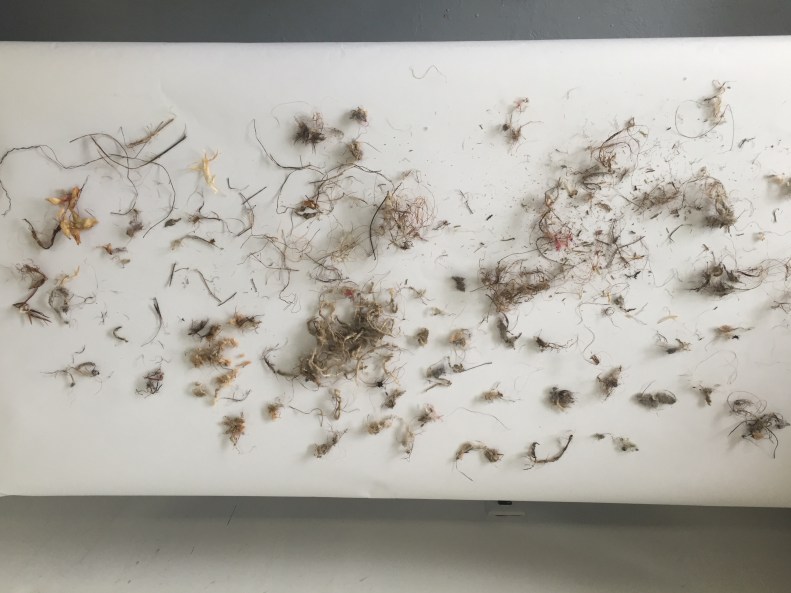
(A deconstructed bird nest for a new art project.)

When we turned the car west, the miles of snowy Sierra pines and stone pushed into greenly-wooded foothills and then into rolling brown scrub of the Pacific. Only a few birds can make a home in all three geographies, as most birds are specialists. As we flew along, something was being pulled from the middle of me, the fragmentation that occurs in the process of becoming not at home.

They would hold him there until I could arrive to say goodbye. Goodbye to who or what I am not sure, but we kept on driving because a monument was in the making.

This is what comes to mind right now as the fog is peeling back over my coastal mountains from which my plane is turning on the runway. East-bound, a one-way route.

John Berger says home is the vertical line between the gods and the buried dead. It’s one that can move along the horizontal of human mobility, but he admits some emigrations disconnect. Nomadic tribes know nothing of this. Home travels with them. Birds neither. They build the most tenuous nests for their most profound task.

I have written here before about needing to be at home in the state of unhousedness. When there is an ambiguous loss with nothing to bury, and no effable one to pray to. This of course means that there is so much glory here: laughter that stung my eyes, the epiphany of childbirth, improbable resonances with strangers, friends who are fixtures at every milestone, family there in an instant, and moments when the art came and made me disappear. Not to mention this light off the ocean. And it all is tied to this home.

I met a homelessness back in China several months before I knew of our move. It was there that I discovered something true that I still have no words for. And in this, I found myself lonely. In consolation, the thick bamboo forest offered me a dark and aching embrace, but there was nothing to hold on to. When will I learn that an attachment to loving moments quickly drains them. This resistance is the artist’s mischief and rebellion — to try to extend the present moment, to give presence, to still a nearing god.

That moment in China, as is happening on this plane, something fell undone into her pond with the splash of a thousand fish about to be dinner. She built a life story inside ten kilometers of that pond, and I was from ten thousand kilometers away. The epiphany of scaffolding, smothering beliefs, and cloying security falling away. And resulted in the terror of a new vulnerability and uncertainty. A deepening of the divine recognition of fragility.

I am making this goodbye a self-indulgent monument, lovingly constructed of the small numbers of my childhood address held by the eucalyptus and coastal sage in the evening breeze yesterday. Also the threshold of every door and every word through which I greeted you and you greeted me, in the company of language-less ghosts who don’t seem to age. It leads one to draft absurd postmortem directions for the body, a future tense when I am no longer present, long after the goodbye. Here also are the wounds of possibility.
IMG_3611.jpg

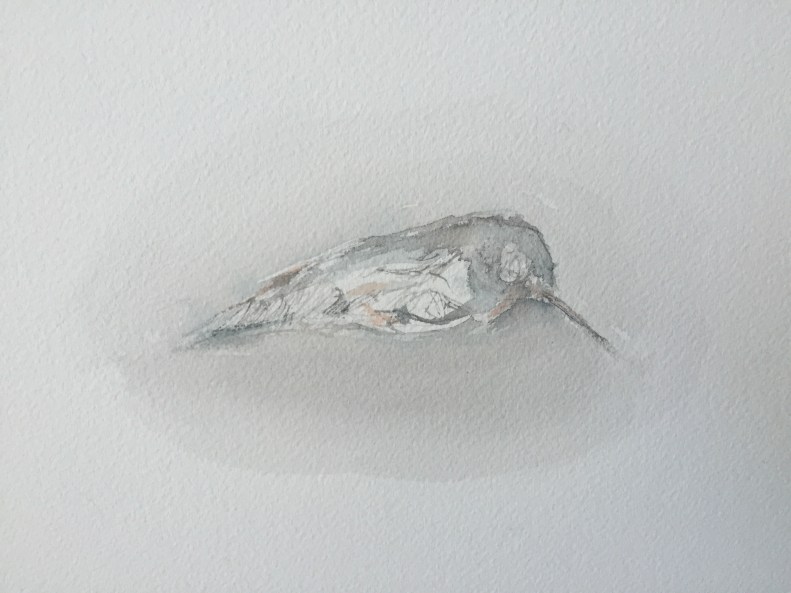
(Detail from my painting of cremated hummingbird, 2009)

“Inhabit vulnerability as a generous citizen of loss.” David Whyte.

“Only when we learn to transcend our earth-bound selves in love, learn to take ourselves not too seriously, do we begin to truly live.” — Karsten Harries

“I come to give you something, and it is the gift of my own beaten self.” — Oedipus at Colonnus

03 Monday Aug 2015

Posted by summermlee in Aesthetic philosophy, Art, Birds, Nature, philosophy

≈ 10 Comments

Tags

art, Burial at Sea, dead whales, George Steiner, J. M. Turner, Pacifica, tragedy

IMG_3528(My son looking over a piece of whale blubber, April 2015)

For the third time since April, small crowds gather at the beach near my home to see yet another corpse of a dead whale washed ashore. Even for gawkers, an homage of solemnity surrounds this image of great defeat. A gentle and magical beast once gracefully at home in the mysterious reaches of ocean inaccessible to us, is now a heap of rotting surrender, rocking gently in the most derelict of slumbers by the relentless waves. Feet away from our local strip mall.

When we read Oedipus, he pointed out the passive structure of the line — the gift of my own beaten self. Because that is what happens when our will fails, we can no longer act. In those moments when we worry about the increasingly acidic and inhospitable ocean, we pick garbage off the beach, we sign petitions, ban plastic bags, we are careful about what sloughs off into our gutters leading to the sea. And I can’t help but think that this third beacon, a totem of majesty now throroughly exhausted, signifies that it doesn’t matter. And a part of me is like that slumped over dark mass of hopelessness, filling me with deep apology. And like a true gift, there is only a response of stillness — not transaction — just acceptance.

The first whale in April was a headliner. It was a 49-foot sperm whale, a species rarely washed ashore because they are at home so far from land. My son and I stood at the perimeter to pay our respects. In the meanwhile, scientists butchered the prized corpse for data. “Why did it die?,” my son asked. A spokesperson from the Academy of Sciences fielded questions, for some reason focusing mostly on a British vacationing family, whose youngest son was poking irreverently at a dead, starved seal pup a few yards away. While we eavesdropped, the spokesperson told them some facts about the sperm whale and what the scientists were looking for. “Why did it die?,” again. She recounted that the whale was later in life, because his teeth were worn down significantly. “Why did it die?” Then she added that although emaciated, the whale had a big meal of squid in his entrails. “Why did it…?” Finally she addressed my son, mostly to stop the grating repetition known only to young children who are ignored and don’t realize the futility of trying not to be. “We don’t know.”

Analysis is a form of subordination, of trying to assert a superiority. Steiner asks, do you ever find a representative from a faraway subsistent tribe in the middle of a North American city, studying our first-world behaviors? Most thinking is indeed a form of self-establishment, of self-congealing.

In real thinking, he said, you almost disappear. There is an intense turning towards — and it is to be in love with everything around you. But here, I go back and forth, wanting to know why so many dead things are being hurled against our shore, and I am met with a harsh refusal.

It is a crisis of consciousness to try to make beautiful things in what can be described as very unbeautiful times. As Steiner says, music never says no. And my god, there are so many seductions coaxing me away from real-art making, even just the projection of myself into this very writing — which Steiner says is an act of a minor craftsman falling short of any originality. But I must give testimony, for the hope that art happens and shows us the freedom not to be. A freedom that sometimes enters after the beaten self is off-stage, dissolving slowly into the sea.

“whatever we lose like a you or a me
it’s always ourselves we find in the sea” — ee cummings

Detail of Turner's Burial at Sea

(Detail from Turner’s Burial at Sea painting, 1842)

“Song leads us home to where we have not yet been.” — George Steiner

25 Sunday Jan 2015

Posted by summermlee in Aesthetic philosophy, Art, Birds, music, Nature, philosophy

≈ 9 Comments

Tags

ancestry, art, birds, China, George Steiner birds, music

As the intensity of morning light increases, it signals to different species of birds when to start their morning song. Each bird is prompted to sing by its own special light.

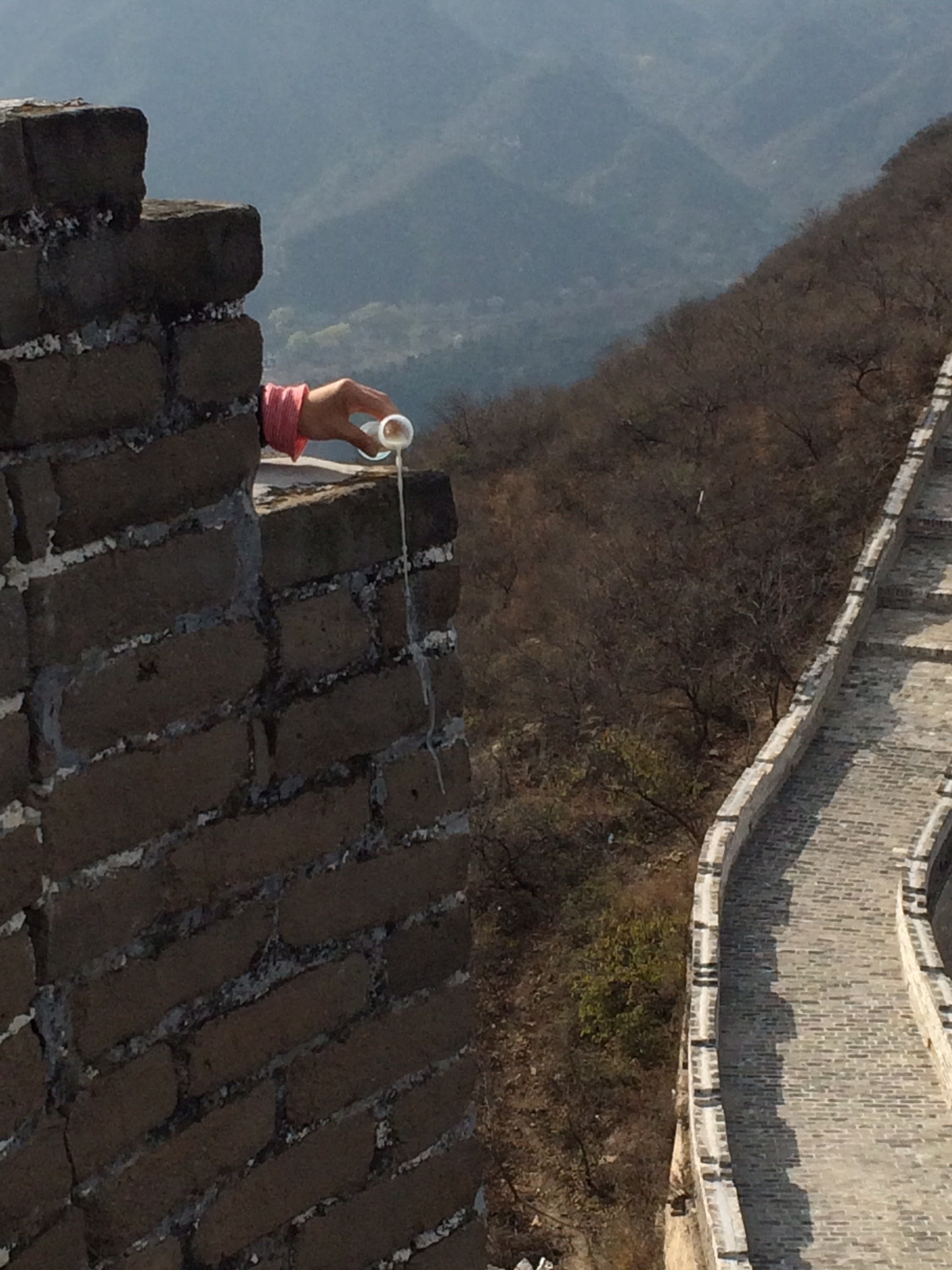
When I visited China, I had in hand my grandmothers INS interrogation which detailed the few belongings they had in hand when they left China, as well as the several dead, young and old, they were leaving behind. In it, she also recounted a gold ring her father had brought to her from America that she lost. I would inherit this reminder of impossible frugality like a mistaken familiar voice in a crowd. As my own trip wore on, I was accumulating breastmilk that I pumped every few hours for relief, but also so that I could return home to nurse my child.

After dumping a heartbreaking amount of milk in China, I persevered the survival of a small frozen stash of milk through five cities (via ferries, taxis, subways, three domestic planes, and a train, all between four separate hotels) and finally across the Pacific ocean home.

By Summer Lee (Photo of pouring my breastmilk off the Great Wall of China, 2014. Summer Lee)

This trip symbolized the means of how an artwork based on my grandmother would come to be exhibited in the region where she was born. And soon, it will enter the permanent collection of that museum, as if I were the unwitting intermediary to repatriate her bones.

Several years ago, I was contacted for a potential exhibit at a university a few hours from my home, a show which took years to come to fruition. Finally this last week, during the same time my grandmother’s piece is in China, the show opened, and one of the paintings chosen for this exhibit is a watercolor of my grandmother’s husband, my grandfather, who was born in the same unlikely town of Stockton, where the university exhibit is located.

I don’t know if birds have homes, but I imagine they are more at home in the state of homelessness than I am, singing on account of the light, as much location.  In this winter of coincidental homecomings for my grandparents, I have become unhoused at the bird feeder of my yard. After so many years, a grasshopper sparrow, a spritely, smaller-sized, streaked sparrow, who was committed to my feeder winter after winter, has not returned. I will never know why, and I have no bones of his to return, nor an understanding of where his song might be.

This dawn chorus is ever a changing one.

image

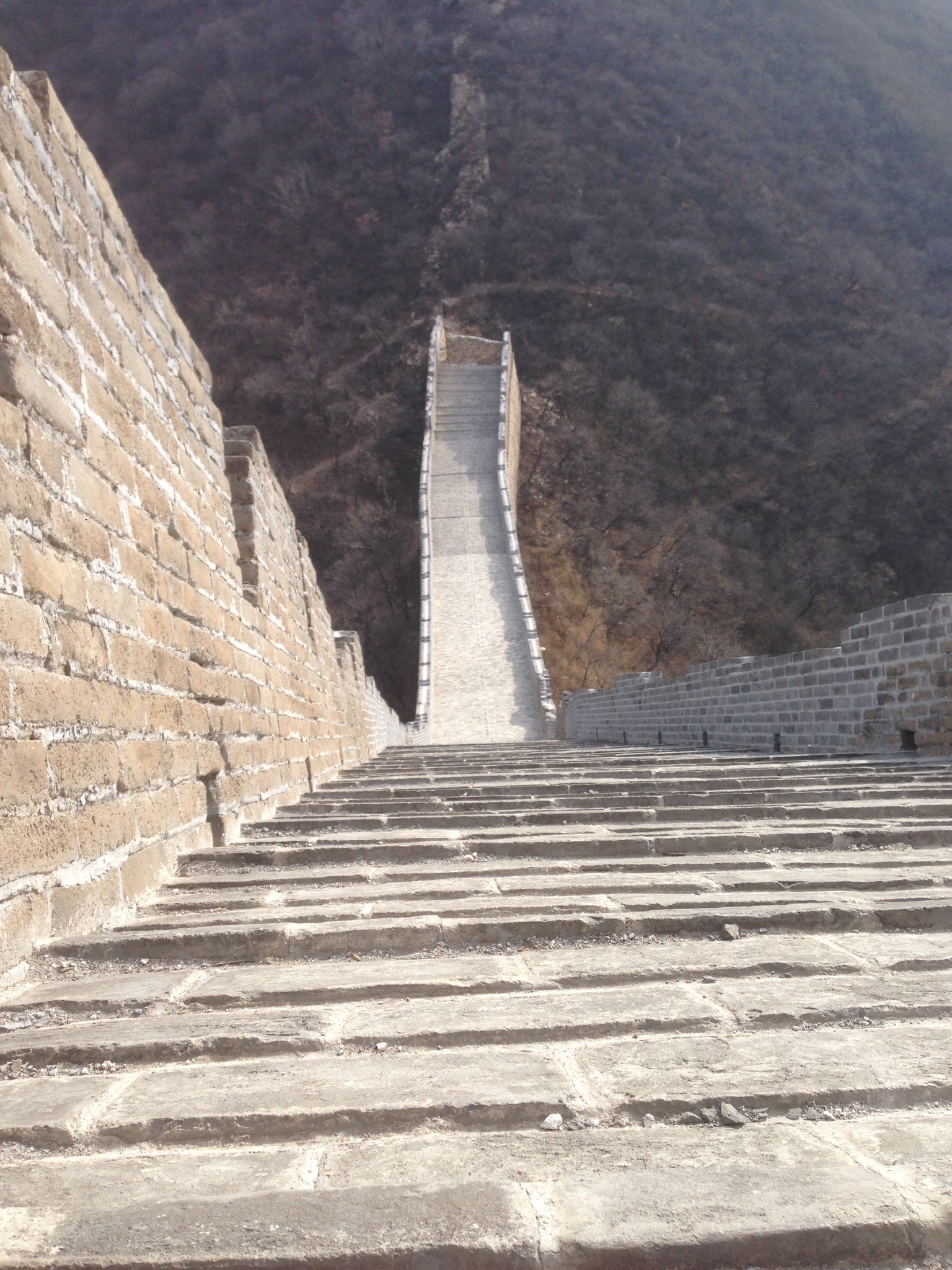
(Photo taken by my friend, of where the restored Great Wall meets the ancient wall, 2014)

“…wherever gods are in flight.” — Heidegger

09 Saturday Nov 2013

Posted by summermlee in Aesthetic philosophy, Art, Birds, philosophy, poetry

≈ 5 Comments

Tags

art, birds, Dylan Thomas, gods, Hieronymus Bosch, illness, Laurence Hemming, Marguerite Yourcenar, Martin Heidegger, poetry, suicide

“No god can be held fast by a mortal: but the poet may, in stillness, bring to a stand the passing-by of the god, by speaking what the god has given him to speak. The poet in stillness, stills the nearing god.” — Laurence P. Hemming on Heidegger.

The gods are in flight.

Heidegger wrote that, and he also wrote that they can be near. But they aren’t here. I don’t know if he meant it in the sense I have as doubt is my glass darkly. But somehow his words prompt my own. But who can write into the unknown without just a few glints of necessary faith.

Heidegger’s fugitive gods were certainly about his pessimism about our modern forgetfulness of being. He also wrote that gods need the hearts of feeling men. And I remember how my heart lifted at the return of the Fox Sparrow to my yard a few days ago, as he has the last several autumns. Last winter, a new pair joined him, bringing an unprecedented three fox sparrows scratching below the feeder. How they knew to join him, and his flock of Golden-Crowneds, I will never know. Where the other two are this year, I am not sure either.

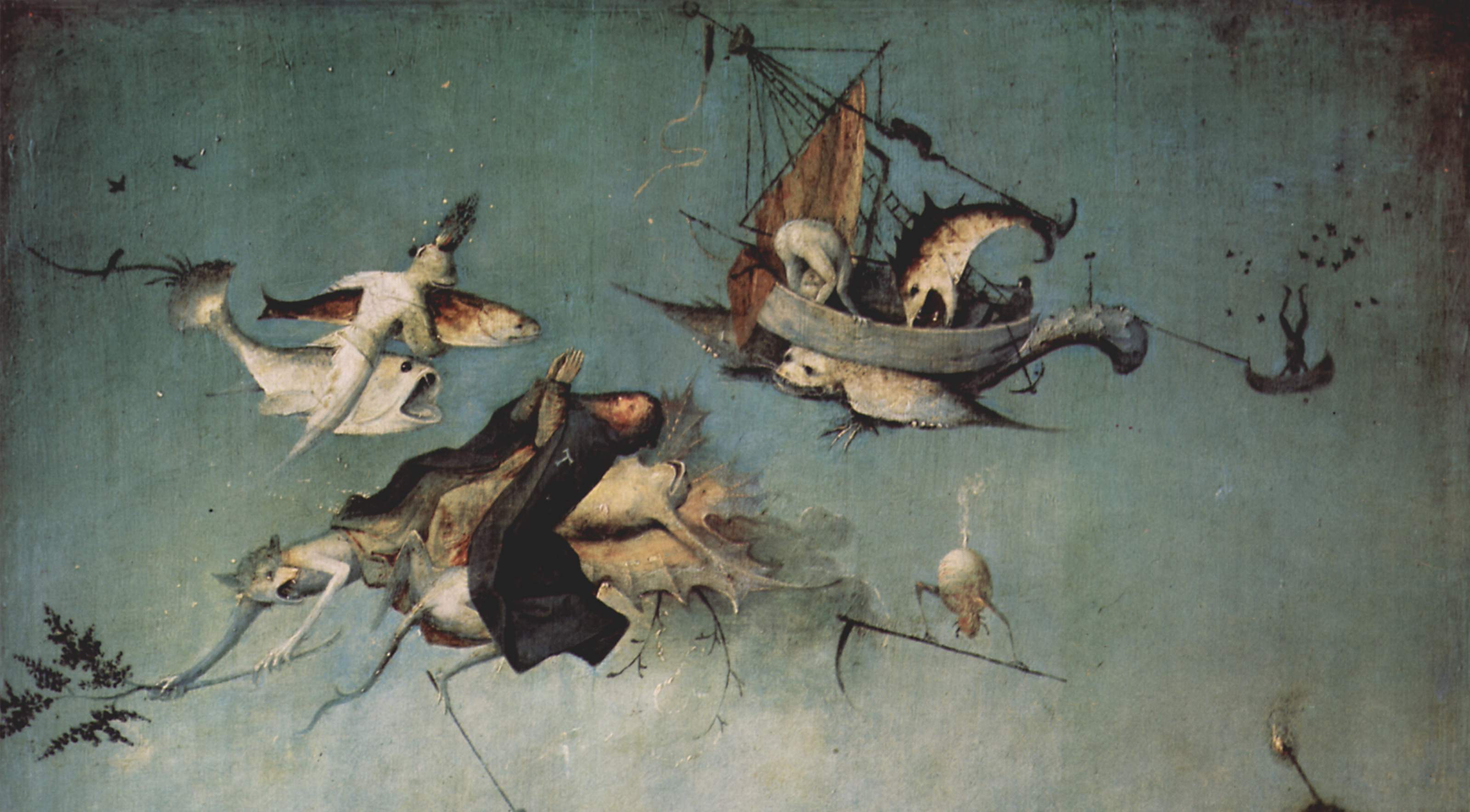
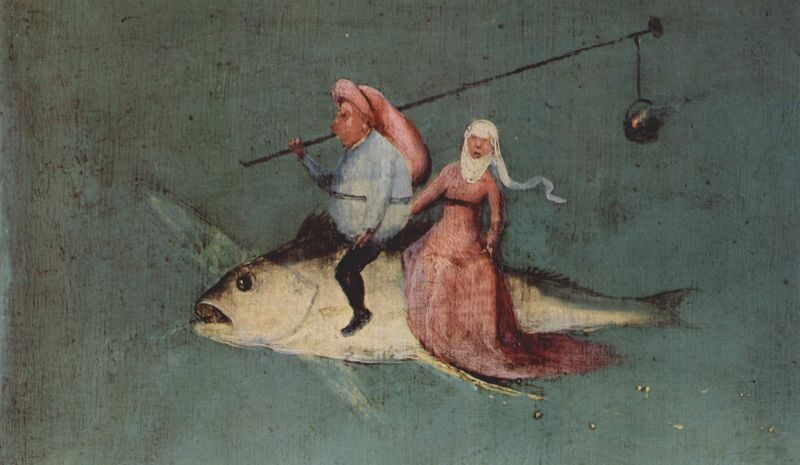
Detail from Hieronymus Bosch Painting

(Detail of Hieronymus Bosch Painting, “The Temptation of St. Anthony,” 1501)

My body is still betraying me, caging me in illness, the remorseful price of an early hope-filled pregnancy. The gruel involved in what were once rote tasks is also a block to the muse. Who in pain can muster an openness to offer hospitality to the unknown. Pain asks when, when will it be over, and in that way is anxiously future-oriented. Pain rarely wants to be at home with itself in the present moment — the moment of stillness needed to still a nearing god.

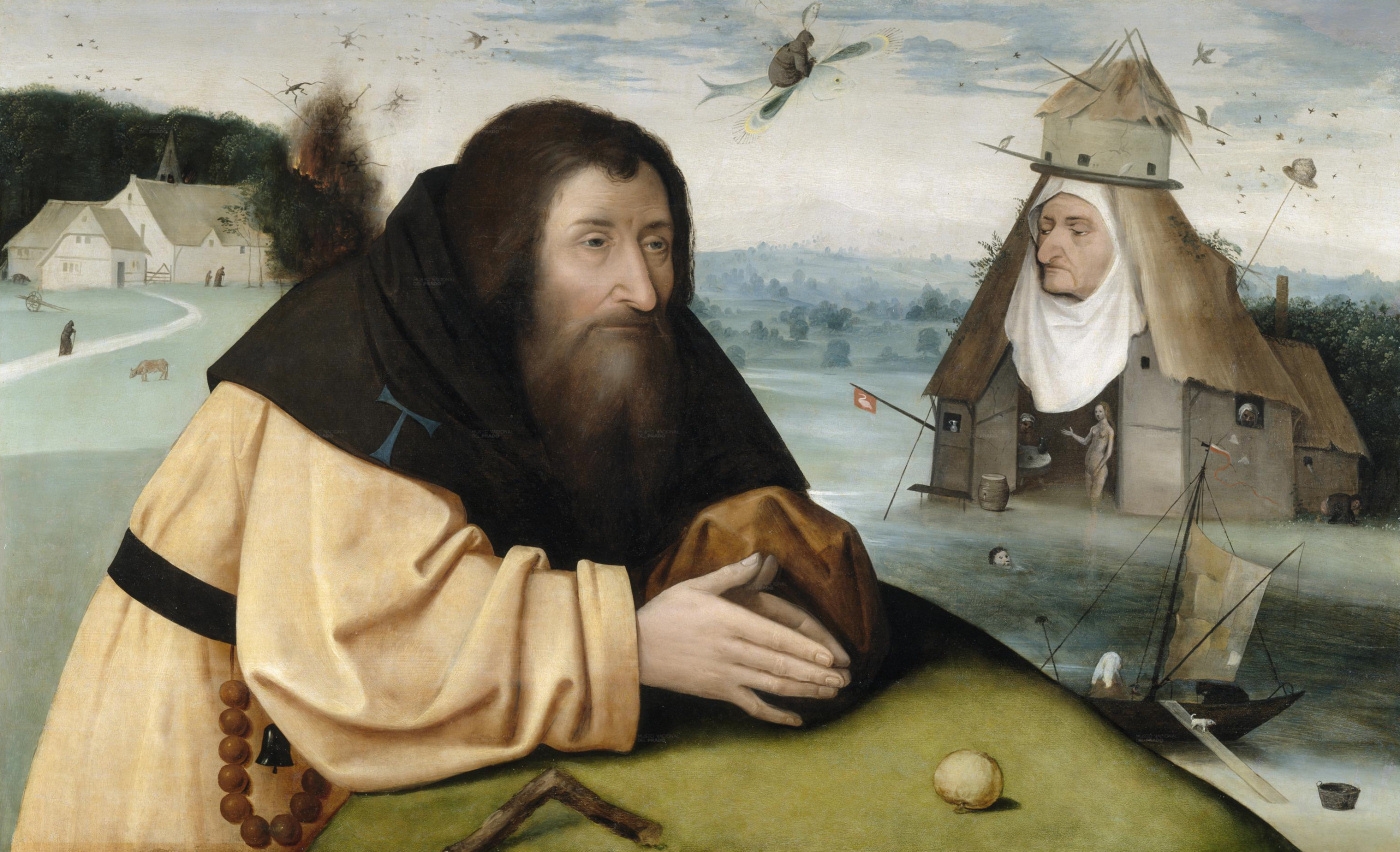
Bosch_Hieronymus-The_Temptations_of_Saint_Anthony

(Detail of Hieronymus Bosch Painting, “The Temptation of St. Anthony,” 1501)

Like my birds, the gods need my heart in pain, and in glory. And I need them and call them back. One of my last of dwindling tools are words. But the permanency of words, the dispelling of mystery, can keep them at flight also.

And half of my grammar is unavailable to me. Not just because I am sick, but because it was a grammar we shared — and he took it with him into the underworld. An underworld I glimpsed with him and am terrified of. And like his ashes bellowing out of the crematorium a few days later, inhaled into my head with unspeakable dread, those words have broken up and are dispersed into a fading language I am not sure I have faith in anymore.

Hieronymus Bosch detail from Temptation of St. Anthony

(Detail of Hieronymus Bosch Painting, “The Temptation of St. Anthony,” 1501)

A friend eulogizing the author Marguerite Yourcenar said, “God has loved me very well through certain people.” Breaking out from the dread is the light of gratitude for those certain people. To see each other completely and still love. Not easy because we take flight ourselves, we look away. But there are those people who have come to me and are the beacon for gods I may never have known, except that they are near, in flight, rising in flocks startled by these predatory words.

And it is in the dark, the extending nights, when Fox Sparrow migrates from his remote, unknown breeding place, following an ancestral path. He does not go gentle into that good night.

“Oh good Lord, who may escape from these snares?” — The Temptation of St. Anthony

“Art does not reproduce the visible, it makes the visible.” — Paul Klee

16 Monday Sep 2013

Posted by summermlee in Aesthetic philosophy, Art, Birds, Nature, philosophy, Uncategorized

≈ 8 Comments

Tags

art, Chandra Cerritos Gallery, Conversations, drawing, installation, Robert Walser, Sheila Ghidini, Summer Lee

The most profound artwork questions what exists, but at the same time what is not there. Sheila Ghidini’s exhibition at Chandra Cerritos Contemporary Art Gallery, “Conversations,” addresses the seen and unseen through a series of drawings and installations involving intricate choreographies of chairs and birds — and negative space. Her careful drawing and skillful choices remind us: See in order to draw, draw in order to see — but most importantly, draw in order to illuminate the unseen.

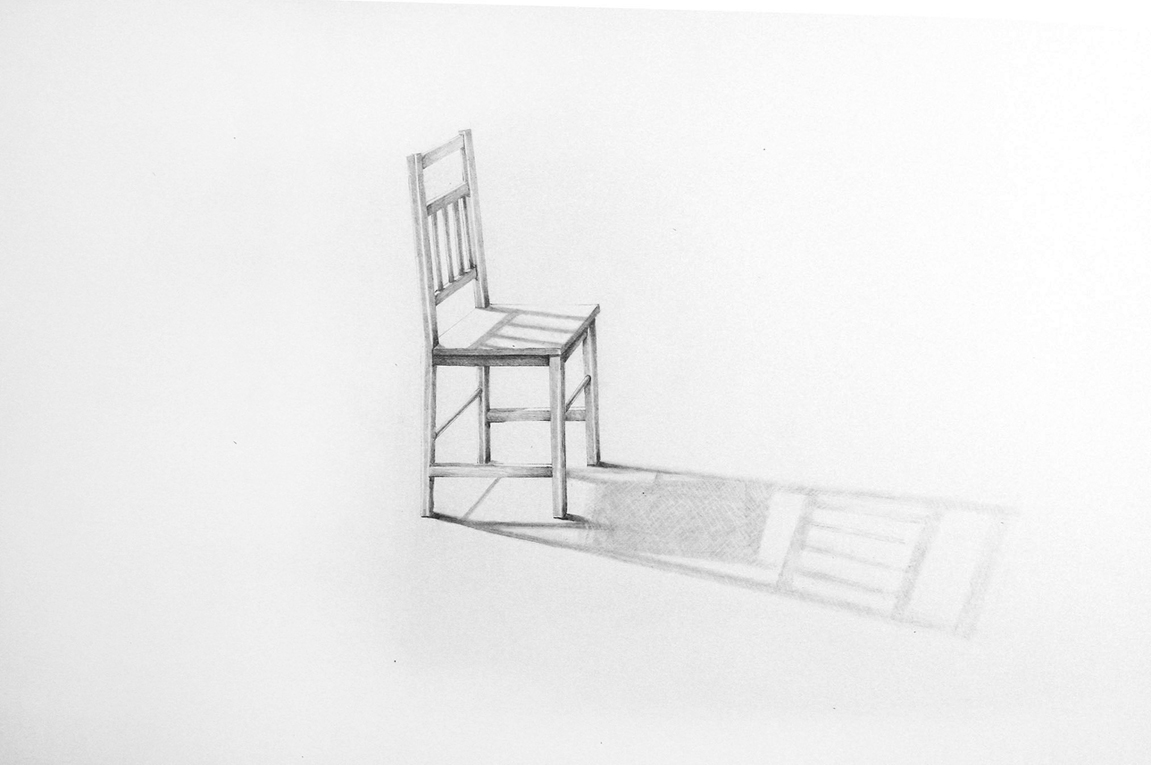
Sheila composes her chairs with an infinite number of graphite marks with the facility of a deftly focused draftsperson, creating a tension between the object’s stillness and the energy of mark-making. This intense focus brings equal attention to the swaths of energized negative space surrounding the drawn object. For example, in the piece entitled, “One Chair,” the solitude of a single object in white space precipitates a question, a longing. And what exactly is longed for is the inviolate mystery that makes Sheila’s drawings philosophical, bringing an untranslatable insight into the human condition.

"One Chair," Drawing by Sheila Ghidini

“One Chair,” by Sheila Ghidini, 2013. www.sheilaghidiniprojectspace.com 

The earliest artists, traditional Chinese brush painters, heralded negative space as much as modern, Western artists delighted in filling the entire picture plane. For them the space untouched by brush was the nothing that is something, a space for contemplating what is beyond that something. That space is deeply connected to the philosophical concept of nothingness running through Taoism and Buddhism. In that vein, the Mustard Seed Garden Manual contains an admonishment from the 13th century painter, Jao Tzu-Jan, to always paint a scene with places made inaccessible to humans by nature. Because, as it is here surrounding Sheila’s lovingly rendered chairs, the dense, white nothingness obscures the contexts of their existence — and incandesces what is most beautiful in the mind. And true to the Buddhist aesthetic concept, yugen, we are most entranced by mystery.

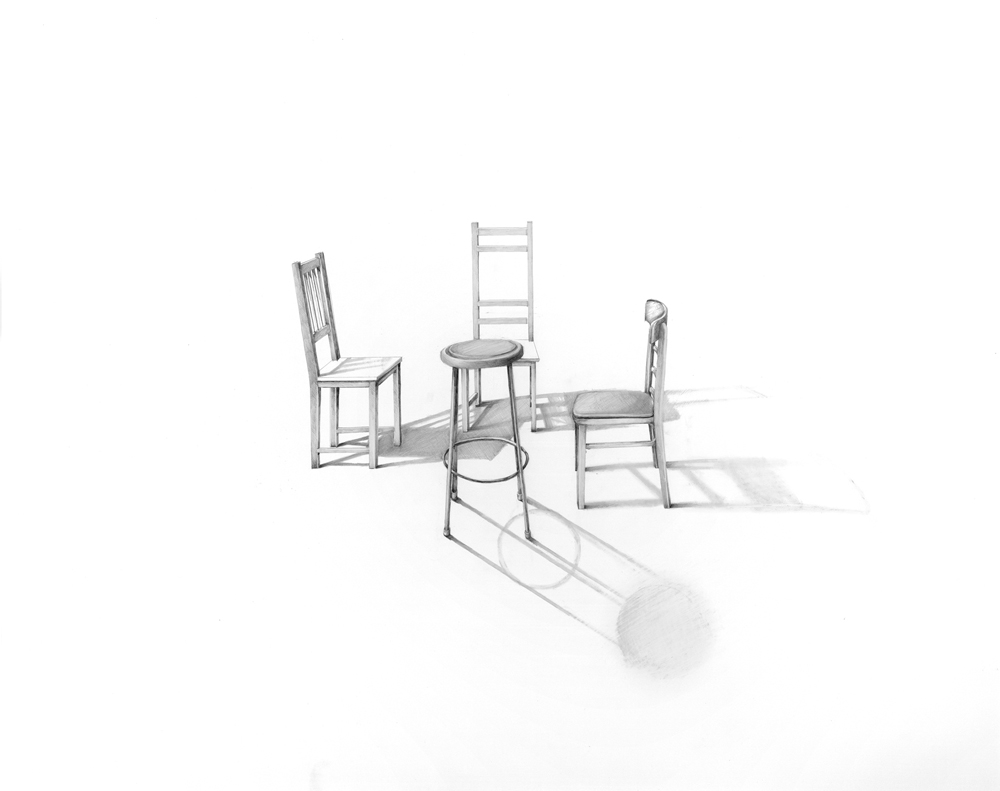
Even in a composition of a group of chairs, as in the piece, “Conversation 10,” where different vanishing points for each object are used within the same composition, the same longing persists. The chairs, whether metaphorical or iconic of ourselves, are alone together. They inhabit the same context, but in different perspective realities. Recalling the ubiquitous dark matter that makes up our universe and is only detectable by instrument and not by light, these drawings are of presences, interactions, and possibilities that are around us always, but unseen. But here, lights and shadows figure centrally in Sheila’s rigorous drawing. The areas of highest value on the chairs are the same as the space engulfing the chairs. One could conclude that the negative space is the same entity as that which reflects light — and perhaps is light itself.

"Conversation 10," drawing by Sheila Ghidini

“Conversation 10,” by Sheila Ghidini, 2013. www.sheilaghidiniprojectspace.com

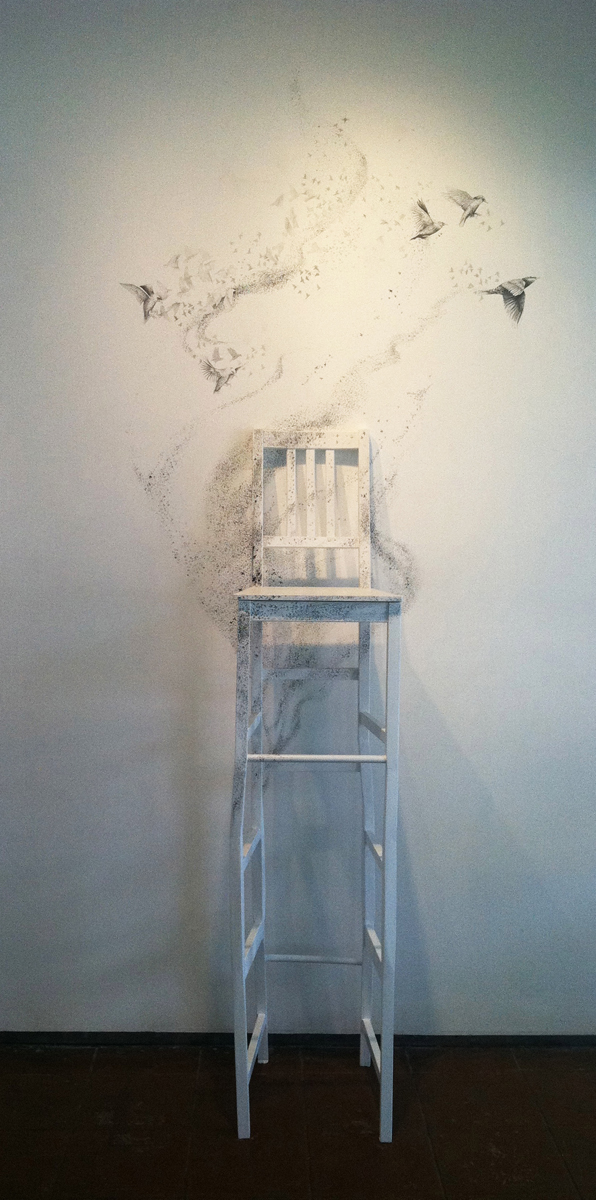
Therefore, when her installation of a sculpted, white chair enters pictorial space by dint of a graphite murmuration of birds drawn around and through the architecture of the chair and wall, the chair and wall similarly dissolve. The firmament, the reality, that you and I rely on itself becomes negative space, becomes light. And true to thousands of years of mystical understanding of the mediatory role of birds, as with the Asian affinity for negative space, Sheila’s work returns us to what is easily forgotten outside of moments of poetic and artistic attention: There is a horizon beyond our knowing. And let it be full of light.

"Murmuration," Installation by Sheila Ghidini

“Murmuration,” Installation by Sheila Ghidini, 2013. www.sheilaghidiniprojectspace.com

“We don’t need to see anything out of the ordinary, we already see so much.” Robert Walser, A Little Ramble.

“The luminous ruins.” – T. Nishiuchi

31 Saturday Aug 2013

Posted by summermlee in Art, Birds, Nature, philosophy

≈ 3 Comments

Tags

art, Joos Ven Cleve, language, Photography, Summer Lee, the birds of San Pedro Valley, tragedy, words

“These words feel as if two waves of water meet each other, his and now mine, and collapse — but they sometime even obliterate, they are definitely torrid and some of mine are too fucking little, too fucking late. True to the man and what he taught, though, they are luminous even as they are tragic. And so unbelievably, painfully, precious now. Because I just thought there would be more. When really there are none.”

The whole writing is here:

http://thebirdsofsanpedrovalley.wordpress.com/2013/08/31/the-luminous-ruins-t-nishiuchi/

My photograph of Lucretia's veil, from Joos Van Cleve's painting, 1525

(My photograph of Lucretia’s veil, from Joos Van Cleve’s painting, 1525.)

Be faithful Go

17 Saturday Aug 2013

Posted by summermlee in Art, philosophy, poetry, Uncategorized

≈ Leave a comment

Tags

Adam Hathaway, art, Emily Hughes, faith, George Steiner, journey of a photograph, Karen Hathaway, Photography, Summer Lee, Zbigniew Herbert

Art, even with its inward mystery, and maybe because of it, has a way of illuminating. Here is my contribution to this wonderful collaborative project.

Journey of a photograph, by Summer Lee, 2013.

Read about it here:

http://journeyofaphotograph.com/2013/08/17/be-faithful-go/

Aside

To discover one’s own absence is to discover one’s immortality…

20 Saturday Jul 2013

Posted by summermlee in Aesthetic philosophy, Art, Birds, Nature, philosophy, poetry, Uncategorized

≈ Leave a comment

Tags

Agnes Martin, art, birds, George Steiner, mystery, nature, poetry, San Pedro Valley

Another entry for my new project: Here is Where We Meet. http://thebirdsofsanpedrovalley.wordpress.com/2013/07/20/to-discover-ones-own-absence-is-to-discover-ones-immortality/ Photo, by Summer Lee

“Here is Where We Meet.” — John Berger

11 Thursday Jul 2013

Posted by summermlee in Art, Birds, Nature, philosophy, Uncategorized

≈ 1 Comment

Tags

art, birds, John Berger, nature, philosophy

I’ve started a new project, an off-shoot of this one. I thought it deserved its own place — since it is about my relationship to a meaningful place.

http://thebirdsofsanpedrovalley.wordpress.com/

Photo, by Summer Lee

“We are in the midst of reality, responding with joy.” — Agnes Martin

23 Sunday Jun 2013

Posted by summermlee in Aesthetic philosophy, Art, music, Nature, philosophy

≈ 8 Comments

Tags

Agnes Martin, art, chapel of the chimes, death, Garden of Memory, George Steiner, Heidegger, painting, summer solstice

A year later and I am back visiting the dead, this time questioning the responsibility of putting new life into the world.

Weaving in and out of the crypts and private chapels, the walls are lined with vessels holding ashes, shelves holding caskets, and the letters of names. It takes a strain of my imagination to fill-in the entire arc of a life that now sits in mostly forgotten urns, placeholders. Once behind the names were fleshes of personality, interactions that effected causality, relational change, consequences in the environment, impressions on the psyches of others — and then they were gone. Except for a spot in a tiny little box aside thousands of others, now also mere words.

Painting by Agnes Martin

(Painting, “Tremolo,” by Agnes Martin, 1967.)

This year, it struck me that the cast of musicians performing here and there among the dead were stand-ins, intermediaries. They attracted hordes of the living into this solemn place on the longest day of the year to challenge the human aloofness towards the dead, to weigh the untranslatable meanings behind those words. With mixed success. Even though evidence of death towers on all sides, our finite narratives and rehearsed terminal endings at the end of every sentence — we remain distracted from our own dying.

We committed to one dark grotto of those born in the early 1800’s. A professional cellist sat inside with her laptop and synthesizer. Sometime while she was tuning her cello and tapping on her laptop, it dawned on us that she was in high performance. The ambiguous noises were experiments against the classical instrument’s boundaries: a stutter and screech here, a falling note there, a computer’s response, and the cellist’s retort. When she finished her “tuning” performance and nodded her head to applause, we understood that the provisional and dissonant duet between cellist and computer highlighted the aleatory relationship between existence and not-existence — and was indeed beautiful music. As Steiner says, art reminds us that there is something rather than nothing, only by virtue of grace.

The scene seared into my heart the ruminating words I had read that day of my dear friend’s husband having only days to live. They were going down their road until a few weeks ago, their life was sideswiped by illness and overturned into a tragic twilight. At home in hospice care, they are surrounded by friends and family who improvise themselves into a blanket of love and support for his last moments. There is no score or predictable soundtrack here. Nor, as Pamela says, is this life a dress rehearsal. But at best we merely hear the music at all.

Painting by Agnes Martin

(Painting, “Trumpet,” by Agnes Martin, 1967)

My friend this evening and I jest that it is just as much the beauty of the performer as it is the melodic tunes (amidst many dissonant-sounding experimental musicians) that has drawn a thick crowd into side room of the columbarium. Sitting on the stone floor in vulnerable elegance, she plays odd, unrecognizable instruments in classical improvisations. And we, the living, over a trickling fountain lined with pertly pink and red impatiens, “watch” her fill the space of the eternally invisible with unseen timbres and undulating wavelengths of passionate percussion. When she breathes into a bamboo flute with an electronic lung holding a previous refrain to which she responds in turn, a strange but pleasing chorus emerges into a rhythm of labored breath, a futile and yet beautiful resuscitation.

(In the stairwell from one chapel to another, we overhear a woman remark that this is what people from the rest of the country think Californians do everyday.)

But the true entrance into me does not occur by that willful anticipation of art, just as much as predicted words here do not alight, but sink. Instead it happened when an unexpected noise entered the back of our music-filled worship. It announced the entrance of a young, disabled girl with the cognition of a child ten years younger. She burst into this delicate space, hugging a 3-foot Barney and two teddy bears, and proceeded to march directly to within inches of the musician. The performer was startled but without missing a note, welcomed her softly with her eyes. And the girl of a strange grammar, much to my held breath’s relief, plopped herself front and center with no further histrionics. While the music pulsed along, the girl’s father sat down in the back, occasionally waving a connective hello to his girl. But she is now entranced by the familiarly foreign music, playing seriously with one of the bear’s ears — because afterall, this is about our ears.

And I, the helicopter parent, who constantly restricts my exuberant son in a cloying distrust and tiresome fear of violating the perceived comfort of everyone around me, orchestrating him here and there so as to fit who-knows-what expectations, I succumbed to this scene. Yes, a carnival of existence among the backdrop of non-existence, of Nothingness — but mostly of trusting surrender. There in front of the dead, the distracted living, too — and because of the little bit of life under my domain that is there despite me — my heart busted itself into tears.

“As the shrine of Nothing, death is the shelter of Being.” — Heidegger

Painting by Agnes Martin(Agnes Martin’s last painting, “Untitled,” 2004)

← Older posts
Newer posts →

Enter your email address to subscribe to this blog and receive notifications of new posts by email.

Join 619 other subscribers

Recent Posts

  • “Experimenters in the passages between worlds.” Vinciane Despret, Au Bonheur des Morts
  • “The terrifying groundlessness, the eradication of all violences. To be embraced by that which doesn’t know us and in that unknowing caresses us and truly loves us. We might become anything at all, something wildly other than what we are encountered by. A world that truly loves us by not presuming what we want or what shape we will take before we show up… We will be held when we are not known from the start.” — Dr. Marquis Bey
  • Images dream within us, a reverie is a world of expansion.
  • “For the natural world, the ethical responsibility is that being alive gives existence to others.” Vinciane Despret
  • “We meet in the freedoms of each other.” – Takeyoshi Nishiuchi

Archived Posts

Blog at WordPress.com.

  • Subscribe Subscribed
    Unwanted Advice: Reflections from a Self-Appointed Life Counselor
    Join 215 other subscribers

    Have a WordPress.com account? Log in now.

  • Unwanted Advice: Reflections from a Self-Appointed Life Counselor
    View site in Reader
    Manage subscriptionsSign upLog in
    Report this content
    Collapse this bar
Loading Comments...